
Contents
- 🎵 Origins & History
- ⚙️ How It Works
- 📊 Key Facts & Numbers
- 👥 Key People & Organizations
- 🌍 Cultural Impact & Influence
- ⚡ Current State & Latest Developments
- 🤔 Controversies & Debates
- 🔮 Future Outlook & Predictions
- 💡 Practical Applications
- 📚 Related Topics & Deeper Reading
- Frequently Asked Questions
- References
- Related Topics
Overview
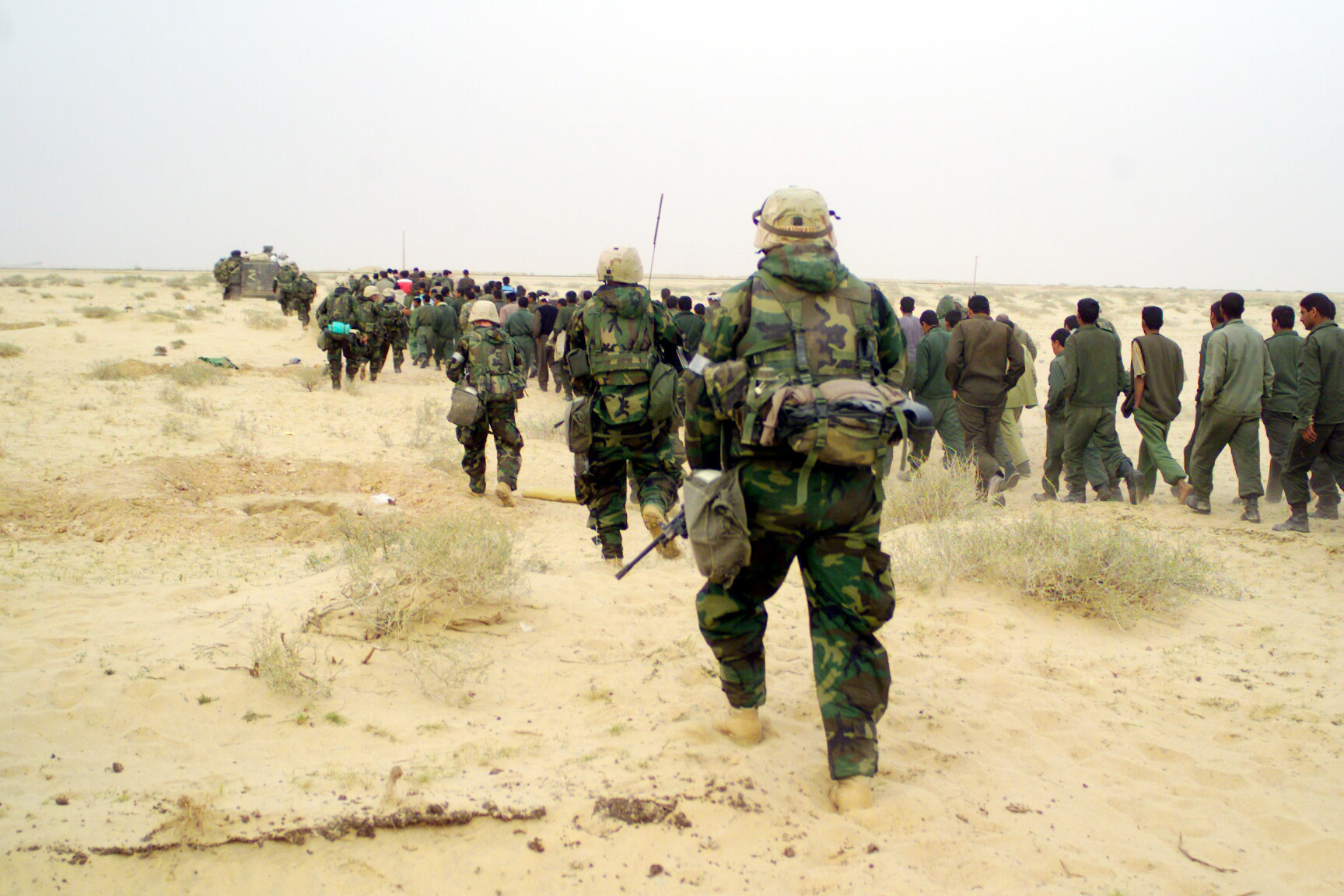
The 2003 invasion of Iraq, launched on March 20, 2003, by a United States-led coalition, marked the initial phase of the Iraq War. This swift military operation, lasting just over a month and characterized by 26 days of intense combat, aimed to depose President Saddam Hussein and disarm Iraq of alleged weapons of mass destruction (WMDs). The coalition, primarily comprising forces from the United States, United Kingdom, Australia, and Poland, operated under the stated objectives of removing a perceived threat to global security and liberating the Iraqi populace. However, the invasion was met with significant international opposition and sparked enduring controversies regarding its legality and the veracity of its stated justifications, particularly concerning the absence of WMDs.
🎵 Origins & History
The roots of the 2003 invasion can be traced back to the aftermath of the 1991 Gulf War, which left Saddam Hussein in power despite international sanctions and ongoing UN weapons inspections. Following the September 11, 2001 attacks, the George W. Bush administration increasingly focused on Iraq, linking Hussein's regime to terrorism and developing WMDs. This narrative gained traction, despite dissenting voices within intelligence agencies and international bodies like the United Nations. The formal decision to invade was made in late 2002, with the coalition building its forces in neighboring countries, setting the stage for a rapid military intervention.
⚙️ How It Works
The invasion itself was a meticulously planned, multi-pronged military operation. Coalition forces, primarily U.S. Army and British Army units, spearheaded the ground assault, supported by U.S. Air Force and RAF air power. The strategy involved a rapid advance towards Baghdad, bypassing heavily fortified areas where possible, and utilizing shock and awe tactics to demoralize Iraqi defenses. Special forces units also conducted operations behind enemy lines, targeting key infrastructure and leadership. The swift collapse of Iraqi Army resistance, particularly in the south, facilitated the rapid advance and eventual capture of Baghdad on April 9, 2003.
📊 Key Facts & Numbers
The invasion involved approximately 170,000 U.S. troops and 45,000 British troops, supported by smaller contingents from Poland and Australia. The coalition reported approximately 200 combat fatalities during the initial invasion phase, while Iraqi military and civilian casualties are estimated to be in the thousands, with some sources suggesting over 10,000 deaths. The invasion cost the United States an estimated $60 billion in its first year alone. Within three weeks, coalition forces had advanced over 350 miles, a pace rarely seen in modern warfare. The operation involved over 2,000 cruise missile strikes and thousands of sorties by combat aircraft.
👥 Key People & Organizations
Key figures driving the invasion included U.S. President George W. Bush, who articulated the rationale for war, and British Prime Minister Tony Blair, his staunchest international ally. U.S. Secretary of Defense Donald Rumsfeld and Deputy Secretary Paul Wolfowitz were instrumental in shaping the war's strategy and justifications. On the Iraqi side, President Saddam Hussein led the regime, while figures like Tariq Aziz served as his prominent international spokesman. The UN Security Council played a crucial role in the international debate, with permanent members like France and Germany expressing strong opposition.
🌍 Cultural Impact & Influence
The 2003 invasion profoundly impacted global geopolitics, fueling anti-American sentiment in many parts of the world and contributing to the rise of new extremist groups. It led to the protracted Iraq War, which destabilized the region for years and resulted in hundreds of thousands of deaths. The invasion also had a significant cultural footprint, inspiring countless books, films, and documentaries that explored its causes, conduct, and consequences, such as the documentary No End in Sight. The debate over the invasion's legitimacy and effectiveness continues to shape foreign policy discussions and international relations.
⚡ Current State & Latest Developments
While the initial invasion concluded in May 2003, its consequences continue to reverberate. The subsequent insurgency and sectarian violence, coupled with the rise of groups like ISIS, demonstrate the long-term instability that followed the invasion. The political landscape of Iraq remains fragile, with ongoing challenges in governance and security. International efforts continue to focus on rebuilding Iraq and preventing the resurgence of extremist threats, a direct legacy of the 2003 intervention and its aftermath. The withdrawal of U.S. troops in 2011 and subsequent redeployments highlight the enduring complexities of the region.
🤔 Controversies & Debates
The invasion is one of the most debated military actions of the 21st century. A central controversy revolves around the justification of WMDs, as no significant stockpiles were found by coalition forces or subsequent investigations. Kofi Annan, then UN Secretary-General, famously declared the invasion illegal under international law, a stance supported by many international law experts. Critics also point to flawed intelligence, the underestimation of post-invasion instability, and the disproportionate human cost. Proponents, however, maintain that removing Saddam Hussein was a necessary step to neutralize a dangerous regime and prevent future aggression, citing his history of human rights abuses and pursuit of WMDs.
🔮 Future Outlook & Predictions
The long-term ramifications of the 2003 invasion continue to unfold. Analysts predict ongoing political and security challenges in Iraq, with potential for renewed instability if internal divisions are not addressed. The invasion's impact on the broader Middle East is also a subject of intense speculation, with some arguing it inadvertently empowered regional rivals like Iran and contributed to the Syrian civil war. The future trajectory of U.S. foreign policy, particularly regarding military interventions, is likely to be heavily influenced by the lessons learned—or unlearned—from this conflict.
💡 Practical Applications
While the invasion itself was a military operation, its 'practical applications' are more about the strategic and political lessons derived from it. For military planners, it offered case studies in hybrid warfare, rapid deployment, and the challenges of nation-building in post-conflict environments. For policymakers, it serves as a stark reminder of the complexities of intelligence assessment, the importance of international consensus, and the unpredictable nature of regime change. The invasion's legacy informs debates on preemptive strikes, the role of international law in warfare, and the ethical considerations of intervening in sovereign states.
Key Facts
- Year
- 2003
- Origin
- Middle East
- Category
- history
- Type
- event
Frequently Asked Questions
What were the main stated reasons for the 2003 invasion of Iraq?
The primary stated reasons for the 2003 invasion of Iraq, as articulated by President George W. Bush and Prime Minister Tony Blair, were to disarm Iraq of alleged weapons of mass destruction (WMDs), including nuclear, chemical, and biological weapons, and to "free the Iraqi people" by removing Saddam Hussein from power. The administration also cited Hussein's alleged support for terrorism as a significant threat to global security, particularly in the wake of the September 11 attacks. These justifications were presented to the UN Security Council and the international public as the imperative for military action.
Did Iraq actually possess Weapons of Mass Destruction (WMDs) at the time of the invasion?
No significant stockpiles of operational WMDs were found in Iraq following the 2003 invasion. While Saddam Hussein's regime had a history of developing and using chemical weapons, particularly during the Iran-Iraq War and against its own Kurdish population, pre-invasion intelligence proved to be flawed. Subsequent investigations by the U.S. Department of Energy and UN bodies concluded that Iraq had largely dismantled its WMD programs by the mid-1990s and did not possess active stockpiles at the time of the invasion. This lack of evidence became a major point of contention and criticism regarding the war's justification.
Who were the main countries involved in the coalition that invaded Iraq?
The coalition that invaded Iraq in 2003 was primarily led by the United States and the United Kingdom. Other significant contributors included Australia and Poland, with smaller military contingents from various other nations. This coalition operated without explicit authorization from the UN Security Council, leading to significant international opposition from countries like France, Germany, and Russia.
What was the immediate aftermath of the invasion in Iraq?
The immediate aftermath of the 2003 invasion saw the rapid collapse of the Saddam Hussein regime and the capture of Baghdad. However, the subsequent period was marked by widespread looting, the dismantling of state institutions by the Coalition Provisional Authority, and the emergence of a violent insurgency. The failure to establish a stable security environment and the perceived marginalization of certain Iraqi communities contributed to escalating sectarian tensions and a prolonged period of conflict that lasted for years, far beyond the initial invasion phase.
What is the estimated human cost of the 2003 invasion and the subsequent war?
Estimating the total human cost of the 2003 invasion and the subsequent Iraq War is complex and subject to varying methodologies. Direct combat deaths during the initial invasion were relatively low, in the hundreds for coalition forces and potentially thousands for Iraqi military personnel. However, the ensuing conflict, insurgency, and sectarian violence led to a far greater toll. Various studies, including those by Iraq Body Count and The Lancet, have estimated civilian deaths ranging from over 100,000 to more than 600,000, with millions more displaced. The long-term health impacts and psychological trauma continue to affect the Iraqi population.
How did the 2003 invasion affect the geopolitical landscape of the Middle East?
The 2003 invasion significantly reshaped the geopolitical landscape of the Middle East. It led to the removal of a key regional power, Saddam Hussein, but also created a power vacuum that contributed to regional instability. The invasion is widely seen as having inadvertently strengthened Iran's influence in Iraq and the wider region, altering the traditional balance of power. Furthermore, the protracted conflict and the rise of extremist groups like ISIS had ripple effects across neighboring countries, contributing to conflicts in Syria and fueling regional tensions. The invasion also damaged the credibility of the United States in the region for many.
What are the main criticisms leveled against the intelligence used to justify the invasion?
The intelligence used to justify the 2003 invasion of Iraq faced intense criticism for being flawed, exaggerated, and politically manipulated. Key allegations included the overstatement of Iraq's WMD capabilities, the misinterpretation of intelligence regarding mobile biological labs, and the unsubstantiated links between Saddam Hussein's regime and Al-Qaeda. Critics, including former intelligence analysts and defectors, argued that the Bush administration selectively used intelligence that supported its predetermined decision to go to war, ignoring dissenting assessments. The CIA's own internal reviews and subsequent congressional investigations highlighted significant failures in the intelligence gathering and analysis processes.