
Contents
Overview
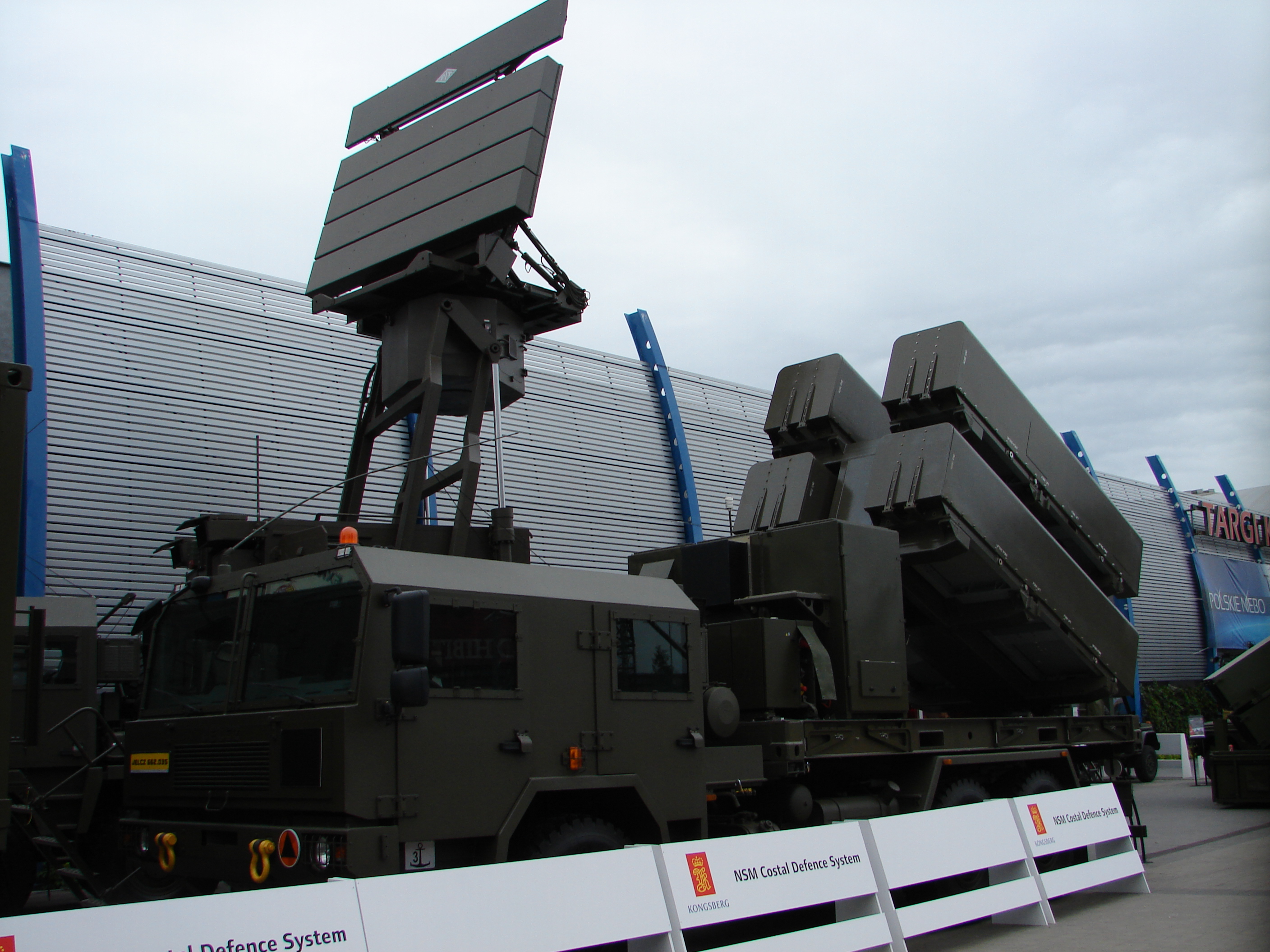
An anti-ship missile (AShM) is a guided munition specifically engineered to target and destroy surface vessels. These weapons represent a critical evolution in naval warfare, capable of striking from vast distances and overwhelming even heavily defended warships. Their development has fundamentally altered naval strategy, forcing navies to invest heavily in countermeasures and distributed fleet architectures. AShMs typically employ sophisticated guidance systems, including inertial navigation, active radar homing, and infrared seekers, often combined with sea-skimming profiles to evade detection. They can be launched from a diverse array of platforms, including aircraft, submarines, surface ships, and even land-based batteries, making them a versatile and persistent threat across the maritime domain. The proliferation of advanced AShMs, particularly anti-ship ballistic missiles (ASBMs), continues to reshape global power dynamics and naval procurement priorities.
🎵 Origins & History
The genesis of the anti-ship missile can be traced back to the early days of guided weaponry, with initial concepts emerging in the interwar period. German experiments with guided bombs like the Fritz X demonstrated the potential for precision aerial attack against capital ships. Post-World War II, the Cold War arms race accelerated development. The Soviet Union, with its vast coastline and perceived naval inferiority to the United States, became a prolific developer of AShMs. Early Soviet designs like the P-15 Termit (NATO reporting name: SS-N-2 Styx) proved the devastating effectiveness of these weapons. This incident spurred Western navies to rapidly develop their own AShM capabilities and countermeasures, leading to systems like the American Harpoon and the French Exocet.
⚙️ How It Works
Anti-ship missiles employ a multi-stage guidance process to ensure a high probability of target kill. Initial launch often utilizes an inertial navigation system (INS) or GPS for mid-course guidance, providing a general trajectory towards the target area. As the missile approaches its target, an active radar seeker or an infrared (IR) seeker takes over for terminal guidance. Active radar seekers emit their own radar signals and track the reflections off the target ship, offering precision in various weather conditions. IR seekers, conversely, home in on the heat signature emitted by the ship's engines and superstructure, making them stealthier but more susceptible to countermeasures like flares or adverse weather. Many modern AShMs also incorporate sophisticated electronic counter-countermeasures (ECCM) to defeat enemy jamming efforts, and some utilize datalinks to receive updates or retarget mid-flight, enhancing their adaptability and effectiveness against maneuvering fleets.
📊 Key Facts & Numbers
The global market for anti-ship missiles is substantial. Over 50 countries currently possess some form of AShM capability, reflecting their widespread adoption. A single modern AShM can cost anywhere from $100,000 to over $2 million, depending on its sophistication and range. For instance, the American RGM-84 Harpoon has been produced in tens of thousands of units since its introduction in the 1970s. More advanced systems, like China's DF-21D anti-ship ballistic missile, are estimated to have a range exceeding 1,500 kilometers (930 miles) and are designed to target large aircraft carriers. The sheer volume of potential targets, combined with the increasing lethality and proliferation of these weapons, presents a significant challenge for naval forces worldwide.
👥 Key People & Organizations
Key organizations driving AShM development include major defense contractors and national military research institutions. In the United States, companies like Lockheed Martin (with the LRASM), Raytheon (with the Tomahawk and Harpoon), and Boeing (with the Harpoon) are prominent developers. Russia's Almaz-Antey Concern (producing the Kalibr and P-800 Oniks) and NPO Novator (developing the Zircon hypersonic missile) are leading entities in that nation's AShM programs. China's state-owned China Aerospace Science and Industry Corporation (CASIC) and China Aerospace Science and Technology Corporation (CASC) are responsible for a wide array of AShMs, including the formidable DF-21D and DF-26 ASBMs. National navies and air forces, such as the U.S. Navy, Russian Navy, and the People's Liberation Army Navy, are the primary end-users and often collaborate closely with these industrial partners on requirements and testing.
🌍 Cultural Impact & Influence
Anti-ship missiles have profoundly influenced naval doctrine and shipbuilding. The threat posed by these weapons has led to the development of more dispersed fleet formations, emphasizing survivability over the concentration of firepower once seen in battleship fleets. Navies now prioritize robust electronic warfare (EW) suites, decoys, and advanced point-defense systems like the Phalanx CIWS and SeaRAM to intercept incoming missiles. The concept of the 'carrier killer' missile, epitomized by the Soviet P-270 Moskit, has forced naval architects to reconsider the vulnerability of even the largest warships. Furthermore, the proliferation of AShMs has democratized naval power to some extent, allowing smaller nations or non-state actors to pose a significant threat to much larger naval forces, as demonstrated by the Houthi attacks in the Red Sea using Iranian-supplied missiles.
⚡ Current State & Latest Developments
The current landscape of anti-ship missile development is characterized by a relentless pursuit of speed, stealth, and range. Hypersonic missiles are a major focus for several nations. Additionally, there's a growing emphasis on 'smart' missiles with enhanced artificial intelligence for target recognition and autonomous swarming capabilities, allowing multiple missiles to coordinate attacks. The integration of AShMs into networked warfare systems, enabling 'shoot-and-scoot' tactics and real-time targeting updates, is also a significant trend. The ongoing development of anti-ship ballistic missiles (ASBMs) continues to pose a strategic challenge, particularly to aircraft carrier strike groups operating far from shore.
🤔 Controversies & Debates
A central controversy surrounding anti-ship missiles revolves around their potential to destabilize regional security and escalate conflicts. There are also debates about the effectiveness of current defensive systems against the latest generation of hypersonic and AI-driven AShMs. Furthermore, the proliferation of these weapons to non-state actors, such as seen with the use of Iranian-supplied missiles by Houthi rebels in the Red Sea, raises concerns about maritime security and the ability of international shipping to operate safely. The ethical implications of developing weapons designed for mass destruction at sea also remain a subject of discussion among defense analysts and ethicists.
🔮 Future Outlook & Predictions
The future of anti-ship missiles will likely be dominated by the continued advancement of hypersonic technology, making them increasingly difficult to defend against. Expect to see more 'fire-and-forget' capabilities, enhanced AI for target discrimination (e.g., distinguishing between a warship and a civilian vessel), and sophisticated electronic warfare integration. The concept of 'loyal wingman' drones launching AShMs or acting as forward sensors for missile attacks is also gaining traction. Naval forces will continue to invest in layered defense systems, including advanced radar, electronic countermeasures, directed energy weapons, and interceptor missiles, to counter the growing threat. The strategic implications of ASBMs will also continue to evolve, potentially leading to new arms control discussions or a renewed focus on anti-access/area denial (A2/AD) strategies by potential adversaries.
💡 Practical Applications
Anti-ship missiles are primarily employed by naval and air forces for offensive maritime operations. Their core application is the destruction or neutralization of enemy warships, ranging from small patrol boats to large aircraft carriers and amphibious assault ships. They can be used in a variety of scenarios, including fleet engagements, amphibious assaults (to suppress enemy naval defenses), anti-access/area denial (A2/AD) operations to keep enemy fleets at bay, and power projection. Beyond direct combat, AShMs can be used for blockade enforcement or to interdict specific vessels. Some variants, like the Tomahawk, can also be adapted for land-attack roles, showcasing the versatility of cruise missile technology derived from AShM development.
Key Facts
- Category
- technology
- Type
- topic