
Contents
- 📊 Origins & History
- 🔍 How It Works
- 📊 Key Facts & Numbers
- 👥 Key People & Organizations
- 🌍 Cultural Impact & Influence
- ⚡ Current State & Latest Developments
- 🤔 Controversies & Debates
- 🔮 Future Outlook & Predictions
- 💡 Practical Applications
- 📚 Related Topics & Deeper Reading
- Frequently Asked Questions
- References
- Related Topics
Overview
Auditing is the systematic examination of financial information to ensure accuracy, completeness, and compliance with laws and regulations. It provides third-party assurance to stakeholders, including investors, customers, and regulatory bodies, that the subject matter is free from material misstatement. With the rise of Sarbanes-Oxley Act and COSO framework, auditing has become a critical component of corporate governance, risk management, and internal control. The auditing process involves obtaining evidence, documenting findings, and evaluating propositions to express an opinion on the financial information. As of 2022, the global auditing market was valued at $134.8 billion, with a growth rate of 7.5% per annum. The increasing demand for auditing services is driven by the need for transparency, accountability, and compliance in the wake of high-profile financial scandals, such as Enron scandal and Bernard Madoff Ponzi scheme.
📊 Origins & History
The concept of auditing dates back to ancient civilizations, where Egyptian accounting and Roman auditing practices were used to ensure the accuracy of financial records. The modern auditing profession, however, emerged in the late 19th century with the establishment of the Institute of Chartered Accountants in England and Wales in 1880. The first auditing standards were introduced in the 1940s, and since then, auditing has become a critical component of corporate governance, risk management, and internal control. Today, auditing is a global profession, with major firms like Deloitte, Ernst & Young, KPMG, and PwC providing auditing services to clients across the world.
🔍 How It Works
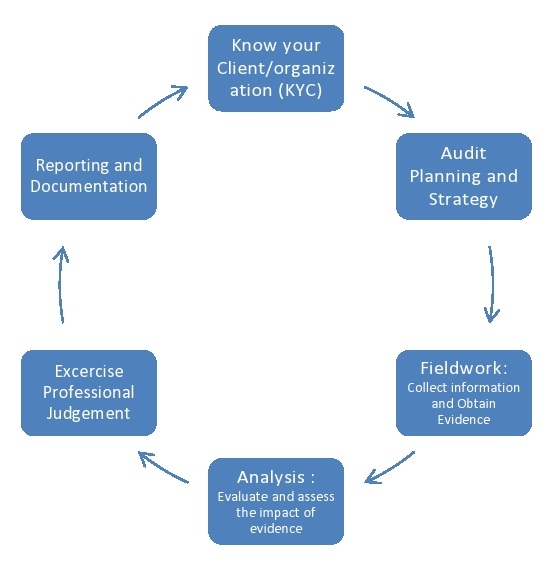
The auditing process involves several stages, including planning, risk assessment, and evidence gathering. Auditors use various techniques, such as statistical sampling and transaction testing, to obtain evidence and document their findings. The audit report is then prepared, which includes an opinion on the financial information, as well as any recommendations for improvement. Auditing also involves the use of technology, such as audit software and data analytics, to improve the efficiency and effectiveness of the audit process. For example, SAS Institute provides audit software solutions to help auditors analyze large datasets and identify potential risks.
📊 Key Facts & Numbers
According to a report by IFAC, the global auditing market was valued at $134.8 billion in 2022, with a growth rate of 7.5% per annum. The report also notes that the demand for auditing services is driven by the need for transparency, accountability, and compliance in the wake of high-profile financial scandals. The auditing profession is also becoming increasingly specialized, with auditors requiring expertise in areas such as IT auditing, environmental auditing, and forensic auditing. For instance, KPMG has a dedicated team of IT auditors who provide services to clients in the technology sector.
👥 Key People & Organizations
Key people in the auditing profession include William Cooper, who is considered the father of auditing, and Arthur Andersen, who founded one of the first auditing firms. Other notable auditors include Luca Pacioli, who developed the double-entry bookkeeping system, and Cynthia Cooper, who exposed the WorldCom scandal. Organizations such as IASB and FRC play a critical role in setting auditing standards and regulating the auditing profession. For example, IASB has introduced new auditing standards to improve the quality of audits and enhance transparency.
🌍 Cultural Impact & Influence
Auditing has had a significant impact on culture and society, with the Enron scandal and Bernard Madoff Ponzi scheme highlighting the importance of auditing in preventing financial fraud. Auditing has also become a critical component of corporate governance, with companies such as Google and Facebook requiring regular audits to ensure compliance with regulatory requirements. The auditing profession has also been influenced by technological advancements, such as blockchain and artificial intelligence, which are changing the way audits are conducted. For instance, Deloitte is using blockchain technology to improve the efficiency of audits and reduce costs.
⚡ Current State & Latest Developments
The current state of auditing is characterized by increasing demand for auditing services, driven by the need for transparency, accountability, and compliance. The auditing profession is also becoming increasingly specialized, with auditors requiring expertise in areas such as cybersecurity and data privacy. The use of technology, such as audit software and data analytics, is also becoming more prevalent, with firms such as SAS Institute providing solutions to improve the efficiency and effectiveness of the audit process. For example, PwC is using data analytics to identify potential risks and improve the quality of audits.
🤔 Controversies & Debates
Controversies and debates in the auditing profession include the issue of auditor independence, with some arguing that auditors are too close to the companies they audit. Others argue that auditing is too focused on compliance, rather than providing value to stakeholders. The use of technology, such as artificial intelligence, is also raising concerns about the potential for bias and error in the audit process. For instance, IFAC has issued guidelines on the use of artificial intelligence in auditing to ensure that auditors are aware of the potential risks and benefits.
🔮 Future Outlook & Predictions
The future of auditing is likely to be shaped by technological advancements, such as blockchain and artificial intelligence, which are changing the way audits are conducted. The auditing profession is also likely to become increasingly specialized, with auditors requiring expertise in areas such as cybersecurity and data privacy. The demand for auditing services is also likely to increase, driven by the need for transparency, accountability, and compliance in the wake of high-profile financial scandals. For example, KPMG is investing in new technologies to improve the efficiency and effectiveness of audits and provide better services to clients.
💡 Practical Applications
Practical applications of auditing include the use of auditing in financial reporting, risk management, and internal control. Auditing is also used in areas such as environmental auditing and social auditing, where it is used to evaluate the impact of organizations on the environment and society. For instance, Deloitte provides environmental auditing services to help companies reduce their environmental footprint and improve their sustainability.
Key Facts
- Year
- 2022
- Origin
- Global
- Category
- technology
- Type
- concept
Frequently Asked Questions
What is auditing?
Auditing is the systematic examination of financial information to ensure accuracy, completeness, and compliance with laws and regulations. It provides third-party assurance to stakeholders, including investors, customers, and regulatory bodies, that the subject matter is free from material misstatement. For example, Deloitte provides auditing services to clients across the world.
What are the different types of auditing?
There are several types of auditing, including financial auditing, internal auditing, and external auditing. Financial auditing involves the examination of financial statements, while internal auditing involves the evaluation of internal controls and risk management. External auditing involves the examination of financial statements by an independent auditor. For instance, PwC provides financial auditing services to help companies ensure compliance with regulatory requirements.
What is the purpose of auditing?
The purpose of auditing is to provide third-party assurance to stakeholders that the subject matter is free from material misstatement. Auditing also helps to identify potential risks and improve the effectiveness of internal controls. For example, KPMG provides risk management services to help companies identify and mitigate potential risks.
What are the benefits of auditing?
The benefits of auditing include improved transparency, accountability, and compliance. Auditing also helps to identify potential risks and improve the effectiveness of internal controls. For instance, SAS Institute provides audit software solutions to help auditors analyze large datasets and identify potential risks.
What are the challenges facing the auditing profession?
The auditing profession is facing several challenges, including the issue of auditor independence, the use of technology, and the need for specialization. Auditors must also stay up-to-date with changing regulations and standards. For example, IFAC has issued guidelines on the use of artificial intelligence in auditing to ensure that auditors are aware of the potential risks and benefits.
What is the future of auditing?
The future of auditing is likely to be shaped by technological advancements, such as blockchain and artificial intelligence, which are changing the way audits are conducted. The auditing profession is also likely to become increasingly specialized, with auditors requiring expertise in areas such as cybersecurity and data privacy. For instance, Deloitte is investing in new technologies to improve the efficiency and effectiveness of audits and provide better services to clients.
How is auditing related to other fields?
Auditing is related to other fields such as accounting, finance, and governance. Auditing is also used in areas such as environmental auditing and social auditing, where it is used to evaluate the impact of organizations on the environment and society. For example, PwC provides environmental auditing services to help companies reduce their environmental footprint and improve their sustainability.