
Contents
Overview
The genesis of the Bharat Ratna can be traced to January 2, 1954, when President Rajendra Prasad instituted India's highest civilian award. The initial design and criteria were meticulously crafted to honor individuals who had made monumental contributions to the nation. The first conferment occurred in 1954, recognizing three eminent figures: C. Rajagopalachari, a prominent leader in the Indian independence movement and the first and only Governor-General of independent India; Sarvepalli Radhakrishnan, a distinguished philosopher and the second President of India; and C. V. Raman, a Nobel laureate physicist celebrated for his discovery of the Raman Effect. The award's charter has seen significant evolution, notably in December 2011, when the scope of eligibility was expanded beyond the traditional domains of arts, literature, science, and public service to include "any field of human endeavor," a move that broadened its potential scope considerably.
⚙️ How It Works
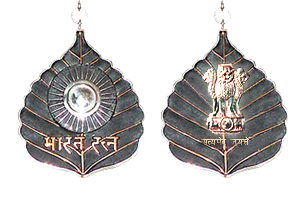
The conferment of the Bharat Ratna operates through a nomination process. These nominations are then forwarded to the Prime Minister's Office (PMO) and subsequently to the President. The final decision rests with the President, acting on the advice of the Council of Ministers. Unlike national awards in some other countries, the Bharat Ratna does not have a fixed number of recipients per year, allowing for flexibility based on merit. Recipients are presented with a Sanad, a formal certificate bearing the President's signature and seal, and a medallion in the shape of a peepal leaf, symbolizing India's rich cultural heritage. The award does not carry any monetary grant but confers significant prestige and a seventh rank in the Indian order of precedence, placing recipients above most government officials.
📊 Key Facts & Numbers
Since its inception, the Bharat Ratna has been awarded to individuals, including those who received it posthumously. The year 1954 saw the first three recipients. As of 2024, the award has been given to men and women. The youngest recipient was Sachin Tendulkar, honored at the age of 40 in 2014, while the oldest was Dhondo Keshav Karve, who received it at 99 years old in 1958. The award has been conferred upon individuals from diverse backgrounds, including politicians, scientists, artists, social reformers, and athletes, reflecting its broad mandate. The total number of Bharat Ratna awardees stands at 53.
👥 Key People & Organizations
Key figures associated with the Bharat Ratna span across politics, science, arts, and social reform. The first recipients in 1954 were C. Rajagopalachari, Sarvepalli Radhakrishnan, and C. V. Raman. Prime Ministers Jawaharlal Nehru (1955) and Indira Gandhi (1971) are among the political leaders honored. In the realm of science, Homi J. Bhabha (though nominated, never received it posthumously) and A. P. J. Abdul Kalam (1997), who later became President, are notable. The arts have been represented by figures like Satyajit Ray (1992) and Lata Mangeshkar (2001). The Indian National Congress and the Bharatiya Janata Party have both seen their leaders and prominent members receive the award. The President of India's office plays a crucial role in the conferment process.
🌍 Cultural Impact & Influence
The Bharat Ratna wields immense cultural significance, serving as a powerful symbol of national appreciation and aspiration. Its conferment on individuals like Mahatma Gandhi (though he never received it, his name was considered) or Subhas Chandra Bose (whose award was rescinded posthumously due to controversy) highlights its role in shaping national narratives. The award has inspired countless Indians to strive for excellence in their respective fields, fostering a culture of achievement. Its influence extends to education, with many institutions naming wings or scholarships after Bharat Ratna recipients. The visual representation of the award, the peepal leaf medallion, has become an iconic symbol recognized across India. The inclusion of figures like Amartya Sen (1999) in economics and Mother Teresa (1980) in social service underscores its broad recognition of societal contributions.
⚡ Current State & Latest Developments
The Bharat Ratna continues to be conferred, with recent awards reflecting a diverse range of contributions. In 2024, the government announced five recipients: L. K. Advani, a veteran Bharatiya Janata Party leader; Kapur Singh (posthumous), a former Chief Minister of Punjab; P. V. Narasimha Rao (posthumous), a former Prime Minister; Chaudhary Charan Singh (posthumous), a former Prime Minister; and M. S. Swaminathan (posthumous), a renowned agricultural scientist. This recent batch underscores the government's intent to honor figures across the political spectrum and in critical fields like agriculture and science. The ongoing conferment ensures the award remains a relevant benchmark for national service and excellence in the 21st century, with discussions often arising about potential future recipients from various domains.
🤔 Controversies & Debates
The Bharat Ratna has not been without its share of controversies and debates. One persistent criticism revolves around the perceived politicization of the award, with accusations that governments have used it to honor political allies or figures aligned with their ideology, rather than solely based on merit. The posthumous conferment, while common, also sparks debate about whether the award loses some of its luster when the recipient cannot personally accept it. The inclusion of figures like Morarji Desai (1991) and Gulzari Lal Nanda (1997) has sometimes been questioned by those who believe other individuals made more significant contributions. Furthermore, the expansion of criteria in 2011 to include "any field of human endeavor" has led to discussions about the potential dilution of the award's exclusivity and the need for even stricter vetting processes to maintain its prestige, especially when considering recipients from fields like sports, such as Sachin Tendulkar (2014).
🔮 Future Outlook & Predictions
The future of the Bharat Ratna is likely to see continued evolution, balancing tradition with the recognition of emerging fields of contribution. As India's global standing grows, the award may increasingly acknowledge individuals with significant international impact. There's a growing expectation for greater transparency in the nomination and selection process, potentially involving more public input or a dedicated advisory council to mitigate accusations of political bias. The criteria, already broadened in 2011, might be further refined to accommodate advancements in technology, artificial intelligence, and space exploration, ensuring the award remains relevant to contemporary achievements. The ongoing debate about posthumous awards may also lead to a more nuanced approach, perhaps prioritizing living recipients where possible. The challenge will be to uphold the award's sanctity while adapting to the nation's dynamic progress.
💡 Practical Applications
While the Bharat Ratna is an honor and not a functional tool, its conferment has several practical implications for recipients and the nation. Awardees are entitled to certain privileges, including a place in the order of precedence, state security, and the use of 'Bharat Ratna' as a prefix to their name. Many recipients, like C. V. Raman, used the prestige to further their research and public service, attracting more funding and support for their work. For politicians such as Atal Bihari Vajpayee (2015), the award solidified their legacy and public standing. Social reformers and artists often find their causes or works gain wider traction and support following the award. Educational institutions often name
Key Facts
- Category
- culture
- Type
- topic