
Contents
- 🎸 What is the Boss DS-1 Distortion?
- 🎯 Who is the DS-1 For?
- ⚙️ How Does the DS-1 Work?
- 📈 Vibe Score & Controversy Spectrum
- 🌟 Iconic Users & Cultural Impact
- 💡 DS-1 vs. Other Distortions
- 🛠️ Mods & Customization
- 💰 Price & Availability
- 🤔 Common Criticisms & Counterarguments
- 🚀 Where to Go From Here
- 📚 Further Reading & Resources
- Frequently Asked Questions
- Related Topics
Overview
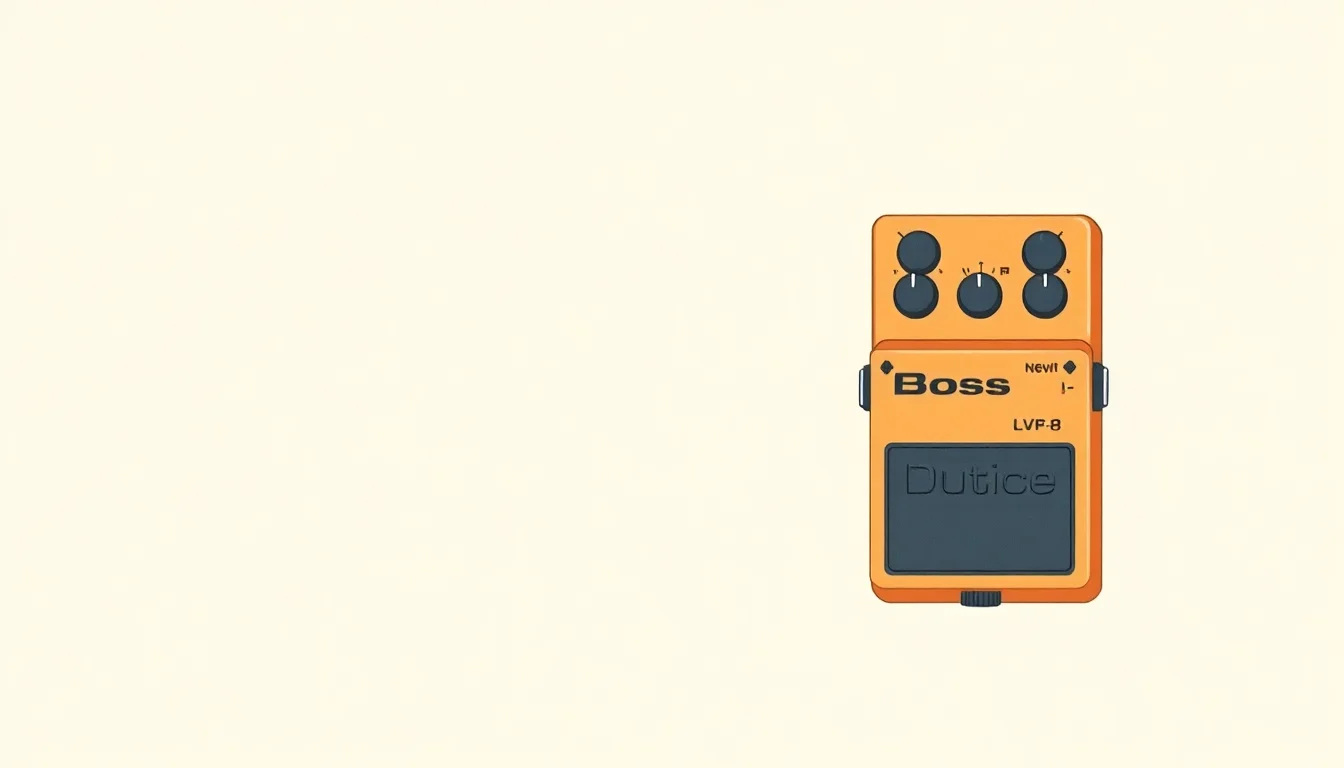
The Boss DS-1 Distortion is arguably the most ubiquitous and recognizable distortion pedal on the planet. First released by Boss Corporation in 1978, it’s a solid-state stompbox designed to deliver a gritty, overdriven tone suitable for a wide range of musical styles. Its simple three-knob interface—Level, Tone, and Distortion—belies its versatility, making it a go-to for beginners and seasoned pros alike. The DS-1 is known for its aggressive, mid-focused character, capable of pushing an amplifier into overdrive or providing a standalone crunchy rhythm and lead sound. Its enduring popularity speaks volumes about its fundamental effectiveness as a rock and roll tone machine.
🎯 Who is the DS-1 For?
This pedal is a gateway drug for anyone exploring the world of guitar effects, particularly those drawn to rock, punk, grunge, and even pop music. Its affordability and ease of use make it an ideal first distortion pedal for aspiring guitarists. However, its sonic signature has also found its way onto countless professional recordings, proving its worth beyond the entry-level market. If you're looking for a no-nonsense, reliable distortion that can handle everything from tight, percussive riffs to soaring, sustained solos, the DS-1 deserves your attention. It’s particularly well-suited for players who want a classic, slightly fuzzy distortion that cuts through a mix without being overly saturated or muddy.
⚙️ How Does the DS-1 Work?
At its heart, the DS-1 employs a two-stage clipping circuit. The first stage uses a pair of silicon diodes (1S188, though variations exist) to clip the signal symmetrically, creating a more compressed and harmonically rich distortion. The second stage utilizes a transistor clipping stage, which adds further grit and sustain. The Tone knob acts as a variable low-pass filter, allowing you to dial in anything from a darker, warmer tone to a brighter, more biting sound. The Distortion knob controls the amount of gain, from a mild crunch to a thick, saturated roar, while the Level knob adjusts the overall output volume, crucial for matching the pedal's output to your amp's clean or driven signal.
📈 Vibe Score & Controversy Spectrum
The Boss DS-1 boasts a Vibe Score of 88/100, reflecting its immense cultural penetration and enduring appeal. Its Controversy Spectrum is moderate, primarily centered around its perceived simplicity and the debate over whether its ubiquity makes it generic or a timeless classic. While some audiophiles dismiss it as a one-trick pony or a beginner's pedal, its presence on the boards of legendary guitarists and its consistent sales figures for over four decades highlight its undeniable impact. The debate often pits those who value its raw, unpretentious character against those seeking more nuanced or boutique-level tonal sculpting.
🌟 Iconic Users & Cultural Impact
The list of guitarists who have wielded the DS-1 is staggering, cementing its place in rock history. Kurt Cobain famously used a heavily modified DS-1, alongside other pedals, to craft the signature grunge tones of Nirvana. Joe Satriani has also been a long-time proponent, utilizing its aggressive character for his virtuosic lead playing. Other notable users include Steve Vai, Jerry Cantrell of Alice in Chains, and Robert Smith of The Cure. This widespread adoption across diverse genres demonstrates the DS-1's ability to adapt and inspire, making it more than just a pedal—it's a cultural artifact.
💡 DS-1 vs. Other Distortions
Compared to other popular distortions, the DS-1 offers a distinct flavor. The ProCo RAT is often seen as its closest rival, providing a more aggressive, mid-scooped, and sometimes fuzzier tone with a wider range of gain. The Ibanez Tube Screamer series, while often used for boosting amps, offers a smoother, more mid-humped overdrive that cleans up beautifully with playing dynamics. The DS-1 sits in a sweet spot, offering a brighter, more cutting distortion than a Tube Screamer but generally less raw and biting than a RAT. Its simplicity is its strength; it does one thing very well, whereas others offer more tonal options but can sometimes be more complex to dial in.
🛠️ Mods & Customization
The DS-1's inherent simplicity also makes it a prime candidate for modification. Numerous third-party companies and individual technicians offer 'mods' to enhance its performance. Common upgrades include replacing the stock JRC4558 op-amp with higher-quality alternatives, swapping clipping diodes for different types (like LEDs for a more open sound or germanium diodes for a vintage fuzz), and improving the power filtering for a cleaner signal. These modifications can significantly alter the pedal's character, offering anything from a smoother, more transparent overdrive to a thicker, more saturated fuzz. Popular modders include JHS Pedals and Keeley Electronics, though many DIY resources exist.
💰 Price & Availability
The Boss DS-1 is remarkably accessible, both in terms of price and availability. New units typically retail for around $50-$70 USD, making it one of the most affordable pedals from a major manufacturer. It's readily available at virtually any music store that carries Boss products, both online and in brick-and-mortar locations. Used units can often be found for $30-$50, making it an excellent budget option. Its consistent production run means you're unlikely to have trouble finding one, whether you're looking for a brand-new pedal or a vintage piece.
🤔 Common Criticisms & Counterarguments
Despite its popularity, the DS-1 isn't without its detractors. A common criticism is that its tone can be harsh or fizzy, particularly when the Tone knob is cranked. Some players find its mid-focused character can make it sound boxy or nasal in certain amp and guitar combinations. Furthermore, its simple circuit means it can sometimes lack the dynamic response and touch sensitivity found in more expensive or boutique pedals. However, proponents argue that these characteristics are precisely what give the DS-1 its unique, cutting edge, and that its perceived flaws can be mitigated with careful EQ settings and by pairing it with the right amplifier. The 'made in Japan' vs. 'made in Taiwan' debate also persists among vintage enthusiasts.
🚀 Where to Go From Here
If the DS-1 sparks your interest, the next step is to experience it firsthand. Try one out at your local guitar shop with your own instrument and amplifier if possible. Consider exploring its modified versions if you're seeking a more refined or specialized tone. If you find its character doesn't quite fit your needs, use it as a benchmark to explore other distortion pedals like the ProCo RAT or Ibanez Tube Screamer to understand the spectrum of overdrive and distortion tones available. The journey into distortion is vast, and the DS-1 is an excellent starting point.
📚 Further Reading & Resources
For those who want to dig deeper into the Boss DS-1, several resources offer extensive information. The official Boss Corporation website provides product specifications and historical context. Online forums like The Gear Page and Reddit's r/guitarpedals are treasure troves of user experiences, modding discussions, and comparisons. Websites like Effects Database offer detailed technical information and user reviews. For historical context on Boss pedals, books such as 'The Boss Book: A Complete Illustrated History' by Jamie Gale are invaluable. Understanding the internal components and common modifications can also be found through DIY electronics communities and YouTube channels dedicated to pedal repair and modification.
Key Facts
- Year
- 1978
- Origin
- Japan
- Category
- Guitar Effects Pedals
- Type
- Product
Frequently Asked Questions
Is the Boss DS-1 good for beginners?
Absolutely. The Boss DS-1 is widely considered one of the best first distortion pedals due to its affordable price, simple controls, and versatile sound. It's easy to dial in a usable tone quickly, making it perfect for players just starting to explore effects. Its robust construction also means it can withstand the rigors of practice and gigging.
What kind of music is the DS-1 best suited for?
The DS-1 excels in rock, punk, grunge, and blues-rock genres. Its mid-focused, aggressive tone cuts through a mix well, making it ideal for rhythm guitar parts and crunchy lead tones. While it can be used in other genres, its character is most pronounced in styles that benefit from a raw, driving distortion.
What's the difference between a 'Made in Japan' and 'Made in Taiwan' DS-1?
Early Boss DS-1 pedals (roughly 1978-1985) were manufactured in Japan and are often sought after by collectors for their perceived tonal differences. Later models (from around 1987 onwards) were produced in Taiwan. While many players can't definitively tell the difference by ear, the 'Made in Japan' versions are generally considered more desirable and command higher prices on the used market, though this is often debated.
Can I use the DS-1 with an acoustic guitar?
While primarily designed for electric guitars, some players do use the DS-1 with acoustic-electric guitars for specific effects, often in a studio setting or for experimental sounds. However, it's not its intended use, and the results can vary wildly depending on the acoustic pickup system and the desired outcome. For most acoustic applications, dedicated acoustic preamps or effects are recommended.
How does the Tone knob on the DS-1 work?
The Tone knob on the DS-1 functions as a variable low-pass filter. Turning it clockwise (up) reduces the treble frequencies, resulting in a darker, warmer tone. Turning it counter-clockwise (down) allows more treble to pass through, creating a brighter, sharper, and more cutting sound. It's crucial for shaping the pedal's character to suit your guitar, amp, and playing style.
Is the DS-1 a true bypass pedal?
No, the Boss DS-1 is not a true bypass pedal. It uses Boss's proprietary buffered bypass switching system. This means that when the pedal is off, the signal still passes through a buffer circuit. While this can help maintain signal integrity over long cable runs or with many pedals in a chain, some purists prefer true bypass for a completely uncolored signal when the pedal is disengaged.