
Contents
Overview
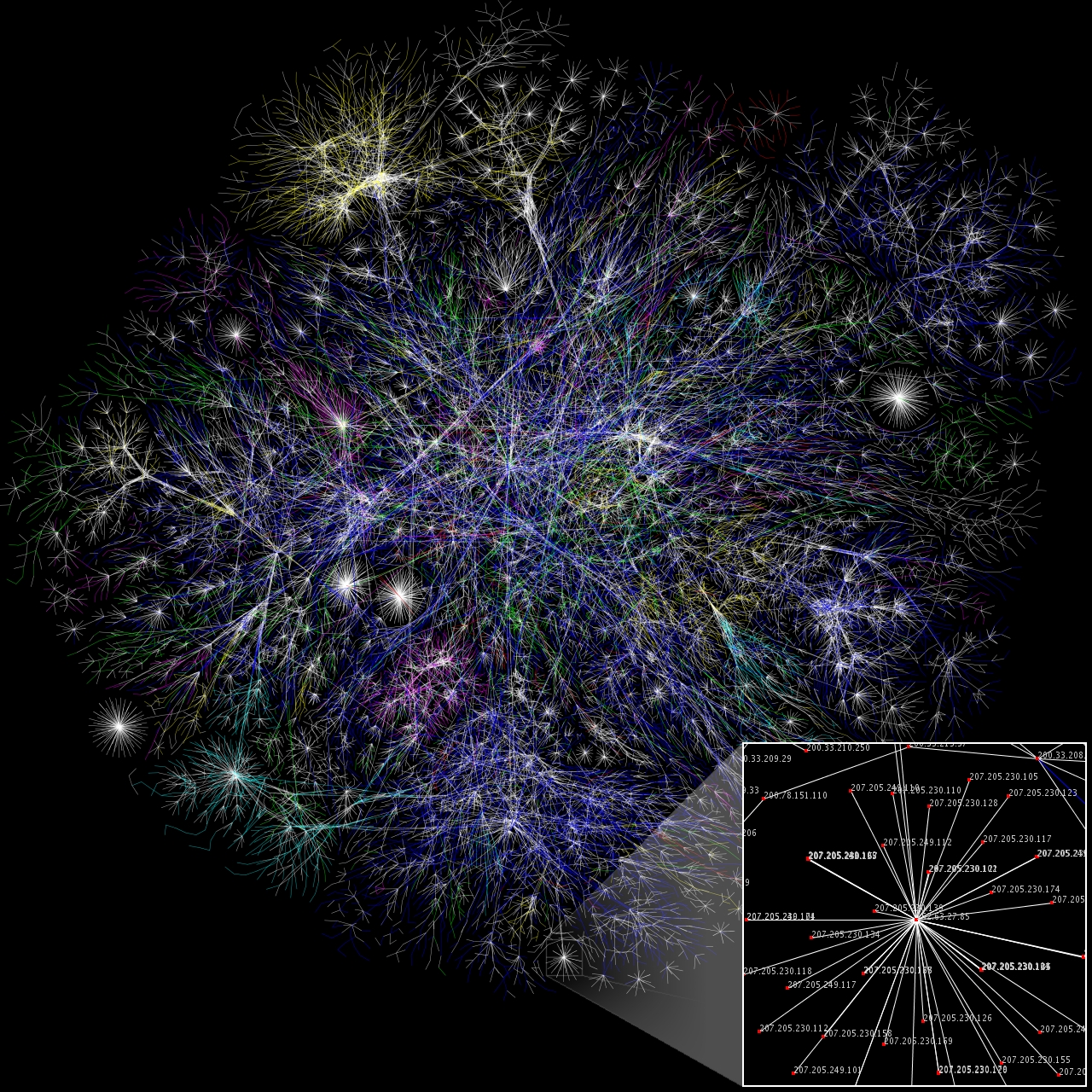
Centrality measures assign numerical values or rankings to nodes within a network based on their position and connectivity. These measures aim to identify the most critical or influential elements, whether they are individuals in a social network, crucial internet routers, key nodes in transportation systems, or potential super-spreaders of disease transmission. The concept of centrality measures originated in sociology, and the CentralityZoo is an online repository cataloging centrality metrics. Understanding centrality is vital for dissecting network structures, predicting information flow, and intervening effectively in complex systems, from biological networks to global communication grids.
🎵 Origins & History
The genesis of centrality measures can be traced back to early 20th-century sociology. Early measures focused on simple counts of connections, like degree centrality, which quantifies the number of direct ties a node possesses. This foundational work laid the groundwork for a more sophisticated understanding of influence and importance within social systems, distinguishing between mere popularity and structural significance. The field has since expanded dramatically, with researchers like Stanford University's Harrison White making contributions to the formalization of network analysis and centrality.
⚙️ How It Works
At their core, centrality measures analyze the structure of a graph (a collection of nodes connected by edges) to determine a node's importance. Degree centrality simply counts direct connections, identifying nodes that are highly connected. Betweenness centrality measures how often a node lies on the shortest path between other pairs of nodes, highlighting bridges or bottlenecks in the network. Closeness centrality assesses how close a node is to all other nodes, indicating efficiency in information dissemination. Eigenvector centrality (and its variant, PageRank) considers the influence of a node's neighbors, giving more weight to nodes connected to other important nodes. Each measure offers a different lens through which to view a node's structural role, and the choice of measure depends heavily on the specific question being asked about the network.
📊 Key Facts & Numbers
The sheer volume of centrality measures is staggering, with the CentralityZoo cataloging a vast number of distinct metrics. Pagerank, famously used by Google to rank web pages, assigns scores that can range from 0 to 1, with the most authoritative pages receiving scores close to 1. The computational complexity of calculating these measures can vary significantly, making efficient algorithms crucial for large-scale networks.
👥 Key People & Organizations
Key figures in the development and popularization of centrality measures include Jacob L. Moreno, considered the father of sociometry, who introduced early concepts of social centrality. Stanford University professor Harrison White made significant contributions to the formalization of network analysis and centrality. Sergey Brin and Larry Page, the founders of Google, developed the PageRank algorithm and used it to rank web pages. Organizations like the International Network for Social Network Analysis (INSNA) foster research and collaboration in this field.
🌍 Cultural Impact & Influence
Centrality measures have profoundly shaped how we understand influence and structure across diverse domains. In social media, platforms like Twitter and Facebook implicitly or explicitly use centrality concepts to recommend connections, surface trending topics, and identify influential users. The study of disease outbreaks, such as the COVID-19 pandemic, heavily relies on centrality to pinpoint individuals most likely to spread the virus, guiding public health interventions. In urban-planning, identifying central nodes in transportation networks can optimize traffic flow and infrastructure development. The concept has permeated computer-science, biology, and economics, providing a universal language for discussing network importance.
⚡ Current State & Latest Developments
The ongoing development of centrality measures is driven by the increasing complexity and scale of modern networks, particularly in areas like big-data and artificial-intelligence. Researchers are continuously developing new metrics to capture more nuanced aspects of influence, such as dynamic centrality (how centrality changes over time) and multiplex centrality (importance across multiple network layers, e.g., social and professional ties). The integration of machine learning techniques is also enabling more sophisticated centrality prediction and analysis, moving beyond static graph structures. Furthermore, there's a growing focus on developing computationally efficient algorithms for these advanced measures, essential for analyzing networks with billions of nodes, such as the global Internet infrastructure or vast biological interaction networks.
🤔 Controversies & Debates
A significant debate revolves around the "best" centrality measure, as no single metric universally captures importance. The choice is context-dependent: degree centrality might identify a celebrity with many followers but little direct impact on specific conversations, while betweenness centrality might highlight a gatekeeper who controls information flow but isn't the most popular. Many centrality measures assume a static network, failing to account for the dynamic nature of relationships and influence. The potential for manipulation, where individuals or entities might artificially inflate their centrality scores, is another concern, particularly in online environments. Furthermore, the interpretation of centrality scores can be subjective, leading to differing conclusions even with the same data.
🔮 Future Outlook & Predictions
The future of centrality measures is likely to involve greater integration with other analytical techniques, particularly machine-learning and deep-learning. Expect to see more sophisticated models that can predict future centrality shifts, identify emergent influencers, and optimize network interventions in real-time. The development of personalized centrality metrics, tailored to individual user behavior and network context, is also on the horizon. As networks become more complex and interconnected, there will be an increasing demand for measures that can handle multi-layered, dynamic, and heterogeneous data. The challenge will be to maintain interpretability and computational feasibility as these measures become more intricate, potentially leading to new theoretical frameworks for understanding network dynamics.
💡 Practical Applications
Centrality measures find practical application across a vast array of fields. In marketing, they help identify key opinion leaders and influencers for targeted campaigns. In public-health, they are crucial for modeling and controlling the spread of infectious diseases by identifying super-spreaders. Financial-modeling uses centrality to assess systemic risk by identifying systemically important financial institutions (SIFIs). In recommendation-systems, centrality can help surface relevant content or connections. Cybersecurity employs centrality to detect critical nodes whose compromise could cripple a network. Even in linguistics, centrality can be used to analyze the importance of words or concepts within a corpus of text.
Key Facts
- Category
- science
- Type
- topic