
Contents
Overview
The geological origins of coastal marshes are intrinsically tied to the Holocene epoch. As glaciers retreated and sea levels began to rise, sediments deposited by rivers and ocean currents accumulated in low-lying intertidal zones, creating the foundational substrate for marsh development. Early human societies recognized the value of these productive areas for fishing, fowling, and later, for agriculture after drainage efforts began in earnest during the Roman era. Drainage efforts intensified in the Middle Ages. The concept of 'marshland' as a distinct ecological and agricultural zone solidified during the Dutch Golden Age with extensive land reclamation projects, such as the creation of the polders in the Netherlands, demonstrating an early, albeit often destructive, form of human interaction with these environments. The scientific study of marshes gained momentum in the late 19th and early 20th centuries, with figures like Eugene Odum later pioneering the field of estuarine ecology in the mid-20th century, formalizing our understanding of their complex biogeochemical cycles.
⚙️ How It Works
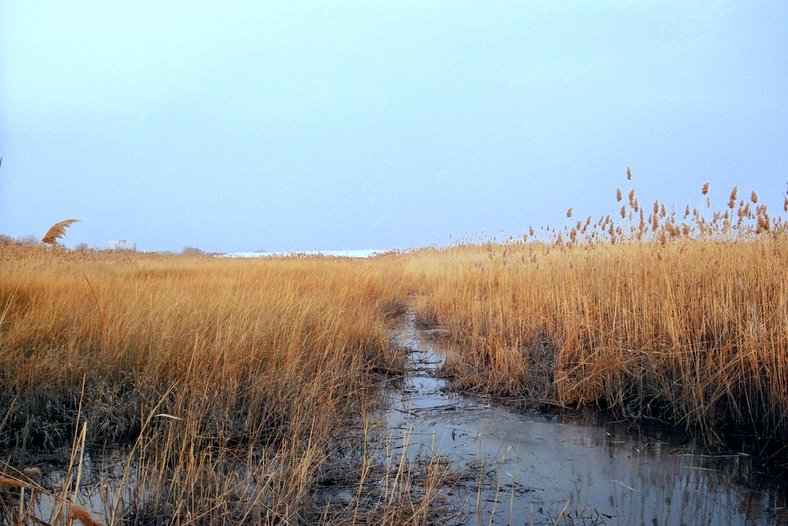
Coastal marshes function as a complex, interconnected system driven by tidal inundation and freshwater input. The ebb and flow of tides deliver nutrients and remove waste products, while also influencing salinity gradients that dictate plant and animal communities. Halophytic vegetation, such as smooth cordgrass and glasswort, forms the foundation, trapping sediment and stabilizing the marsh platform. These plants photosynthesize, converting solar energy into biomass, which then fuels a rich food web. Detritus from decaying plant matter forms the base of the food chain, supporting a vast array of invertebrates like crabs and mollusks, which in turn feed fish, amphibians, and numerous bird species. The porous soil structure and dense vegetation also act as natural filters, removing pollutants and excess nutrients from water before it reaches the open ocean, a process vital for maintaining water quality in adjacent marine ecosystems.
📊 Key Facts & Numbers
Globally, coastal marshes represent a significant portion of the planet's wetland ecosystems. In the United States alone, tidal marshes are estimated to cover over 10 million acres. Louisiana possesses the largest expanse of coastal wetlands in the country, accounting for approximately 40% of the total US coastal marsh area. These ecosystems can sequester carbon at rates up to 50 times higher than tropical rainforests, playing a crucial role in carbon sequestration and climate change mitigation. The economic value of coastal marshes is substantial; for instance, the ecosystem services provided by Chesapeake Bay marshes, including storm protection and water filtration, are valued at billions of dollars annually. However, between 1998 and 2010, the United States lost an average of 1,600 acres of coastal wetlands per year, highlighting the scale of ongoing degradation.
👥 Key People & Organizations
Key figures in the study and conservation of coastal marshes include Eugene Odum, often called the 'father of modern ecology,' whose foundational work on estuarine ecology in the 1960s illuminated the productivity of these systems. Robert Costanza, an ecological economist, has been instrumental in quantifying the economic value of ecosystem services, including those provided by marshes. Organizations like the The Nature Conservancy and the National Audubon Society have been at the forefront of marsh conservation efforts worldwide, advocating for policy changes and implementing restoration projects. Governmental bodies such as the U.S. Environmental Protection Agency (EPA) and NOAA's National Ocean Service play critical roles in research, monitoring, and regulatory oversight of coastal marsh habitats. The Ramsar Convention on Wetlands is an international treaty for the conservation and wise use of wetlands, with many coastal marshes designated as Ramsar sites.
🌍 Cultural Impact & Influence
Coastal marshes have long been integral to human cultures, providing sustenance and shaping settlement patterns. Indigenous peoples worldwide developed deep knowledge of marsh ecosystems, utilizing them for fishing, hunting, and gathering medicinal plants. The iconic imagery of marshlands has inspired artists and writers, often evoking themes of wildness, transition, and the ephemeral nature of the coast. For example, the marshlands depicted in J.M.W. Turner's paintings capture their atmospheric and dynamic qualities. In literature, marshes frequently serve as symbolic settings, representing liminal spaces or the untamed aspects of nature, as seen in works like Charles Dickens's Great Expectations. The cultural significance extends to recreational activities, with birdwatching, kayaking, and fishing in marsh environments being popular pursuits for millions, contributing to local economies and fostering a connection with nature.
⚡ Current State & Latest Developments
The current state of coastal marshes is precarious, marked by accelerating rates of loss due to anthropogenic pressures and climate change. Sea-level rise, driven by global warming, is a primary threat, inundating marshes faster than they can accrete sediment and migrate inland, particularly where coastal development creates barriers. Pollution from agricultural runoff (e.g., pesticides and fertilizers) and industrial discharge degrades water quality and harms marsh biota. Coastal development, including urbanization and infrastructure projects, directly destroys marsh habitat or fragments it, impeding ecological processes. In response, there's a growing focus on coastal resilience strategies, including large-scale marsh restoration projects using techniques like sediment augmentation and living shoreline approaches, as seen in ongoing efforts in the Mississippi River Delta and the San Francisco Bay Area.
🤔 Controversies & Debates
The management and conservation of coastal marshes are fraught with controversy, primarily revolving around competing land-use interests and the efficacy of restoration efforts. Debates persist regarding the balance between protecting natural marsh habitats and accommodating coastal development, including housing, industry, and port infrastructure. The effectiveness and long-term sustainability of various restoration techniques are also subjects of scientific and political contention; some argue that engineered solutions may not fully replicate natural marsh functions or may be prohibitively expensive. Furthermore, the designation of land for marsh conservation can lead to conflicts with existing economic activities, such as aquaculture or oil and gas exploration, creating tension between environmental protection and economic development. The role of geoengineering in mitigating sea-level rise impacts on marshes, while speculative, also presents ethical and practical debates.
🔮 Future Outlook & Predictions
The future of coastal marshes hinges on our ability to mitigate climate change and adapt management strategies. Projections indicate that without significant intervention, a substantial portion of existing coastal marshes could be lost by the end of the century due to sea-level rise, particularly in low-lying deltas like the Mekong Delta and the Nile Delta. Future conservation efforts will likely involve more ambitious restoration projects, including the strategic removal of coastal barriers to allow marsh migration inland, as explored in managed realignment initiatives. Advances in remote sensing and GIS technology will enable more precise monitoring and adaptive management. There is also growing interest in 'blue carbon' initiatives,
Key Facts
- Category
- nature
- Type
- topic