
Contents
Overview
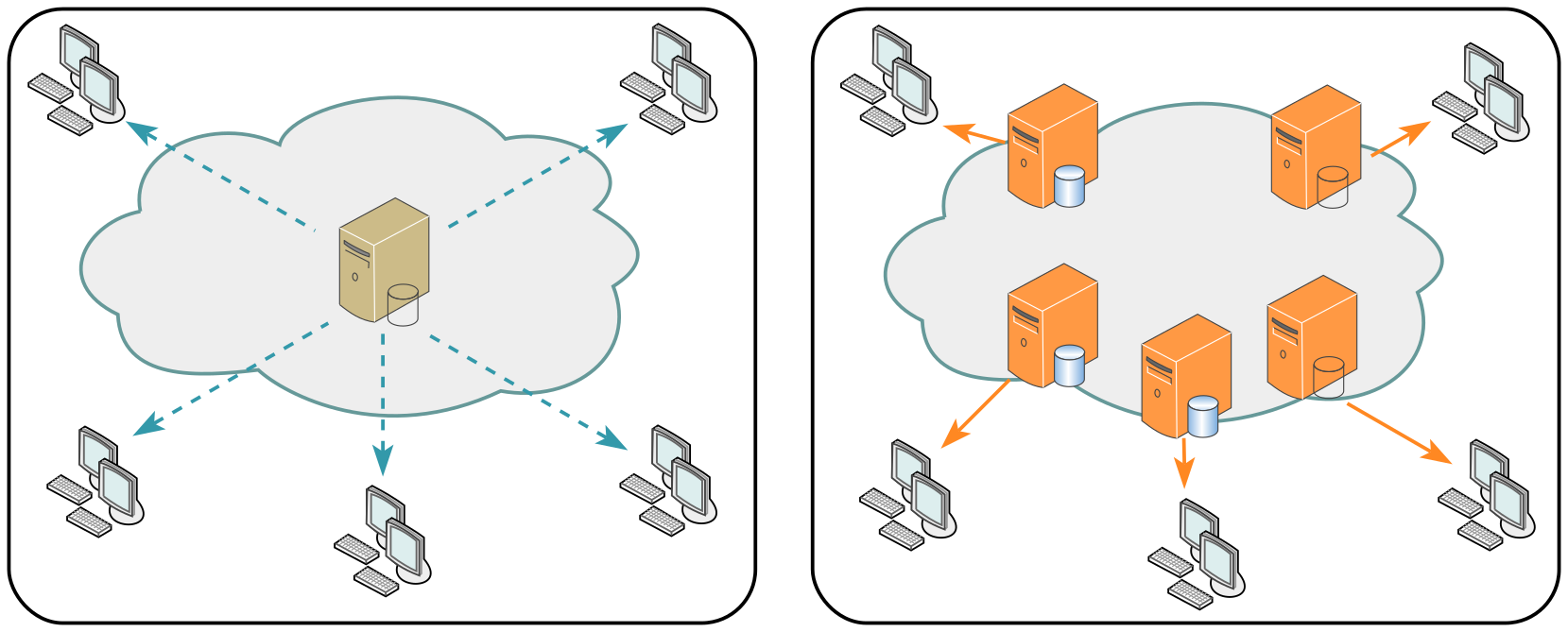
Content delivery networks (CDNs) are geographically distributed networks of proxy servers and data centers that provide high availability and performance by reducing the distance between users and the content they request. CDNs have become a crucial layer in the internet ecosystem, serving a large portion of online content, including text, images, videos, and applications. Companies like Akamai and Cloudflare are leading players in the CDN market, with Amazon Web Services and Google Cloud Platform also offering CDN services.
🌐 Origins & History
The concept of content delivery networks (CDNs) emerged in the late 1990s, as the internet was becoming increasingly congested and slow. Cisco Systems and IBM were among the first companies to develop CDN technologies, aiming to alleviate the performance bottlenecks of the internet. Since then, CDNs have grown to serve a large portion of online content, including text, images, videos, and applications, with companies like Netflix and YouTube relying heavily on CDNs to deliver their content to users worldwide.
⚙️ How It Works
A CDN works by caching content at multiple locations around the world, reducing the distance between users and the content they request. This is achieved through a network of proxy servers and data centers, which are typically hosted in Internet Exchange Points (IXPs) and data centers owned by Equinix and Digital Realty. When a user requests content, the CDN redirects the request to the nearest edge server, which then delivers the content from its cache, reducing latency and improving performance. Verizon Digital Media Services and Limelight Networks are examples of CDN providers that offer such services.
📈 Market & Players
The CDN market is highly competitive, with key players like Akamai, Cloudflare, and Amazon Web Services offering a range of services, from basic caching to advanced security and analytics features. Google Cloud Platform and Microsoft Azure also offer CDN services, leveraging their global infrastructure and expertise in cloud computing. As the demand for online content continues to grow, the CDN market is expected to expand, with new players emerging and existing ones innovating to stay ahead of the curve, such as Fastly and Section.io.
🔮 Future & Trends
As the internet continues to evolve, CDNs will play an increasingly important role in ensuring that online content is delivered quickly, securely, and reliably. With the rise of edge computing and 5G networks, CDNs will need to adapt to new technologies and architectures, such as containerization and serverless computing, to remain relevant. Companies like VMware and Red Hat are already exploring the potential of CDNs in these emerging areas.
Key Facts
- Year
- 1998
- Origin
- United States
- Category
- technology
- Type
- concept
Frequently Asked Questions
What is a content delivery network?
A content delivery network (CDN) is a geographically distributed network of proxy servers and data centers that cache content at multiple locations to reduce latency and improve performance. Companies like Akamai and Cloudflare offer CDN services to deliver content quickly and securely.
How do CDNs work?
CDNs work by caching content at multiple locations around the world, reducing the distance between users and the content they request. This is achieved through a network of proxy servers and data centers, which are typically hosted in Internet Exchange Points (IXPs) and data centers.
What are the benefits of using a CDN?
The benefits of using a CDN include improved performance, reduced latency, and increased security. CDNs can also help reduce the load on origin servers, improving overall website performance and user experience. Companies like Netflix and YouTube rely heavily on CDNs to deliver their content to users worldwide.
What are the key players in the CDN market?
The key players in the CDN market include Akamai, Cloudflare, Amazon Web Services, and Google Cloud Platform. These companies offer a range of CDN services, from basic caching to advanced security and analytics features.
What is the future of CDNs?
The future of CDNs is closely tied to the evolution of the internet and emerging technologies like edge computing and 5G networks. As the demand for online content continues to grow, CDNs will need to adapt to new technologies and architectures to remain relevant. Companies like Fastly and Section.io are already exploring the potential of CDNs in these emerging areas.