
Contents
Overview
The historical roots of attempting to 'cure' non-normative sexualities and gender expressions can be traced back to early psychiatric and religious doctrines that viewed such identities as pathologies. The mid-20th century saw the rise of 'reparative therapy' or 'sexual orientation change efforts' (SOCE), often promoted by religious organizations like the Exodus International and therapists like Joseph Nicolosi. The scientific and medical communities began to shift away from pathologizing homosexuality, notably with the American Psychiatric Association's 1973 decision to remove homosexuality from its Diagnostic and Statistical Manual of Mental Disorders (DSM). This pivotal moment, followed by the World Health Organization's declassification in 1990, laid the groundwork for challenging these practices and advocating for bans. Early legislative efforts gained momentum in the late 20th and early 21st centuries, driven by advocacy groups and survivors of these harmful interventions.
⚙️ How It Works
A conversion therapy ban functions by legally prohibiting licensed mental health professionals and, in some jurisdictions, unlicensed practitioners, from engaging in practices designed to change an individual's sexual orientation or gender identity. These bans typically define conversion therapy broadly to encompass a range of techniques, including talk therapy, hypnosis, aversion therapy (e.g., using nausea-inducing drugs or electric shocks), and spiritual counseling aimed at altering identity. Crucially, bans often include specific protections for minors, recognizing their heightened vulnerability to coercion and abuse. Enforcement mechanisms vary, often involving professional licensing board sanctions, fines, and in some cases, criminal penalties. The effectiveness of these bans hinges on clear definitions, robust enforcement, and public awareness campaigns to educate individuals about their rights and the dangers of conversion practices, as championed by organizations like The Trevor Project.
📊 Key Facts & Numbers
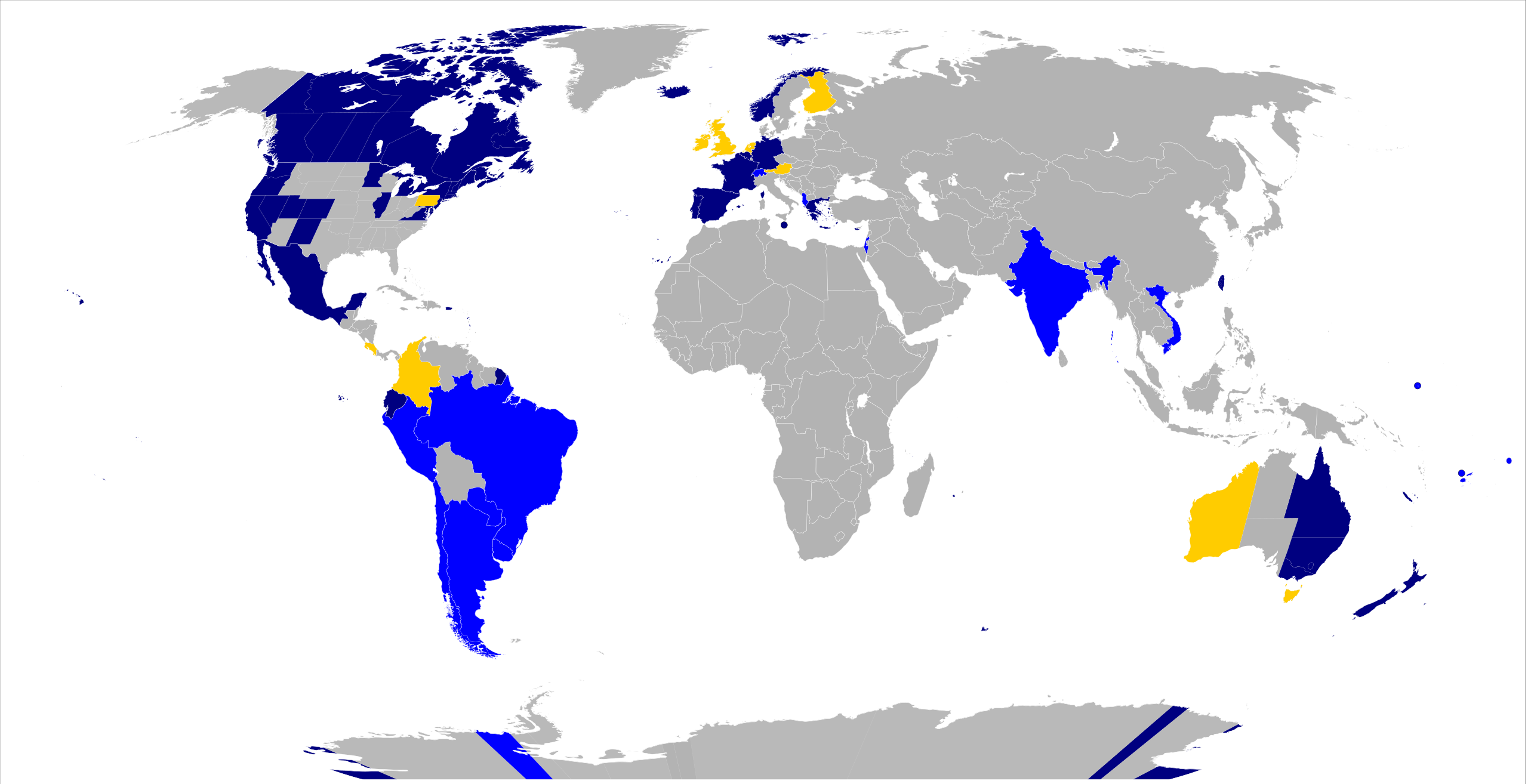
Globally, over 70 jurisdictions have enacted some form of conversion therapy ban, with the United States leading in sub-national legislation, boasting bans in over 20 states and numerous municipalities. For instance, California became the first U.S. state to ban conversion therapy for minors in 2012. The European Union is moving closer to a bloc-wide ban, with several member states like Germany and France already having national prohibitions. In the United Kingdom, legislative efforts have faced delays, but the government has pledged to implement a ban, with estimates suggesting that up to 10,000 individuals annually in the UK may still be subjected to these practices. The Human Rights Campaign reports that at least 160,000 LGBTQ+ individuals in the U.S. have undergone conversion therapy, with a significant percentage being minors. The cost of conversion therapy can range from hundreds to thousands of dollars per session, often paid out-of-pocket by desperate families.
👥 Key People & Organizations
Key figures and organizations have been instrumental in the movement to ban conversion therapy. Alan Turing Institute scholar Jacob Corbin Hames has contributed research on the psychological impacts. Advocacy groups like The Trevor Project, Human Rights Campaign, GLSEN, and PFLAG have been at the forefront of lobbying efforts, public awareness campaigns, and providing support to survivors. Survivors themselves, such as Jason Bellamy and Carissa Ellis, have bravely shared their experiences, providing crucial testimony that has fueled legislative change. Professional organizations, including the American Medical Association, the American Psychological Association, and the National Association of Social Workers, have issued statements denouncing conversion therapy and supporting bans. Bob Unruh of WorldNetDaily has been a vocal critic of these bans, framing them as censorship.
🌍 Cultural Impact & Influence
The push for conversion therapy bans has had a profound cultural impact, shifting the public discourse around LGBTQ+ identities from one of pathology to one of inherent validity and human rights. These bans have legitimized the experiences of LGBTQ+ individuals, signaling that their identities are not to be 'cured' or changed. Culturally, the narrative has moved from the secretive, often religiously-motivated 'ex-gay' ministries like Exodus International to mainstream acceptance of diverse sexualities and gender expressions. The visibility of survivors' stories in media, such as documentaries and news reports, has been crucial in building public empathy and support for legislative action. Furthermore, the debate around bans has spurred broader conversations about the ethics of mental health practices and the role of religion in public policy, influencing discussions on topics like religious freedom versus civil rights. The Attitude magazine has covered the EU's progress towards a ban, highlighting its cultural significance.
⚡ Current State & Latest Developments
As of 2024, the movement for conversion therapy bans continues to gain momentum globally. While many countries and sub-national entities have enacted legislation, enforcement remains a critical challenge. In the United States, efforts are underway to pass federal legislation, such as the Bipartisan Safe Schools Act, which would prohibit conversion therapy for minors nationwide. In the United Kingdom, despite government pledges, the implementation of a ban has faced parliamentary hurdles and debates over its scope, particularly concerning religious exemptions. Canada has strengthened its federal ban, making it a criminal offense to promote or provide conversion therapy. Meanwhile, organizations like GLAAD continue to monitor legislative developments and advocate for comprehensive protections. The ongoing legal challenges and debates, such as those reported by Religion News Service, indicate that the fight for universal prohibition is far from over.
🤔 Controversies & Debates
The primary controversy surrounding conversion therapy bans centers on the tension between LGBTQ+ rights and claims of religious freedom or parental rights. Opponents, often aligned with conservative religious groups like Family Research Council, argue that bans infringe upon the rights of individuals to seek counseling aligned with their religious beliefs and the rights of parents to guide their children's upbringing. They sometimes frame these bans as 'censorship' of legitimate therapeutic or religious discourse, as seen in critiques from WorldNetDaily. Proponents, conversely, emphasize the overwhelming scientific consensus that conversion therapy is ineffective and deeply harmful, constituting a form of abuse, particularly when performed on minors. Debates also arise over the precise definition of conversion therapy, with concerns that overly broad language could inadvertently criminalize legitimate counseling or spiritual guidance that does not aim to change identity. The American Bar Association has supported bans, highlighting the ethical and legal implications.
🔮 Future Outlook & Predictions
The future outlook for conversion therapy bans points towards continued legislative expansion and increased enforcement, though significant challenges remain. Experts predict a growing number of countries and sub-national jurisdictions will enact prohibitions, driven by international human rights standards and advocacy from LGBTQ+ organizations. The focus is likely to shift towards ensuring robust enforcement mechanisms and addressing loopholes, particularly those related to religious exemptions. There is also a growing movement to hold practitioners and institutions accountable for past harms. Furthermore, as
Key Facts
- Category
- movements
- Type
- topic