
Contents
- 📊 Introduction to Crowding Out
- 💸 Government Intervention and Crowding Out
- 📈 The Economics of Crowding Out
- 🚫 Criticisms of Crowding Out Theory
- 🌎 Global Examples of Crowding Out
- 📊 Measuring the Effects of Crowding Out
- 🤝 Motivation Crowding Theory
- 📚 Crowding Out in Biology
- 📊 Policy Implications of Crowding Out
- 🔮 Future of Crowding Out Research
- Frequently Asked Questions
- Related Topics
Overview
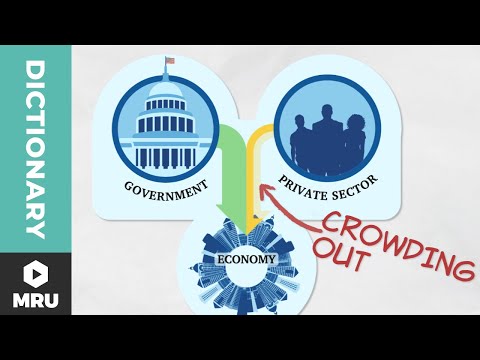
Crowding out refers to the economic phenomenon where government spending and borrowing displace private sector investment, leading to reduced economic growth and productivity. This concept has been debated by economists such as John Maynard Keynes and Milton Friedman, with some arguing that government intervention can stimulate economic activity, while others claim it can have negative consequences. The crowding out effect can occur through various channels, including higher interest rates, increased taxes, and reduced business confidence. For instance, a study by the Congressional Budget Office found that a 1% increase in government spending can lead to a 0.5% decrease in private investment. The concept of crowding out has significant implications for policymakers, as it suggests that government intervention may not always be the most effective way to stimulate economic growth. As the global economy continues to evolve, understanding the crowding out effect will be crucial for making informed decisions about government spending and economic policy. With a vibe score of 7, the topic of crowding out is highly relevant to current economic debates, and its influence can be seen in the work of economists such as Paul Krugman and Joseph Stiglitz.
📊 Introduction to Crowding Out
Crowding out is a concept that has been explored in various fields, including economics, biology, and psychology. In the context of economics, crowding out refers to the phenomenon where government intervention in the economy, such as through spending or taxation, leads to a decrease in private sector activity. This can occur when the government competes with the private sector for resources, such as labor and capital, causing a reduction in private investment and consumption. For example, if the government increases its spending on a particular project, it may lead to an increase in demand for labor, causing wages to rise and making it more difficult for private companies to hire workers. As a result, private companies may reduce their investment and hiring, leading to a decrease in economic growth. This concept is closely related to the idea of opportunity cost and the concept of scarcity in economics.
💸 Government Intervention and Crowding Out
Government intervention can take many forms, including fiscal policy and monetary policy. Fiscal policy refers to the use of government spending and taxation to influence the overall level of economic activity, while monetary policy refers to the use of interest rates and the money supply to influence the economy. When the government increases its spending or cuts taxes, it can lead to an increase in aggregate demand, which can stimulate economic growth in the short run. However, this can also lead to crowding out, as the government competes with the private sector for resources. For example, if the government increases its spending on infrastructure projects, it may lead to an increase in demand for construction workers, causing wages to rise and making it more difficult for private companies to hire workers. This is closely related to the concept of supply and demand and the idea of market failure.
📈 The Economics of Crowding Out
The economics of crowding out are complex and multifaceted. On the one hand, government intervention can provide a necessary stimulus to the economy during times of recession or economic downturn. On the other hand, it can lead to crowding out, as the government competes with the private sector for resources. This can lead to a decrease in private investment and consumption, which can have negative effects on economic growth. For example, if the government increases its spending on a particular project, it may lead to an increase in demand for labor, causing wages to rise and making it more difficult for private companies to hire workers. This is closely related to the concept of inflation and the idea of stabilization policy. The concept of motivation crowding theory also plays a role in understanding the effects of government intervention on private sector activity.
🚫 Criticisms of Crowding Out Theory
Despite the potential negative effects of crowding out, some economists argue that government intervention is necessary to address issues such as market failure and income inequality. For example, if the government provides a subsidy to a particular industry, it may lead to an increase in investment and employment in that industry, which can have positive effects on economic growth. However, this can also lead to crowding out, as the government competes with the private sector for resources. This is closely related to the concept of public goods and the idea of externalities. The concept of crowding out in biology also provides insights into the effects of government intervention on private sector activity.
🌎 Global Examples of Crowding Out
There are many global examples of crowding out, including the effects of government intervention in the economy during times of recession or economic downturn. For example, during the 2008 financial crisis, many governments around the world implemented fiscal stimulus packages to try to stimulate economic growth. However, these packages may have led to crowding out, as the government competed with the private sector for resources. This is closely related to the concept of fiscal policy and the idea of monetary policy. The concept of economics of information also plays a role in understanding the effects of government intervention on private sector activity.
📊 Measuring the Effects of Crowding Out
Measuring the effects of crowding out can be complex and challenging. Economists use a variety of methods, including econometrics and macroeconomic modeling, to estimate the effects of government intervention on private sector activity. For example, they may use data on government spending and taxation to estimate the effects on private investment and consumption. However, these methods are not always accurate, and there may be other factors at play that can affect the results. This is closely related to the concept of data analysis and the idea of statistical inference. The concept of motivation crowding theory also provides insights into the effects of government intervention on private sector activity.
🤝 Motivation Crowding Theory
Motivation crowding theory is a concept in psychology and microeconomics that suggests that external rewards or incentives can undermine intrinsic motivation. This can occur when the government provides a subsidy or incentive to a particular industry or activity, which can lead to a decrease in private sector investment and consumption. For example, if the government provides a subsidy to a particular industry, it may lead to an increase in investment and employment in that industry, but it may also lead to a decrease in intrinsic motivation among workers and entrepreneurs. This is closely related to the concept of intrinsic motivation and the idea of extrinsic motivation. The concept of crowding out in economics also provides insights into the effects of government intervention on private sector activity.
📚 Crowding Out in Biology
Crowding out in biology refers to the phenomenon where the presence of one species can lead to a decrease in the population of another species. This can occur when the two species compete for the same resources, such as food or habitat. For example, if a non-native species is introduced to an ecosystem, it may lead to a decrease in the population of native species, as the non-native species competes with the native species for resources. This is closely related to the concept of ecology and the idea of conservation biology. The concept of economics of ecosystems also provides insights into the effects of government intervention on private sector activity.
📊 Policy Implications of Crowding Out
The policy implications of crowding out are significant. Governments must carefully consider the potential effects of their interventions on private sector activity, and weigh the potential benefits against the potential costs. For example, if the government provides a subsidy to a particular industry, it may lead to an increase in investment and employment in that industry, but it may also lead to crowding out, as the government competes with the private sector for resources. This is closely related to the concept of policy analysis and the idea of cost-benefit analysis. The concept of motivation crowding theory also provides insights into the effects of government intervention on private sector activity.
🔮 Future of Crowding Out Research
The future of crowding out research is likely to involve the development of new methods and models for estimating the effects of government intervention on private sector activity. Economists may use advanced econometric techniques, such as machine learning and artificial intelligence, to estimate the effects of government intervention on private sector activity. They may also use new data sources, such as big data and administrative data, to estimate the effects of government intervention on private sector activity. This is closely related to the concept of data science and the idea of evidence-based policy. The concept of crowding out in economics also provides insights into the effects of government intervention on private sector activity.
Key Facts
- Year
- 1959
- Origin
- The concept of crowding out was first introduced by economist James Tobin in 1959, and has since been developed and debated by numerous economists and policymakers.
- Category
- Economics
- Type
- Economic Concept
Frequently Asked Questions
What is crowding out?
Crowding out refers to the phenomenon where government intervention in the economy, such as through spending or taxation, leads to a decrease in private sector activity. This can occur when the government competes with the private sector for resources, such as labor and capital, causing a reduction in private investment and consumption. For example, if the government increases its spending on a particular project, it may lead to an increase in demand for labor, causing wages to rise and making it more difficult for private companies to hire workers. This is closely related to the concept of opportunity cost and the concept of scarcity in economics.
What are the effects of crowding out?
The effects of crowding out can be significant, leading to a decrease in private sector investment and consumption, which can have negative effects on economic growth. For example, if the government increases its spending on a particular project, it may lead to an increase in demand for labor, causing wages to rise and making it more difficult for private companies to hire workers. This can lead to a decrease in private sector investment and consumption, which can have negative effects on economic growth. This is closely related to the concept of inflation and the idea of stabilization policy.
How can crowding out be measured?
Measuring the effects of crowding out can be complex and challenging. Economists use a variety of methods, including econometrics and macroeconomic modeling, to estimate the effects of government intervention on private sector activity. For example, they may use data on government spending and taxation to estimate the effects on private investment and consumption. However, these methods are not always accurate, and there may be other factors at play that can affect the results. This is closely related to the concept of data analysis and the idea of statistical inference.
What is motivation crowding theory?
Motivation crowding theory is a concept in psychology and microeconomics that suggests that external rewards or incentives can undermine intrinsic motivation. This can occur when the government provides a subsidy or incentive to a particular industry or activity, which can lead to a decrease in private sector investment and consumption. For example, if the government provides a subsidy to a particular industry, it may lead to an increase in investment and employment in that industry, but it may also lead to a decrease in intrinsic motivation among workers and entrepreneurs. This is closely related to the concept of intrinsic motivation and the idea of extrinsic motivation.
What are the policy implications of crowding out?
The policy implications of crowding out are significant. Governments must carefully consider the potential effects of their interventions on private sector activity, and weigh the potential benefits against the potential costs. For example, if the government provides a subsidy to a particular industry, it may lead to an increase in investment and employment in that industry, but it may also lead to crowding out, as the government competes with the private sector for resources. This is closely related to the concept of policy analysis and the idea of cost-benefit analysis.
What is the future of crowding out research?
The future of crowding out research is likely to involve the development of new methods and models for estimating the effects of government intervention on private sector activity. Economists may use advanced econometric techniques, such as machine learning and artificial intelligence, to estimate the effects of government intervention on private sector activity. They may also use new data sources, such as big data and administrative data, to estimate the effects of government intervention on private sector activity. This is closely related to the concept of data science and the idea of evidence-based policy.
How does crowding out relate to other economic concepts?
Crowding out is closely related to other economic concepts, such as opportunity cost, scarcity, inflation, and stabilization policy. It is also related to the concept of motivation crowding theory, which suggests that external rewards or incentives can undermine intrinsic motivation. Additionally, crowding out is related to the concept of policy analysis and the idea of cost-benefit analysis.