
Contents
Overview
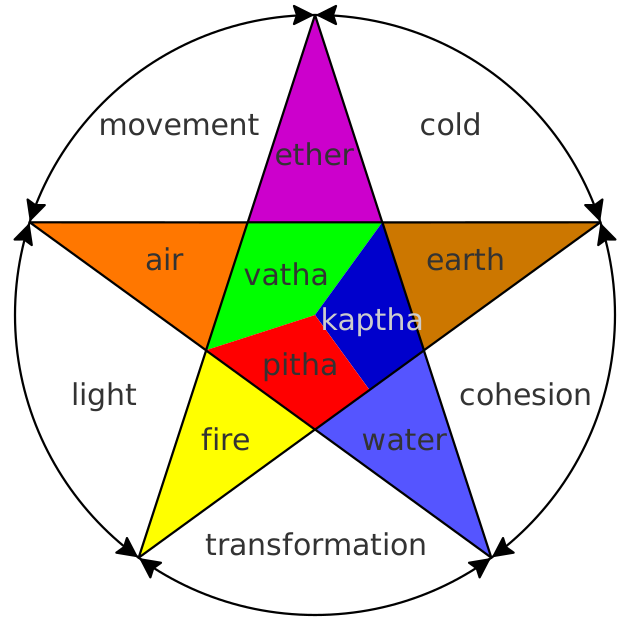
The concept of doshas traces its roots back to ancient Indian Vedic traditions, with detailed expositions found in foundational Ayurvedic texts like the Charaka Samhita (estimated between 200 BCE and 200 CE) and the Sushruta Samhita (also estimated around the same period). These texts describe the universe and the human body as being composed of five fundamental elements: Pancha Mahabhuta (ether, air, fire, water, earth). The interaction of these elements gives rise to the three doshas: Vata (ether + air), Pitta (fire + water), and Kapha (water + earth). Early Ayurvedic physicians, such as Charaka and Sushruta, meticulously documented the qualities, functions, and signs of balance and imbalance for each dosha, establishing a framework for understanding individual constitutions and disease pathology that has persisted for millennia.
⚙️ How It Works
Each dosha embodies distinct qualities and governs specific physiological and psychological processes. Vata, characterized by dryness, lightness, and movement, controls all bodily motion, including respiration, circulation, and nerve impulses. Pitta, embodying heat, intensity, and transformation, governs metabolism, digestion, and intellectual processes. Kapha, with its qualities of coolness, stability, and lubrication, manages structure, lubrication, and immunity. Ayurvedic treatments, including diet, herbs, and lifestyle adjustments, aim to pacify aggravated doshas and restore balance.
📊 Key Facts & Numbers
Ayurveda posits that the human body is a microcosm of the universe, governed by the interplay of the five elements and the three doshas. Vata constitutes approximately 70% of the body's functions, Pitta around 20%, and Kapha about 10%, though these proportions are conceptual and vary based on individual constitution. Pitta imbalances are associated with inflammatory conditions and digestive issues, while Kapha imbalances can manifest as congestion, lethargy, and metabolic disorders.
👥 Key People & Organizations
While Ayurveda is an ancient system, key figures in its modern revival and global dissemination include Swami Vivekananda, who introduced Indian philosophy, including Ayurvedic principles, to the West in the late 19th century. Later, physicians like Vasant Lad and Deepak Chopra played significant roles in popularizing Ayurvedic concepts, including the doshas, in Western countries through their books and institutions such as the Ayurvedic Institute in Albuquerque, New Mexico, and the Chopra Foundation. Organizations like the World Health Organization (WHO) have recognized Ayurveda as a traditional medicine system, though its integration into mainstream Western healthcare remains a complex process involving various regulatory bodies and research institutions worldwide.
🌍 Cultural Impact & Influence
The concept of doshas has influenced dietary trends, yoga practices, and alternative health approaches. Millions worldwide now consult Ayurvedic practitioners to understand their unique constitution and receive personalized recommendations based on Vata, Pitta, and Kapha. The popularity of terms like 'Vata-balancing diet' or 'Pitta-pacifying lifestyle' reflects the widespread adoption of these Ayurvedic principles. This cultural resonance has led to a significant global market for Ayurvedic products and services, estimated to reach billions of dollars annually, with countries like India, the United States, and Germany being major consumers. The influence extends to fields like naturopathy and Traditional Chinese Medicine, which share some conceptual parallels in understanding bodily humors and balance.
⚡ Current State & Latest Developments
In 2024, the global Ayurvedic market, heavily driven by dosha-based wellness, is experiencing robust growth. There's a growing trend towards evidence-based Ayurveda, with increased research funding from governments and private institutions aimed at validating Ayurvedic treatments and understanding the biochemical mechanisms behind dosha-specific therapies. Digital platforms and apps are emerging that offer personalized dosha assessments and lifestyle guidance, making Ayurvedic principles more accessible. However, challenges remain in standardizing Ayurvedic education and practice globally, with varying levels of regulation across different countries.
🤔 Controversies & Debates
The scientific validation of doshas remains a significant point of contention. Critics argue that the concept of Vata, Pitta, and Kapha lacks empirical evidence and cannot be directly measured by conventional scientific instruments, leading to skepticism about its efficacy. Proponents, however, contend that doshas represent complex bio-energetic principles that influence physiology and psychology in ways not yet fully understood by Western science, pointing to the success of Ayurvedic treatments in managing chronic conditions. Debates also arise regarding the potential for misdiagnosis or inappropriate treatment by unqualified practitioners, raising concerns about patient safety. The integration of Ayurvedic principles into mainstream medicine is often hampered by the need for rigorous, large-scale clinical trials that meet Western scientific standards.
🔮 Future Outlook & Predictions
The future of doshas in wellness is likely to involve a deeper integration with personalized medicine and genomics. Researchers are exploring how genetic predispositions might correlate with Ayurvedic constitutions, potentially leading to more precise diagnostic tools. The development of objective biomarkers for dosha imbalances is a key area of research, which could bridge the gap between Ayurvedic theory and scientific validation. Furthermore, as global interest in preventative and holistic health continues to surge, the demand for dosha-based lifestyle guidance is expected to grow, potentially influencing mainstream healthcare approaches to diet, stress management, and chronic disease prevention. The market for Ayurvedic products and services is projected to continue its upward trajectory, driven by consumer demand for natural and personalized wellness solutions.
💡 Practical Applications
Dosha principles are practically applied in numerous ways to promote health and well-being. Ayurvedic practitioners use dosha assessments to tailor dietary recommendations, suggesting specific foods and eating habits to balance Vata (e.g., warm, grounding foods), Pitta (e.g., cooling, non-spicy foods), or Kapha (e.g., light, stimulating foods). Lifestyle adjustments, such as sleep patterns, exercise routines, and stress-management techniques like Pranayama and meditation, are also prescribed based on an individual's dominant dosha. Herbal formulations, including Ashwagandha and Turmeric, are widely used to address specific doshic imbalances. Panchakarma, a detoxification and rejuvenation therapy, is also individualized according to dosha profiles.
Key Facts
- Category
- philosophy
- Type
- topic