
Contents
- 🎵 Origins & History
- ⚙️ How It Works
- 📊 Key Facts & Numbers
- 👥 Key People & Organizations
- 🌍 Cultural Impact & Influence
- ⚡ Current State & Latest Developments
- 🤔 Controversies & Debates
- 🔮 Future Outlook & Predictions
- 💡 Practical Applications
- 📚 Related Topics & Deeper Reading
- Frequently Asked Questions
- References
- Related Topics
Overview
The transition from Middle English to Early Modern English wasn't a sudden event but a gradual process that began around the late 15th century, coinciding with the end of the Wars of the Roses and the dawn of the Tudor dynasty. Precursors to EModE can be seen in the works of writers like Geoffrey Chaucer, whose late 14th-century Canterbury Tales already exhibited features that would become characteristic of the new era. The invention of the printing press by William Caxton in 1476 was a monumental catalyst, standardizing spelling and grammar by disseminating texts more widely and consistently. The influx of classical learning during the English Renaissance introduced a vast number of loanwords from Latin and Greek, enriching the lexicon. By the reign of Queen Elizabeth I, English had begun to shed many of the grammatical complexities of Middle English, moving towards a more analytic structure.
⚙️ How It Works
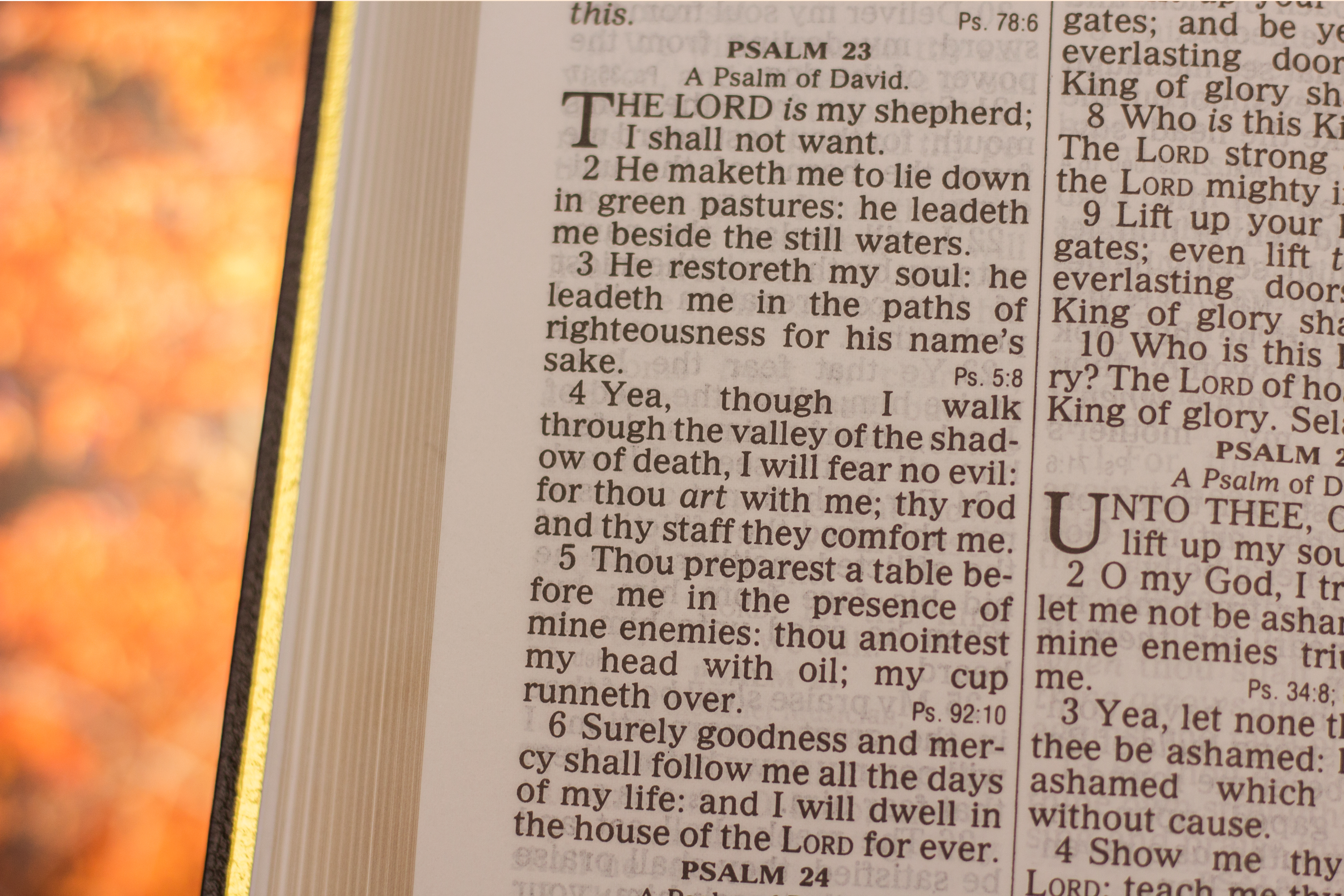
Grammatically, Early Modern English saw a significant simplification of verb conjugations and the loss of many inflections that were common in Middle English. The pronoun system also underwent changes, with the gradual adoption of 'you' as both singular and plural subject and object forms, replacing 'thou/thee' and 'ye/you' in many contexts, though 'thou/thee' persisted in informal or poetic usage. The Great Vowel Shift, a series of pronunciation changes that occurred between the 14th and 18th centuries, fundamentally altered the sound of English, particularly affecting long vowels. For instance, the vowel sound in 'mouse' shifted from an /uː/ sound (like 'oo' in 'boot') to the diphthong /aʊ/ we use today. The syntax became more fixed, with a stronger tendency towards Subject-Verb-Object (SVO) word order, a pattern that solidified into the standard we recognize now.
📊 Key Facts & Numbers
The period of Early Modern English spans approximately 200 years, from around 1470 to 1670. During this time, the English vocabulary expanded dramatically, with estimates suggesting that between 10,000 and 12,000 new words and phrases were introduced, many borrowed from Latin, Greek, French, and Spanish. The first folio of William Shakespeare's plays, published in 1623, contained 36 plays and is estimated to have introduced around 1,700 words to the English language, though many of these were coinages or neologisms that did not endure. The King James Bible, published in 1611, is estimated to have been read by over 50 million people within its first 50 years, profoundly influencing the language and making its phrasing ubiquitous. By the mid-17th century, the number of speakers of English had grown significantly due to colonial expansion, with estimates placing the number of English speakers worldwide at around 5-7 million by 1700.
👥 Key People & Organizations
The literary giants of the era are inextricably linked to Early Modern English. William Shakespeare (1564-1616) is perhaps the most celebrated figure, whose prolific output of plays and sonnets showcased the language's expressive potential and introduced countless words and phrases still in use. Christopher Marlowe (1564-1593) and Ben Jonson (1572-1637) were other prominent playwrights who contributed to the linguistic richness of the period. The translators of the King James Bible, a committee of scholars working under the patronage of King James I, produced a text that became a cornerstone of English literature and prose style. The Church of England and its Book of Common Prayer also played a role in standardizing religious and formal language. Linguistic scholars like Robert Cawdrey, who published the first English dictionary, 'A Table Alphabeticall', in 1604, were instrumental in codifying the language.
🌍 Cultural Impact & Influence
Early Modern English is the language of some of the most enduring works in the English canon, including Shakespeare's tragedies like Hamlet and comedies like A Midsummer Night's Dream, as well as the monumental King James Bible. The widespread adoption of the printing press facilitated the dissemination of these texts, contributing to a growing sense of national identity tied to a common language. This period also saw the beginnings of English as a global language, spread through exploration and colonization by British explorers and traders. The literary and rhetorical styles developed during EModE, characterized by elaborate metaphors, complex sentence structures, and a rich vocabulary, continue to influence writers and speakers today, shaping our understanding of eloquence and poetic expression. The influence is so profound that many phrases originating from this era, such as 'break the ice' or 'all that glitters is not gold', remain common idioms.
⚡ Current State & Latest Developments
While Early Modern English is a historical stage, its direct descendants are thriving. Modern Standard English, spoken globally by billions, is the direct continuation of EModE. The ongoing evolution of English is marked by rapid technological advancements, globalization, and the influence of diverse cultures. The internet and social media platforms like Twitter and Reddit are accelerating linguistic change, introducing new slang, abbreviations, and communication styles at an unprecedented rate. The study of EModE remains crucial for understanding historical texts, but its living legacy is evident in every conversation, every written word, and every digital interaction in contemporary English. The development of new dialects and creoles, particularly in former British colonies, also represents a dynamic continuation of English's global spread.
🤔 Controversies & Debates
One of the primary debates surrounding Early Modern English concerns the precise dating of its boundaries and the relative influence of various factors on its development. While the mid-17th century is often cited as the transition to Modern English, some scholars argue for earlier or later endpoints, pointing to the gradual nature of linguistic change. The extent to which Shakespeare 'invented' words versus simply popularizing existing ones is another area of discussion; linguistic analysis suggests he was more of a masterful synthesizer and popularizer. The standardization of spelling, driven by the printing press, is often seen as a positive step, but critics point out that it also froze certain archaic spellings and pronunciations, leading to modern English spelling irregularities. The impact of the Great Vowel Shift is also debated, with ongoing research refining our understanding of its exact timing and phonetic details.
🔮 Future Outlook & Predictions
The future of English, as the descendant of Early Modern English, points towards continued diversification and adaptation. Linguists predict further simplification of grammatical structures in some contexts, alongside the rapid incorporation of new vocabulary driven by technology and global interaction. The rise of artificial intelligence and machine translation may also influence how languages evolve, potentially leading to new forms of hybrid communication or a greater emphasis on universally understood linguistic structures. While English is likely to remain a dominant global language, its future forms will undoubtedly be shaped by the very forces of cultural exchange and innovation that characterized the Early Modern period. The ongoing development of online communication and global collaboration will continue to push the boundaries of what constitutes 'standard' English.
💡 Practical Applications
The primary practical application of studying Early Modern English lies in the interpretation and appreciation of its vast literary and historical corpus. Scholars, students, and enthusiasts can directly engage with the original works of William Shakespeare, John Milton, and Edmund Spenser without the need for extensive translation or annotation, gaining deeper insights into their nuances. Understanding EModE is also crucial for historical linguistics, providing a critical link in tracing the development of English from its Middle English roots to its Modern form. Furthermore, it aids in the study of historical documents, legal texts, and early scientific writings, offering direct access to the thought and expression of pivotal centuries in Western history. For actors and theatre practitioners, mastering EModE pronunciation and cadence is essential for authentic performance.
Key Facts
- Year
- c. 1470-1670
- Origin
- United Kingdom
- Category
- language
- Type
- topic
Frequently Asked Questions
What is Early Modern English?
Early Modern English (EModE) is the stage of the English language spoken and written from the late 15th century to the mid-17th century. It marks the transition from Middle English, characterized by Chaucer's works, to Modern English. This period saw significant changes in grammar, vocabulary, and pronunciation, heavily influenced by the English Renaissance and the introduction of the printing press by William Caxton. Key literary works from this era, such as those by William Shakespeare and the King James Bible, are largely comprehensible to modern readers and have profoundly shaped contemporary English.
When did Early Modern English begin and end?
The period of Early Modern English is generally considered to span from approximately 1470 to 1670. Its beginning is often linked to the end of the Wars of the Roses and the widespread adoption of printing in England. The end date is typically placed around the Restoration period in 1660, after which the language is generally classified as Modern English. However, these dates are approximate, as linguistic change is a gradual process, and some features of EModE persisted well into the 18th century.
What are the key differences between Early Modern English and Modern English?
While largely comprehensible, Early Modern English differs from Modern English in several ways. Grammatically, it retained more inflections and had more flexible word order, though it was moving towards the stricter SVO structure of today. Pronoun usage was more complex, with 'thou/thee' still in common use alongside 'you'. The most significant phonetic change is the Great Vowel Shift, which altered the pronunciation of long vowels, making it sound quite different from modern English. Vocabulary also differs, with many words now archaic and numerous loanwords introduced during the Renaissance and exploration periods.
Who were the most important figures in Early Modern English?
The most iconic figure associated with Early Modern English is undoubtedly William Shakespeare, whose plays and sonnets are prime examples of the language's expressive power and introduced thousands of words. The scholars responsible for the King James Bible (published 1611) were also immensely influential in standardizing prose and disseminating key phrases. Other notable writers include Christopher Marlowe, Ben Jonson, and John Donne. Linguistically, Robert Cawdrey's 1604 dictionary was a significant step towards codification.
How did the printing press affect Early Modern English?
The introduction of the printing press by William Caxton in 1476 was a revolutionary force in shaping Early Modern English. It enabled the mass production and wider dissemination of texts, which led to greater standardization of spelling and grammar. Printers often made choices about dialect and usage that became influential, gradually solidifying certain forms over others. This standardization helped to unify the language across different regions of England and laid the groundwork for the concept of a 'standard' English that would continue to evolve.
Can modern speakers understand Early Modern English texts?
Yes, most modern English speakers can understand texts written in the later stages of Early Modern English, such as the works of William Shakespeare or the King James Bible, with relative ease. While some vocabulary, idioms, and grammatical structures may be unfamiliar, the core language is recognizable. The Great Vowel Shift means the spoken pronunciation would sound quite different, but the written form is largely accessible. Understanding older texts from the beginning of the EModE period, however, might require more effort due to greater differences from modern English.
What is the legacy of Early Modern English?
The legacy of Early Modern English is immense, as it forms the direct foundation of contemporary Standard English. The literary masterpieces produced during this era continue to be read, performed, and studied worldwide, shaping our cultural heritage. The vocabulary, grammatical structures, and idiomatic expressions that became established during EModE are still integral to how English is spoken and written today. Furthermore, the role of English as a global language began to solidify during this period, a trend that has continued exponentially, making the study of EModE essential for understanding the language's historical trajectory and its current global status.