
Contents
Overview
The concept of harnessing energy for human use stretches back millennia, from the earliest fires to watermills and windmills. Michael Faraday's groundbreaking discovery of electromagnetic induction, demonstrated by his invention of the Faraday disk, laid the theoretical and practical foundation for electric generators. This pivotal moment allowed for the conversion of mechanical motion into electrical current. Early pioneers like Thomas Edison championed direct current (DC) systems, while Nikola Tesla and George Westinghouse advocated for alternating current (AC) systems, which proved more efficient for long-distance transmission. The development of large-scale steam turbines further revolutionized power generation, enabling the creation of massive power plants that could supply electricity to entire cities.
⚙️ How It Works
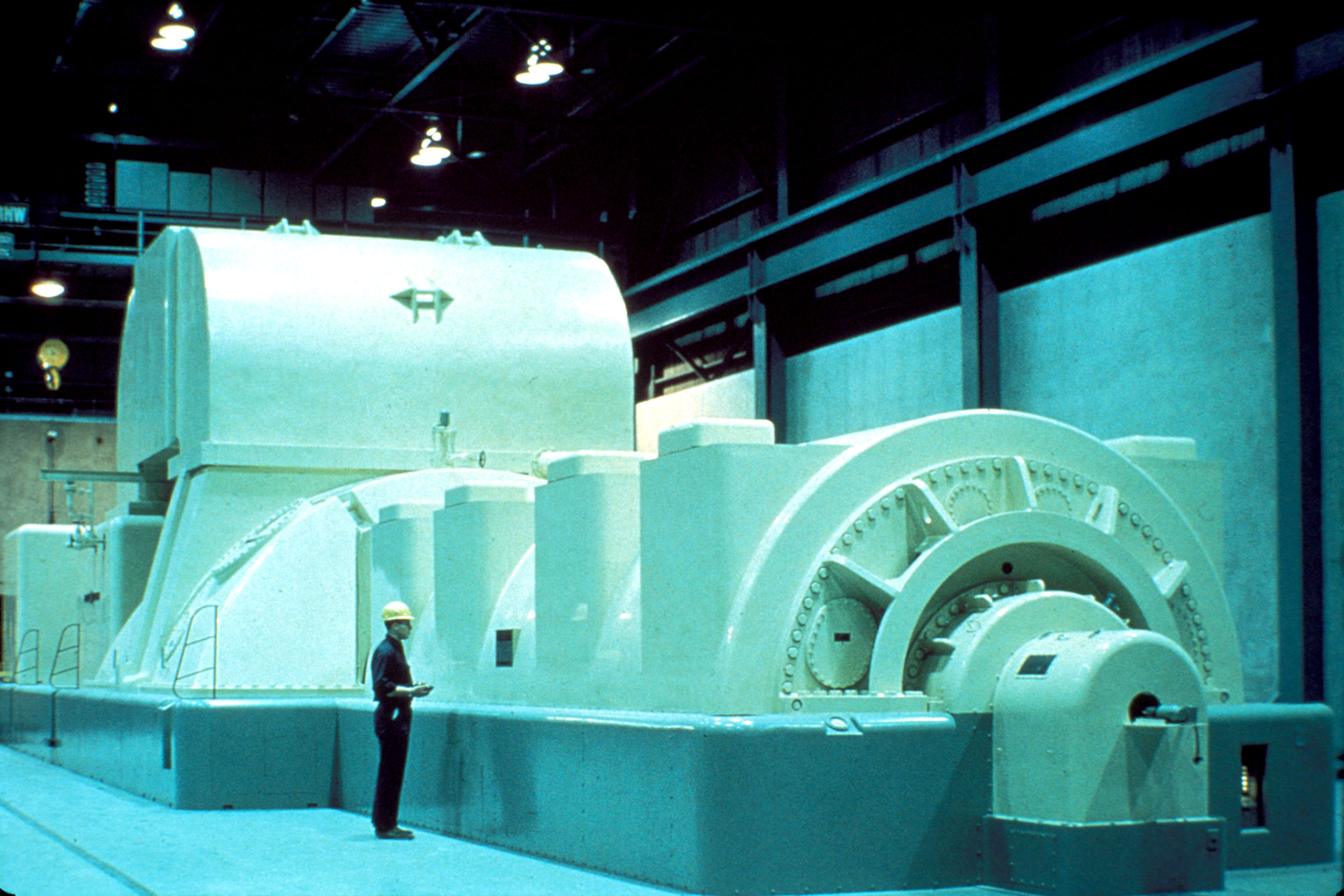
At its core, most modern electrical energy generation relies on the principle of electromagnetic induction, famously described by Michael Faraday. A prime mover, such as a steam turbine powered by burning fossil fuels or nuclear fission, a hydroelectric dam utilizing water flow, or a wind turbine capturing kinetic energy from the air, rotates a shaft. This shaft is connected to an electric generator, which typically consists of a rotor (a rotating electromagnet or permanent magnet) and a stator (a stationary set of coils). As the rotor spins within the stator's magnetic field, it induces an electrical voltage across the coils, causing electrons to flow and creating an electric current. This mechanical-to-electrical energy conversion is the fundamental process, with variations in prime movers and generator designs dictating the specific type of power plant, from sprawling coal-fired power plants to compact solar photovoltaic arrays.
📊 Key Facts & Numbers
Globally, the annual electricity generation stands at approximately 29,000 terawatt-hours (TWh) as of recent estimates. Fossil fuels—coal, natural gas, and oil—still account for roughly 60% of this total, a figure that has seen a slight decline but remains dominant. Hydropower contributes around 16%, followed by nuclear power at approximately 9%. Wind power has surged to about 7%, and solar power is rapidly growing, now contributing around 5%. The average efficiency of thermal power plants (coal, gas, nuclear) typically ranges from 33% to 60%, meaning a significant portion of the energy input is lost as heat. The cost of electricity generation varies wildly, with solar and wind becoming increasingly competitive, often below $0.05 per kWh in optimal conditions, while coal can range from $0.06 to $0.15 per kWh. The United States alone generates over 4,000 TWh annually, with China producing significantly more.
👥 Key People & Organizations
Numerous individuals and organizations have shaped energy generation. Michael Faraday's discovery of electromagnetic induction is foundational. Nikola Tesla and George Westinghouse were instrumental in popularizing alternating current (AC) power systems, a critical development for widespread electricity distribution. Thomas Edison championed direct current (DC) and built the first central power station. Charles Parsons' invention of the compound steam turbine enabled the construction of large-scale power plants. Today, major players include national utilities like NextEra Energy and Enel S.p.A., technology providers such as Siemens Energy and General Electric, and international bodies like the International Energy Agency (IEA) which track global energy trends and policy.
🌍 Cultural Impact & Influence
Energy generation is inextricably linked to societal development and cultural evolution. The widespread availability of electricity fueled the Second Industrial Revolution, enabling mass production, electric lighting, and the proliferation of new technologies like the radio and television. It fundamentally altered daily life, extending the productive day beyond sunset and enabling advancements in healthcare, communication, and entertainment. The visual iconography of power plants—towering smokestacks, vast dams, and sprawling solar farms—has become a symbol of industrial might and technological progress, deeply embedded in the collective consciousness. Debates over energy sources also reflect cultural values, with the rise of environmentalism driving a shift towards renewable energy narratives.
⚡ Current State & Latest Developments
The current energy generation landscape is characterized by a dynamic interplay between established fossil fuel infrastructure and the rapid expansion of renewables. In 2023, renewable energy sources, excluding large hydropower, accounted for a record share of new power capacity additions globally, driven by significant investments in solar photovoltaics and wind turbines. China continues to lead in renewable energy deployment, with substantial growth also seen in the United States and the European Union. Simultaneously, there's a renewed interest in nuclear fusion research, with projects like ITER making incremental progress, and advanced small modular reactors (SMRs) gaining traction as potential solutions for decarbonizing electricity grids. Grid modernization efforts, including the integration of battery storage systems, are crucial for managing the intermittency of renewables.
🤔 Controversies & Debates
The primary controversy surrounding energy generation centers on its environmental impact and the pace of decarbonization. While fossil fuels have powered industrialization, their combustion releases greenhouse gases like carbon dioxide (CO2), contributing to climate change. This has led to intense debates about phasing out coal and natural gas in favor of cleaner alternatives. Nuclear power offers carbon-free electricity but faces concerns regarding radioactive waste disposal and safety, as highlighted by incidents like Chernobyl and Fukushima. The intermittency of solar and wind power also sparks debate about grid stability and the necessity of reliable baseload power sources, often leading to discussions about the role of natural gas as a transitional fuel or the potential of advanced nuclear technologies.
🔮 Future Outlook & Predictions
The future of energy generation is poised for a significant transformation, driven by the imperative to combat climate change and achieve energy security. Experts predict a continued, accelerated shift towards renewable energy sources, with solar and wind power expected to dominate new capacity additions for the foreseeable future. Innovations in energy storage technologies, such as advanced battery chemistries and green hydrogen, will be critical for ensuring grid reliability with high penetrations of renewables. Nuclear fusion remains a long-term aspiration, with potential to provide virtually limitless clean energy if commercial viability can be achieved, possibly within the latter half of the 21st century. Furthermore, the integration of artificial intelligence and advanced grid management systems will optimize energy distribution and consumption, creating more resilient and efficient power networks.
💡 Practical Applications
Energy generation technologies have a vast array of practical applications. Large-scale power plants—whether coal-fired, natural gas, nuclear, hydroelectric, or wind farms—provide the electricity that powers national grids, supplying homes, businesses, and industries. Smaller-scale applications include rooftop solar photovoltaic systems for individual homes and businesses, geothermal power plants utilized in regions with geological heat, and biomass energy conversio
Key Facts
- Category
- technology
- Type
- topic