
Contents
Overview
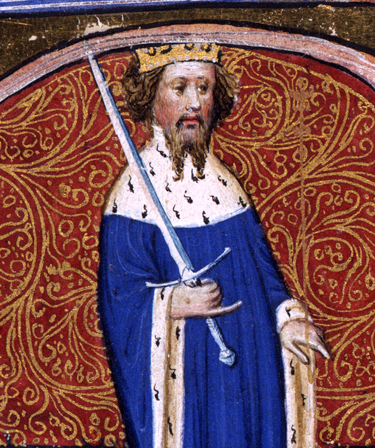
Henry IV's lineage was steeped in royal blood, being the son of John of Gaunt, Duke of Lancaster, and Blanche of Lancaster, and a grandson of King Edward III. His early life was marked by proximity to power. By 1388, as a young man, he was embroiled in the Lords Appellant revolt against his first cousin, King Richard II, a bold move that signaled his early ambition and willingness to challenge the established order. This defiance, however, led to his exile from England. Upon the death of his father, John of Gaunt, Richard II controversially blocked Henry's inheritance of the vast Lancastrian estates. This act of dispossession provided the immediate catalyst for Henry's return and subsequent seizure of the throne, a dramatic usurpation that would echo through English history.
⚙️ How It Works
Henry IV's ascension to the throne was not a matter of simple inheritance but a calculated act of political maneuvering and military force. After Richard II's confiscation of his inheritance, Henry, leveraging his Lancastrian support base and popular discontent with Richard's rule, landed in England. He swiftly gathered momentum, with many lords and commoners flocking to his banner. By September 1399, he had secured Richard II's imprisonment. The subsequent deposition of Richard II, formally enacted by Parliament on September 29, 1399, established Henry as king. This process bypassed traditional hereditary claims, establishing a precedent for parliamentary involvement in royal succession, albeit under duress. His coronation on October 13, 1399, solidified his claim, but the shadow of his usurpation meant his reign was a constant struggle to legitimize his rule against internal and external threats.
📊 Key Facts & Numbers
Henry IV reigned as King of England, from 1399 until his death in 1413. During his tenure, he faced at least three major rebellions: the Welsh Revolt led by Owain Glyndŵr, the Percy Rebellion, and a subsequent uprising involving Archbishop Richard Scrope. His reign saw the establishment of the House of Lancaster as the ruling dynasty, a lineage that would produce his son, the famed Henry V. His death occurred on March 20, 1413, at Westminster Abbey.
👥 Key People & Organizations
Key figures surrounding Henry IV include his first wife, Mary de Bohun, mother of his heir, Henry V, and his second wife, Joan of Navarre. His father, John of Gaunt, was a powerful figure whose legacy and lands Henry inherited. His primary rival and predecessor, King Richard II, was deposed by Henry and died in captivity. Prominent rebels who challenged Henry's rule included Owain Glyndŵr, who led the Welsh uprising, and Henry 'Hotspur' Percy, initially an ally who later turned against him. The Parliament of England played a crucial role in both sanctioning his deposition of Richard II and later in debating the legitimacy of his claim. The Church of England also played a significant role, with figures like Archbishop Scrope leading a rebellion against him.
🌍 Cultural Impact & Influence
Henry IV's most profound cultural impact lies in his role as the first English king since the Norman Conquest (1066) to use English as his primary language. This linguistic shift, detailed in chronicles like the Chronicles of Froissart, signaled a move away from the French-speaking aristocracy that had dominated England for over three centuries, fostering a nascent sense of English national identity. His usurpation of the throne, while controversial, also fundamentally altered the English monarchy, introducing the House of Lancaster and setting the stage for the dynastic conflicts of the Wars of the Roses. Shakespeare immortalized his reign in his play Henry IV, Part 1, which, while dramatizing events, cemented his image in popular culture as a complex ruler grappling with rebellion and legitimacy, famously featuring the character of Sir John Falstaff.
⚡ Current State & Latest Developments
The immediate aftermath of Henry IV's reign saw his son, Henry V, ascend the throne in 1413. Henry V, building on his father's consolidation efforts, achieved significant military victories, most notably at the Battle of Agincourt in 1415, further solidifying the Lancastrian claim. However, the underlying dynastic tensions that Henry IV's usurpation had unleashed continued to simmer. The House of Lancaster would rule England for 62 years before being overthrown by the House of York in 1461, marking the beginning of the Wars of the Roses. The legacy of Henry IV's reign is thus intrinsically linked to the prolonged period of civil strife that defined much of 15th-century England.
🤔 Controversies & Debates
The most significant controversy surrounding Henry IV is undoubtedly the legitimacy of his claim to the throne. His deposition of King Richard II in 1399, while sanctioned by Parliament, was viewed by many as an illegal usurpation, a direct violation of divine right and hereditary succession. This act fueled persistent rebellions throughout his reign, notably from Henry 'Hotspur' Percy and Owain Glyndŵr, who sought to restore Richard or install alternative claimants. The debate over whether Henry IV was a legitimate king or a usurper continues to be a central theme in historical analyses of his reign, with historians like Alison Weir and Ian Mortimer offering differing perspectives on the justification and consequences of his actions. The very foundation of his rule was built on a contested claim, a tension that defined his entire time as monarch.
🔮 Future Outlook & Predictions
The future trajectory of the House of Lancaster, initiated by Henry IV, was one of intense dynastic struggle. While his son, Henry V, enjoyed a period of military glory, the underlying instability of the Lancastrian claim would eventually lead to the Wars of the Roses. The eventual victory of the House of York in 1461, and later the rise of the House of Tudor through a Lancastrian descendant, demonstrates the long-lasting impact of Henry IV's foundational act of usurpation. The question of legitimate succession, first challenged by Henry IV, remained a volatile issue in English politics for over a century, shaping the very nature of royal power and parliamentary authority.
💡 Practical Applications
While Henry IV's reign was primarily defined by warfare and political consolidation, his actions had practical implications for governance and law. His reliance on Parliament for legitimacy, even under duress, contributed to the evolving role of this institution in English political life. The need to fund his constant campaigns against rebels necessitated new forms of taxation and financial management, influencing the development of royal finances. Furthermore, his emphasis on English as the language of the court and government, as documented in the Statutes of England, fostered a more unified administrative system and contributed to the standardization of the English language, impacting legal and administrative practices for centuries to come.
Key Facts
- Category
- history
- Type
- topic