
Contents
Overview
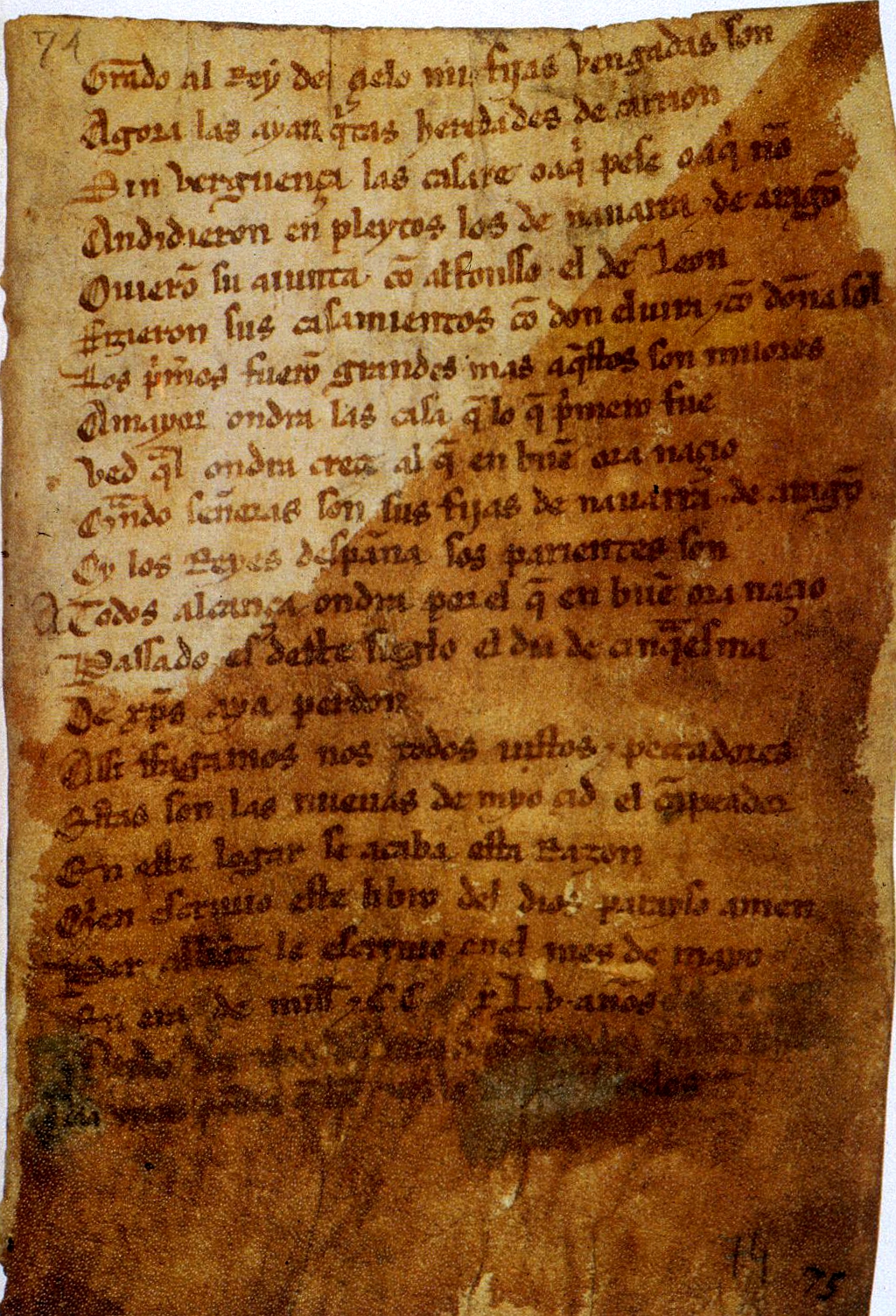
The story of Spanish begins with the arrival of Roman legions in the Iberian Peninsula, bringing with them Vulgar Latin, the spoken vernacular of the empire. Vulgar Latin gradually supplanted pre-Roman languages like Iberian, Celtiberian, and Tartessian, though traces of these substratum languages persist in some regional dialects and vocabulary. Following the fall of the Western Roman Empire, the Latin spoken in Iberia began to diverge, evolving into distinct Ibero-Romance dialects. A pivotal period arrived with the Umayyad Caliphate's conquest of Hispania, leading to centuries of Moorish rule in Al-Andalus. During this era, Arabic exerted a significant lexical influence, contributing to what would become Spanish, particularly in areas like science, agriculture, and administration. The Reconquista, the centuries-long Christian reconquest of the peninsula, saw the dialect of Castile, known as Castilian, gain prominence as it spread southward with the expanding Kingdom of Castile. The dialect of Castile, known as Castilian, gained prominence during the Reconquista.
⚙️ How It Works
Spanish operates as an inflected language, meaning words change form to indicate grammatical function. Nouns and adjectives have gender (masculine or feminine) and number (singular or plural), and verbs are heavily conjugated to express person, number, tense, mood, and aspect. Its phonology is characterized by a relatively straightforward system of vowels and consonants, with a notable absence of certain sounds common in other Romance languages, such as the French 'u' or the Italian 'gli'. The orthography is largely phonetic, meaning words are generally pronounced as they are spelled, a feature that aids learners. The language's structure, while rooted in Latin, has also been shaped by its historical interactions, notably the significant influx of Arabic vocabulary and, to a lesser extent, influences from Basque and the indigenous languages of the Americas following colonization. The standard Spanish taught today is largely based on the dialect of Castile, though regional variations in pronunciation, vocabulary, and grammar are substantial across Spain and Latin America.
📊 Key Facts & Numbers
Spanish is the world's second-most spoken native language, trailing only Mandarin Chinese. Globally, it ranks as the fourth most spoken language overall. Spanish is an official language in a significant number of countries, with large Spanish-speaking populations residing in Mexico, Colombia, and Spain. The United States has a substantial Spanish-speaking population. The Cervantes Institute estimates that Spanish is studied by a large number of students worldwide, making it a widely studied foreign language. The Hispanosphere represents a significant global market, estimated to contribute trillions of dollars to the global GDP.
👥 Key People & Organizations
The standardization and spread of Spanish are inextricably linked to several key figures and institutions. King Alfonso X 'the Wise' of Castile was instrumental in promoting Castilian as the language of administration and scholarship, commissioning translations and original works that established a written norm. The Real Academia Española (RAE), founded in the 18th century, has played a crucial role in regulating and preserving the Spanish language, publishing dictionaries and grammar guides that have shaped its modern form. Antonio de Nebrija's "Gramática de la lengua castellana" was the first grammar of a modern European language, a landmark publication that coincided with Christopher Columbus's first voyage. The literary giants like Miguel de Cervantes, author of "Don Quixote," and later Gabriel García Márquez, a Nobel laureate, have profoundly shaped the language's literary prestige and global reach. The Instituto Cervantes, established in the late 20th century, is the modern institution dedicated to promoting Spanish language and culture internationally.
🌍 Cultural Impact & Influence
The cultural footprint of Spanish is immense, extending far beyond its linguistic borders. Spanish is the primary language of a vast literary tradition, from the Golden Age epics of Cervantes to the magical realism of García Márquez and the contemporary works of Isabel Allende. In music, genres like flamenco, salsa, reggaeton, and tango have achieved global popularity, carrying Spanish lyrics to international audiences. Spanish cinema, particularly from Spain and Argentina, has garnered critical acclaim and a significant following worldwide. The language serves as a vital conduit for cultural exchange, connecting millions of people and fostering a shared identity across continents. Its influence is also evident in the lexicon of other languages, particularly English, which has borrowed thousands of words from Spanish, especially related to food, culture, and the American Southwest, such as 'rodeo,' 'fiesta,' 'patio,' and 'canyon.' The global reach of Spanish media, including telenovelas, news outlets like CNN en Español, and digital platforms, further amplifies its cultural resonance.
⚡ Current State & Latest Developments
In the 21st century, Spanish continues its dynamic evolution, heavily influenced by digital communication and globalization. The rise of social media platforms like Twitter and TikTok has fostered new linguistic trends, abbreviations, and meme culture in Spanish, often originating from specific regions and spreading rapidly. The Cervantes Institute reports a steady increase in the number of Spanish learners, driven by economic opportunities and cultural interest. Major media conglomerates like Prisa and Grupo Televisa continue to produce vast amounts of Spanish-language content, from news to entertainment. The development of advanced AI translation tools, such as those offered by Google Translate and DeepL, is also impacting how Spanish is used and perceived globally, facilitating cross-linguistic communication while also raising questions about linguistic purity and authenticity. The ongoing demographic shifts in the United States, with a growing Hispanic population, are also solidifying Spanish's presence and influence within the country.
🤔 Controversies & Debates
The history and current state of Spanish are not without their controversies. A persistent debate revolves around linguistic standardization versus regional diversity. The Real Academia Española's prescriptive approach is sometimes criticized for attempting to impose a unified norm that doesn't always reflect the rich variations spoken across the Hispanosphere. The influence of English, particularly in technology and business, leads to ongoing discussions about Anglicisms and the potential dilution of Spanish vocabulary. Furthermore, the historical legacy of Spanish colonialism continues to be a sensitive topic, with ongoing discussions about the language's role in cultural imposition and the preservation of indigenous languages in Latin America. The question of which dialect – Peninsular Spanish or Latin American Spanish (and which variant thereof) – should be considered the 'standard' for teaching purposes also sparks debate, highlighting the complex sociolinguistic landscape.
🔮 Future Outlook & Predictions
The future of Spanish appears robust, with projections indicating continued growth in speaker numbers and global influence. Demographic trends in Latin America and the United States suggest that Spanish will become even more prominent in the coming decades. Experts at the Cervantes Institute predict that Spanish could become one of the top three languages for global communication within the next generation, potentially rivaling English in certain spheres. The increasing digital presence of Spanish content, from streaming services like Netflix to educational platforms, will further solidify its reach. However, challenges remain, including the need to adapt to evolving communication technologies and to address the ongoing endangerment of indigenous languages within Spanish-speaking countries. The development of more sophisticated AI for Spanish language processing and translation will also play a significant role
Key Facts
- Category
- history
- Type
- topic