
Contents
Overview
The LGBTQIA rights movement is a multifaceted, ongoing global endeavor advocating for the social, legal, and political equality of lesbian, gay, bisexual, transgender, queer, intersex, and asexual individuals. Originating from scattered acts of resistance and evolving into organized political and social campaigns, the movement has achieved significant milestones, including the decriminalization of same-sex relations, legal recognition of same-sex relationships and marriage, and increased visibility in media and public discourse. However, it faces persistent challenges, including widespread discrimination, violence, and legal setbacks in various regions. The movement's impact extends beyond legal rights, fostering cultural shifts in understanding gender and sexuality, and inspiring solidarity across diverse communities.
🎵 Origins & History
The roots of the LGBTQIA rights movement can be traced back to the late 19th and early 20th centuries, with early homophile organizations emerging. The modern movement, however, gained significant momentum following the Stonewall Uprising in June 1969, a series of spontaneous demonstrations by members of the LGBTQIA community against a police raid at the Stonewall Inn in New York City. This pivotal event is widely considered the catalyst for the modern gay rights movement, leading to the formation of numerous activist groups. The subsequent decades saw the movement expand its focus to include bisexual, transgender, intersex, and asexual rights, addressing a broader spectrum of identities and experiences.
⚙️ How It Works
The LGBTQIA rights movement operates through a decentralized, multi-pronged strategy. This includes direct action and protest, such as Christopher Street Day marches and the Pride parades that have become global phenomena. It also involves extensive legal advocacy, lobbying governments for legislative changes like the repeal of sodomy laws and the passage of non-discrimination protections. Public education campaigns, media representation, and cultural production are crucial for shifting public perception and fostering acceptance. Furthermore, the movement relies on community organizing, mutual aid networks, and the establishment of safe spaces and support services for LGBTQIA individuals.
📊 Key Facts & Numbers
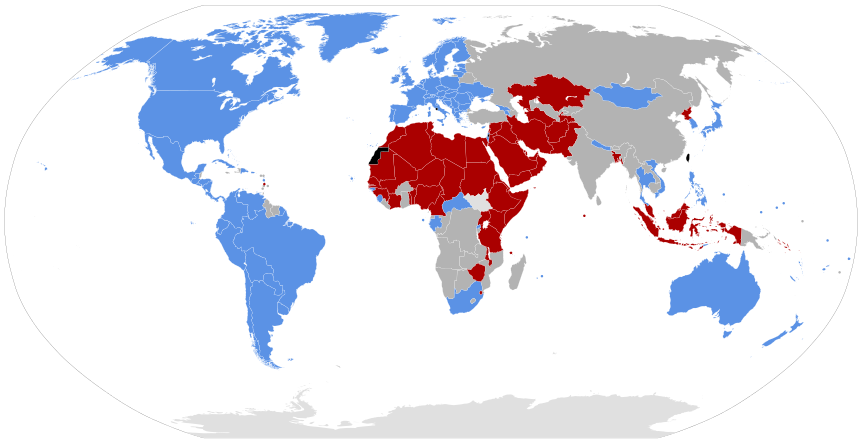
As of January 2025, 38 countries globally recognize same-sex marriage, a significant increase from just a handful in the early 2000s. Conversely, at least two countries, Iran and Afghanistan, are believed to impose the death penalty for consensual same-sex sexual acts, with several others maintaining it in law but rarely practicing it. In 2023, an estimated 70 countries still criminalized consensual same-sex relations. The global LGBTQIA population is estimated to be between 100 million and 400 million people, though precise figures are difficult to ascertain due to stigma and underreporting. In the United States, a 2023 Gallup poll indicated that 7.6% of adults identify as LGBTQIA, a figure that has steadily risen over the past decade.
👥 Key People & Organizations
Key figures have been instrumental in shaping the LGBTQIA rights movement. Marsha P. Johnson and Sylvia Rivera, transgender activists and pioneers of the Stonewall Uprising, were crucial in advocating for both gay and transgender rights. Harvey Milk, one of the first openly gay elected officials in the United States, championed LGBTQIA visibility and political power. Organizations like GLAAD (Gay & Lesbian Alliance Against Defamation) have been vital in shaping media representation, while Stonewall UK has been a leading force in the UK's advocacy efforts. More recently, figures like Laverne Cox have brought transgender issues to mainstream attention, and groups like Intersex Society of North America (ISNA) work to raise awareness for intersex individuals.
🌍 Cultural Impact & Influence
The LGBTQIA rights movement has profoundly reshaped cultural landscapes worldwide. Its influence is evident in the increased and more diverse representation of LGBTQIA characters and storylines in film, television, and literature, moving beyond harmful stereotypes. The widespread adoption of Pride parades as annual celebrations has normalized LGBTQIA identities and fostered a sense of community and visibility. The movement has also challenged traditional notions of gender and family, contributing to broader societal conversations about identity, acceptance, and human rights. This cultural shift has, in turn, influenced fashion, music, and art, embedding LGBTQIA themes into mainstream culture, though debates about authenticity and commercialization persist.
⚡ Current State & Latest Developments
As of early 2025, the LGBTQIA rights movement continues to navigate a complex global terrain. While progress has been made in many Western nations, with ongoing debates about gender-affirming care and transgender rights, other regions are witnessing significant backlash and legislative rollbacks. For instance, several US states have enacted laws restricting transgender rights and access to healthcare, while in some African and Asian countries, anti-LGBTQIA sentiment and legislation are intensifying. The global fight for decriminalization remains a critical focus, with organizations like OutRight Action International actively campaigning in nations where same-sex relations are criminalized. The rise of online activism and digital communities has also become a more prominent feature of the movement's current state.
🤔 Controversies & Debates
The LGBTQIA rights movement is not without its internal and external controversies. Debates within the community itself often revolve around the inclusion and prioritization of different identities (e.g., the T in LGBTQIA, intersex rights, asexual representation), and the balance between assimilationist goals (e.g., same-sex marriage) and more radical calls for systemic change. Externally, the movement faces strong opposition from religious and conservative groups who cite religious or traditional values to argue against LGBTQIA rights, leading to intense political and social polarization. Issues surrounding gender-affirming care for minors, the definition of gender identity, and the role of LGBTQIA content in education remain highly contentious areas, often fueling legislative battles and public debate.
🔮 Future Outlook & Predictions
The future of the LGBTQIA rights movement will likely be characterized by continued global divergence, with some regions advancing rights while others regress. Experts predict an increasing focus on intersectionality, recognizing how LGBTQIA identities intersect with race, class, and disability, leading to more nuanced advocacy. The fight for comprehensive non-discrimination laws that protect LGBTQIA individuals in housing, employment, and public accommodations will remain a priority. Furthermore, the movement is expected to grapple with the evolving understanding of gender identity and the increasing visibility of intersex and asexual individuals, potentially leading to expanded advocacy efforts and the redefinition of existing legal frameworks. The impact of climate change and global migration on LGBTQIA communities also presents a new frontier for future activism.
💡 Practical Applications
The principles and advocacy strategies of the LGBTQIA rights movement have practical applications beyond direct legal reform. They inform diversity and inclusion initiatives within corporations, aiming to create more welcoming workplaces for LGBTQIA employees, as championed by organizations like Out & Equal Workplace Advocates. The movement's emphasis on visibility and authentic representation has influenced marketing and branding strategies, encouraging companies to engage with LGBTQIA consumers respectfully. Furthermore, the community organizing and mutual aid models developed by LGBTQIA activists have been adapted by other social justice movements, demonstrating effective strategies for building solidarity and achieving collective goals. The fight for bodily autonomy and self-determination, central to transgender rights, also has broader implications for reproductive rights and healthcare access.
Key Facts
- Category
- movements
- Type
- topic