
Contents
- 🎵 Origins & History of Symptom Recognition
- ⚙️ The Inner Ear Mechanism of Symptoms
- 📊 Prevalence and Impact Statistics
- 👥 Key Figures in Symptom Description
- 🌍 Global Symptom Manifestations
- ⚡ Current Understanding of Symptom Triggers
- 🤔 Debates on Symptom Severity and Progression
- 🔮 Future Research on Symptom Management
- 💡 Practical Symptom Identification
- 📚 Related Conditions and Symptom Overlap
- References
Overview
Ménière's disease is a chronic inner ear disorder that manifests as a cluster of debilitating symptoms, primarily characterized by sudden, severe episodes of vertigo, fluctuating hearing loss, persistent tinnitus, and aural fullness. These attacks, often unpredictable and lasting from 20 minutes to several hours, can profoundly disrupt an individual's life. While initially affecting one ear, the condition can progress to involve both. The underlying cause remains elusive, with theories ranging from vascular issues and viral infections to autoimmune responses and genetic predispositions, all potentially leading to abnormal fluid pressure within the inner ear's labyrinth. Understanding these symptoms is crucial for diagnosis and management, distinguishing Ménière's from other neurological and auditory conditions.
🎵 Origins & History of Symptom Recognition
The recognition of Ménière's disease symptoms traces back to the mid-19th century, with French physician Prosper Menière publishing his work in the mid-19th century. He meticulously described patients experiencing sudden, severe vertigo, deafness, and tinnitus, attributing these to an affliction of the inner ear. Prior to Menière's work, these symptoms were often misunderstood or attributed to other neurological issues. His detailed observations laid the groundwork for understanding the distinct constellation of symptoms that define the condition, distinguishing it from conditions like epilepsy or stroke. The historical context reveals a slow but steady accumulation of knowledge, moving from vague descriptions to a more defined clinical picture over decades.
⚙️ The Inner Ear Mechanism of Symptoms
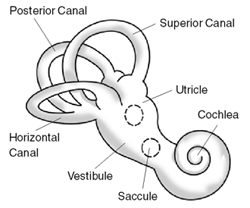
The hallmark symptoms of Ménière's disease are believed to stem from an imbalance of endolymph, the fluid within the inner ear's membranous labyrinth. This condition, often termed endolymphatic hydrops, leads to increased pressure, distorting the delicate structures responsible for balance and hearing. The vestibular system, particularly the semicircular canals and otolith organs, becomes overstimulated, triggering the intense vertigo. Simultaneously, the cochlea, responsible for hearing, is affected, leading to fluctuating hearing loss and the perception of sound, or tinnitus. The feeling of fullness, or aural fullness, is thought to be a direct consequence of this internal fluid pressure. This intricate interplay between fluid dynamics and sensory organ function explains the characteristic symptom cluster.
📊 Prevalence and Impact Statistics
While precise global prevalence figures for Ménière's disease are challenging to pinpoint due to diagnostic variations, it is understood to affect a notable portion of the population. The economic impact is significant, with lost productivity and healthcare costs mounting. Studies indicate that the condition often emerges between the ages of 40 and 60, though it can affect individuals at any age. The unpredictable nature of the symptom attacks means that a substantial portion of affected individuals report a significant reduction in their quality of life, impacting their ability to work, socialize, and engage in daily activities.
👥 Key Figures in Symptom Description
Beyond Prosper Menière, several physicians and researchers have contributed to our understanding of the disease's symptoms. Alfred Kaufmann and Paul-Henri Frémont-Smith further refined the diagnostic criteria in the early 20th century, emphasizing the episodic nature of the attacks. Later, researchers like John W. House and Robert J. S. Todhunter at institutions like the House Ear Institute have been instrumental in advancing diagnostic techniques and exploring treatment options, often focusing on managing the debilitating symptomology. The collective work of these individuals has shaped the modern clinical understanding of Ménière's disease.
🌍 Global Symptom Manifestations
Ménière's disease symptoms are recognized globally, though cultural interpretations and diagnostic accessibility can vary. While the core symptoms of vertigo, hearing loss, tinnitus, and aural fullness are universally reported, the frequency, severity, and progression can differ. In some regions, access to specialized audiological and neurological assessments may be limited, potentially leading to delayed or misdiagnosis. However, the fundamental physiological mechanisms are consistent across populations, as described by international medical bodies like the World Health Organization. Research collaborations across continents, such as those involving the American Academy of Otolaryngology–Head and Neck Surgery and its international counterparts, aim to standardize diagnostic criteria and symptom reporting worldwide.
⚡ Current Understanding of Symptom Triggers
Identifying triggers for Ménière's symptom exacerbations is a key area of ongoing research and patient management. While the exact mechanisms remain unclear, several factors are commonly implicated. Dietary influences, particularly high salt intake, are frequently cited as potential triggers, leading to fluid retention and increased endolymphatic pressure. Stress is another significant factor, with many patients reporting symptom flares during periods of emotional or physical strain. Changes in weather, fatigue, and certain medications have also been anecdotally linked to symptom onset. Understanding these potential triggers, as explored by organizations like the Menière's Society, allows for more personalized management strategies, though definitive scientific proof for many triggers remains elusive.
🤔 Debates on Symptom Severity and Progression
Significant debate exists regarding the natural progression and variability of Ménière's disease symptoms. While some individuals experience infrequent, mild attacks, others suffer from frequent, severe episodes that can lead to permanent disability. The rate at which hearing loss becomes constant, and the potential for complete resolution of symptoms, are subjects of ongoing discussion among otolaryngologists and neurologists. Some researchers propose distinct subtypes of the disease based on symptom presentation and progression, while others advocate for a more unified understanding of the underlying pathophysiology. The controversy often centers on the difficulty in predicting individual disease trajectories and the effectiveness of various interventions in altering symptom patterns.
🔮 Future Research on Symptom Management
Future research into Ménière's disease symptoms is heavily focused on unraveling the precise pathophysiology and developing more targeted treatments. Advances in neuroimaging techniques, such as MRI scans, are being employed to better visualize inner ear structures and potential fluid abnormalities. Genetic research aims to identify specific gene variants that predispose individuals to the condition, potentially paving the way for personalized risk assessment and preventative strategies. Furthermore, novel therapeutic approaches, including targeted drug delivery to the inner ear and advanced surgical techniques, are being explored to alleviate the most debilitating symptoms, particularly vertigo and hearing loss, as investigated by leading research institutions like the National Institute on Deafness and Other Communication Disorders.
💡 Practical Symptom Identification
Recognizing the symptoms of Ménière's disease is the first step toward seeking appropriate medical attention. Individuals experiencing sudden, severe vertigo, often accompanied by nausea and vomiting, should seek immediate evaluation. Fluctuating hearing loss, particularly in the lower frequencies, and a persistent ringing or roaring sound in the ear (tinnitus) are also critical indicators. A feeling of pressure or fullness in the affected ear, often described as if the ear is 'plugged,' is another key symptom. Diagnosis typically involves a thorough medical history, a physical examination, and audiological testing, including pure-tone audiometry and speech audiometry, to assess hearing function and rule out other conditions like acoustic neuroma or BPPV.
Key Facts
- Category
- science
- Type
- topic