
Contents
Overview
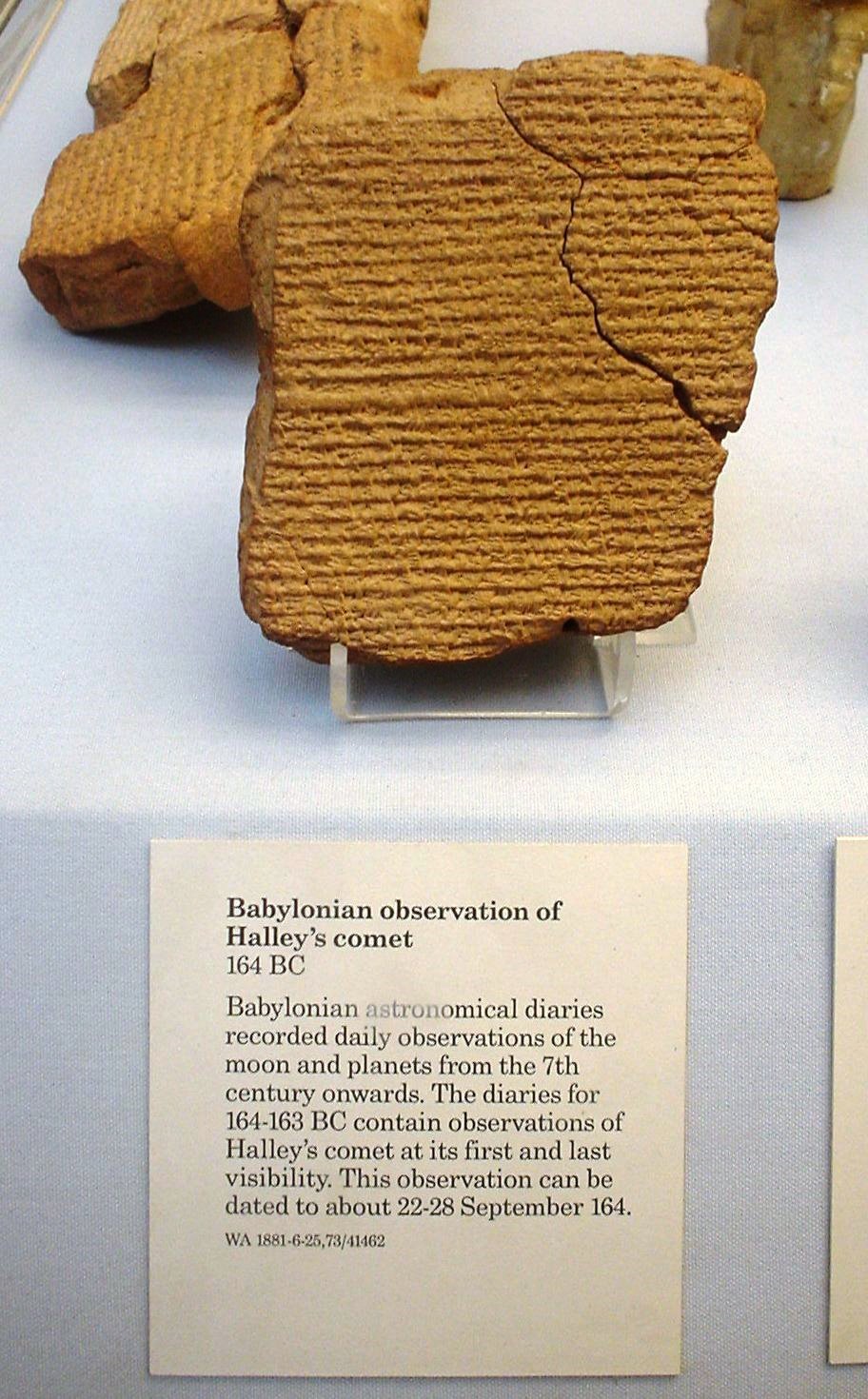
The study of celestial motion began not with abstract theory, but with practical necessity and profound wonder. Ancient Mesopotamians, particularly the Babylonians, developed a sexagesimal (base-60) system that facilitated detailed astronomical records. They observed the sun, moon, and visible planets, noting their cyclical patterns to create calendars and predict celestial events, crucial for agriculture and religious rituals. This empirical approach, focusing on observable patterns and developing predictive models, laid early groundwork for what would become scientific astronomy. Their meticulous observations and mathematical systems were later inherited and expanded upon by Ancient Greek astronomers like Hipparchus, who introduced concepts like precession and star catalogs, and subsequently by Islamic scholars during the Islamic Golden Age, who preserved and advanced astronomical knowledge through figures like Al-Battani and Nasir al-Din al-Tusi.
⚙️ How It Works
At its core, the movement of celestial bodies is governed by the universal law of Newtonian gravity, later refined by Einstein's theory of General Relativity. Massive objects exert a gravitational pull on each other, causing them to orbit around a common center of mass. For planets orbiting a star, like Earth around the Sun, this pull creates a continuous acceleration that balances the planet's tangential velocity, resulting in an elliptical orbit. The complexity increases with multiple bodies, leading to gravitational perturbations that subtly alter orbits over time, a phenomenon studied in n-body problem dynamics. Stars within galaxies, and galaxies within clusters, also follow gravitational trajectories, forming vast, dynamic structures that evolve over cosmic timescales, as described by cosmological models.
📊 Key Facts & Numbers
The gravitational influence of a single supermassive black hole at the center of a galaxy can affect the motion of stars within a radius of tens of thousands of light-years.
👥 Key People & Organizations
Pioneers in understanding celestial motion include Nicolaus Copernicus, who proposed a heliocentric model, challenging the long-held geocentric view. Johannes Kepler revolutionized this by formulating his three laws of planetary motion, describing elliptical orbits. Isaac Newton provided the unifying theory of gravity, explaining why these motions occur. Later, Albert Einstein's theory of General Relativity offered a more accurate description of gravity, particularly for massive objects and strong gravitational fields. Modern research is advanced by organizations like NASA, the European Space Agency (ESA), and institutions like the California Institute of Technology and MIT, utilizing data from telescopes such as the Hubble Space Telescope and the James Webb Space Telescope.
🌍 Cultural Impact & Influence
The predictable movements of celestial bodies have profoundly shaped human culture and civilization. Calendars, based on solar and lunar cycles, have dictated agricultural practices, religious festivals, and societal organization for millennia. Navigation, from ancient Polynesian voyagers using stars to modern GPS systems reliant on precise satellite orbits, is fundamentally dependent on understanding celestial mechanics. The philosophical implications are vast, inspiring awe, fueling religious beliefs, and driving scientific inquiry into our place in the cosmos. The concept of a clockwork universe, popularized by Newton, influenced Enlightenment thought, while the discovery of exoplanets has ignited imaginations about extraterrestrial life, impacting science fiction and popular culture.
⚡ Current State & Latest Developments
Current research into celestial motion is pushing the frontiers of astrophysics. Astronomers are meticulously mapping the orbits of stars around the supermassive black hole at the center of the Milky Way to test predictions of General Relativity. The study of gravitational waves, ripples in spacetime caused by the collision of massive objects like black holes and neutron stars, provides a new way to observe and understand extreme celestial dynamics. Furthermore, efforts to map the distribution and movement of dark matter and dark energy are ongoing, with observatories like the Vera C. Rubin Observatory poised to provide unprecedented data.
🤔 Controversies & Debates
One of the most persistent debates revolves around the interpretation of anomalies in celestial motion. While the precise nature and distribution of dark matter and dark energy remain subjects of intense investigation and debate, some researchers propose alternative gravitational theories, such as Modified Newtonian Dynamics (MOND), to explain these phenomena without invoking unseen matter or energy.
🔮 Future Outlook & Predictions
The future of understanding celestial motion promises even greater precision and scope. Upcoming missions like the Nancy Grace Roman Space Telescope will conduct large-scale surveys to map dark energy and search for exoplanets. The development of next-generation gravitational wave detectors, both ground-based and potentially space-based, will open new windows into the dynamics of black holes and neutron stars. Scientists are also exploring the possibility of interstellar probes capable of reaching nearby star systems, allowing for direct observation of exoplanetary movements. Theoretical work continues to refine our understanding of cosmic expansion, the formation of large-scale structures, and the potential for predicting the long-term evolution of planetary systems and galaxies, perhaps even identifying precursors to cosmic events.
💡 Practical Applications
The practical applications of understanding celestial motion are ubiquitous. GPS and other satellite navigation systems rely on precisely calculated orbital mechanics to provide accurate positioning on Earth. Spacecraft trajectories, from launching satellites to sending probes to other planets, are meticulously planned using orbital mechanics. Timekeeping, from daily clocks to the leap second adjustments, is tied to the Earth's rotation and orbit. Furthermore, the study of exoplanet movements informs the search for potentially habitable worlds and the assessment of their stability, a critical factor in astrobiology. Even predicting tides, crucial for coastal communities and maritime activities, is a direct application of lunar and solar gravitational influence.
Key Facts
- Category
- science
- Type
- topic