
Contents
Overview
The concept of neural circuitry has roots stretching back to the late 19th century, with pioneers like Santiago Ramón y Cajal and Camillo Golgi laying the groundwork for understanding neurons as discrete units. Santiago Ramón y Cajal is credited with the "neuron doctrine," which posited that the nervous system is composed of individual cells that communicate at specialized junctions, a radical departure from earlier theories of a continuous nerve net. The subsequent discovery of the synapse by Charles Sherrington solidified this view, providing a physical basis for neural communication. Edgar Adrian's work on nerve impulse transmission earned him a Nobel Prize. The mid-20th century saw the rise of computational neuroscience, with figures like Warren McCulloch and Walter Pitts developing early models of artificial neurons, inspired by biological circuits. This historical trajectory reveals a continuous interplay between biological observation and theoretical modeling, each pushing the other forward.
⚙️ How It Works
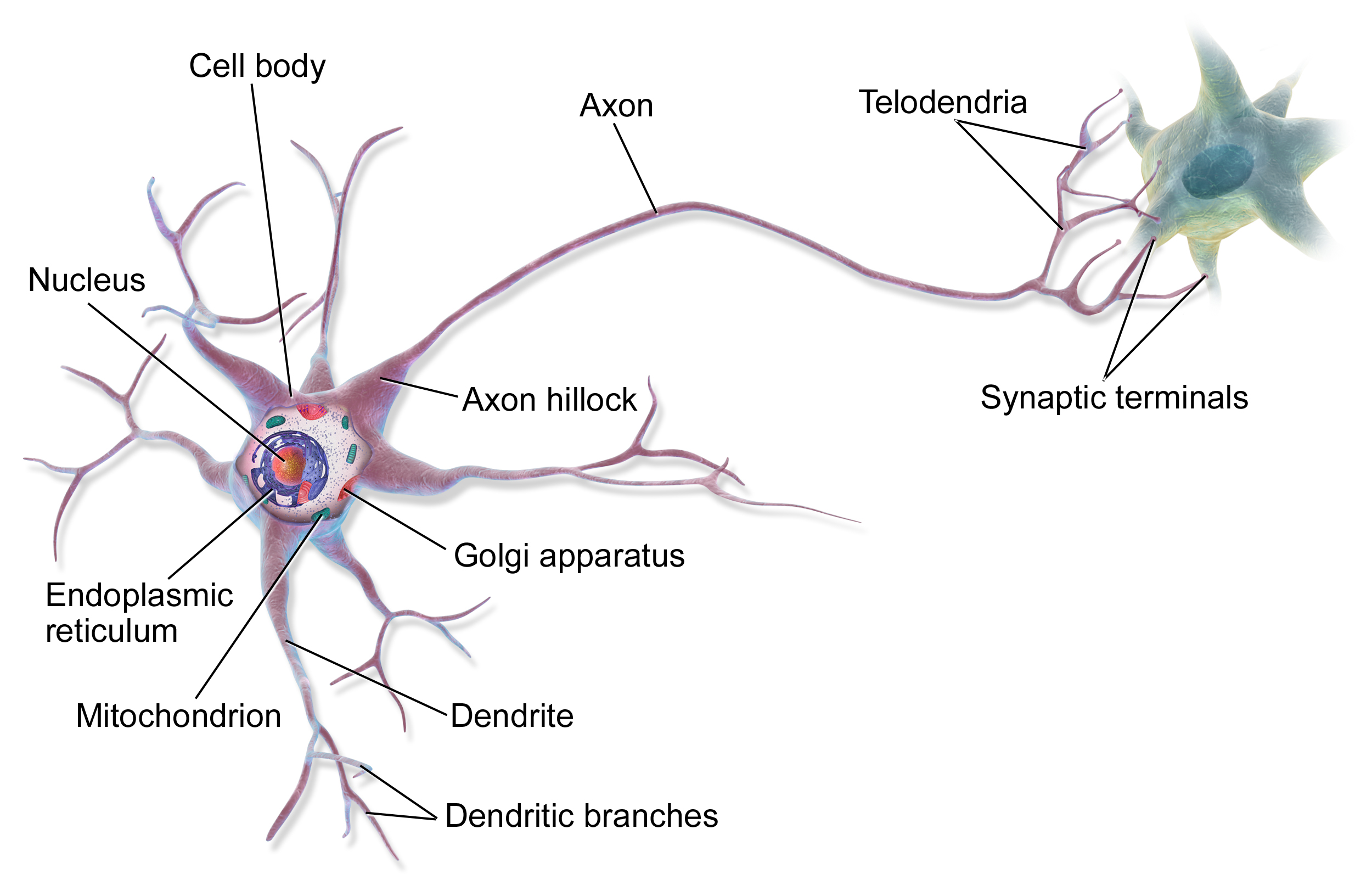
At its core, neural circuitry operates through the coordinated activity of neurons, the fundamental signaling units of the nervous system. Neurons communicate via electrochemical signals, transmitting information across synapses, which are specialized junctions between cells. When a neuron receives sufficient excitatory input, it fires an action potential, a brief electrical impulse that travels down its axon. This impulse triggers the release of neurotransmitters into the synaptic cleft, which then bind to receptors on the postsynaptic neuron, either exciting or inhibiting its activity. The pattern and strength of these synaptic connections, along with the intrinsic properties of individual neurons, define the computational capabilities of a circuit. For instance, a simple reflex arc involves a sensory neuron directly synapsing with a motor neuron, enabling rapid, involuntary responses. More complex circuits involve interneurons that process and integrate signals from multiple sources, allowing for sophisticated computations like pattern recognition and decision-making, as seen in the visual cortex or hippocampus.
📊 Key Facts & Numbers
The sheer scale of neural circuitry is mind-boggling. Studies estimate that the cerebral cortex alone has approximately 16 billion neurons. The cerebellum, responsible for motor control, contains over 69 billion neurons, more than any other brain region. Even a simple organism like the nematode Caenorhabditis elegans has a precisely mapped nervous system of just 302 neurons. In terms of artificial neural networks, the largest models now boast hundreds of billions, and even trillions, of parameters, mimicking the scale of biological systems, though their underlying architecture and learning mechanisms differ significantly. The energy consumption of the human brain, powered by these circuits, is remarkably efficient, using about 20 watts, far less than the power required by comparable artificial systems.
👥 Key People & Organizations
Key figures in understanding neural circuitry include Santiago Ramón y Cajal, whose "neuron doctrine" revolutionized neuroscience. Charles Sherrington coined the term "synapse" and elucidated principles of synaptic integration. Edgar Adrian's work on action potentials earned him a Nobel Prize. In computational neuroscience, Warren McCulloch and Walter Pitts developed early artificial neuron models. More recently, researchers like Jeff Lichtman at Harvard University have pioneered techniques for mapping neural circuits at the synaptic level using electron microscopy, while Karl Deisseroth at Stanford University has developed optogenetic tools to control and study neuronal activity. Organizations such as the Allen Institute for Brain Science are undertaking massive efforts to map and model brain circuitry, aiming to create comprehensive atlases of neural connections.
🌍 Cultural Impact & Influence
Neural circuitry has profoundly influenced our understanding of ourselves and has permeated popular culture and technological innovation. The "neuron doctrine" fundamentally changed how we perceive the brain, moving from a holistic view to one based on discrete cellular units. This biological understanding directly inspired the field of artificial intelligence, particularly the development of artificial neural networks by researchers like Geoffrey Hinton and Yann LeCun. Concepts like learning, memory, and consciousness, once purely philosophical, are now investigated through the lens of neural circuit function. The depiction of brain-computer interfaces and advanced AI in science fiction, from The Matrix to Westworld, reflects a cultural fascination with the potential of understanding and manipulating neural wiring. The ongoing quest to map the brain, epitomized by initiatives like the Human Brain Project, captures public imagination and fuels scientific ambition.
⚡ Current State & Latest Developments
The current frontier in neural circuitry research involves high-throughput techniques for mapping and manipulating neuronal connections at unprecedented scales. Connectomics, the study of the complete set of neural connections in an organism, is rapidly advancing thanks to innovations in electron microscopy and automated reconstruction algorithms, exemplified by projects mapping the entire Drosophila melanogaster (fruit fly) brain. Optogenetics and chemogenetics, developed by researchers like Karl Deisseroth, allow for precise control of specific neuron types, enabling causal investigations into circuit function. Furthermore, the integration of machine learning with neuroscientific data is accelerating discovery, helping to identify patterns and extract meaning from vast datasets. The development of advanced brain-computer interfaces (BCIs) is also a rapidly evolving area, with applications ranging from restoring motor function to enabling new forms of human-computer interaction, driven by companies like Neuralink and Synchron.
🤔 Controversies & Debates
Significant controversies and debates surround the study of neural circuitry. A central tension lies in the reductionist versus emergentist debate: to what extent can complex cognitive functions be fully explained by the properties of individual circuits, versus the possibility of emergent properties arising from the system as a whole? The "wiring diagram" approach, while powerful, faces challenges in capturing the dynamic, plastic nature of neural connections, which change with experience and learning. There's also ongoing debate about the best methods for studying circuits, with differing views on the utility of detailed synaptic mapping versus functional imaging and perturbation techniques. Furthermore, the ethical implications of advanced BCIs and the potential for "mind-reading" technologies raise profound questions about privacy, autonomy, and the very definition of self, particularly as companies like Neuralink push the boundaries of brain-computer integration.
🔮 Future Outlook & Predictions
The future of neural circuitry research points towards increasingly comprehensive mapping and sophisticated computational modeling. We can expect to see full synaptic-level connectomes of more complex organisms, potentially including parts of the mammalian brain, within the next decade. Advances in AI will likely play a crucial role in analyzing these massive datasets and generating predictive models of circuit behavior. The development of more refined tools for manipulating neural activity, perhaps moving beyond current optogenetic and chemogenetic methods, could allow for even finer-grained control and understanding. This will undoubtedly fuel further progress in neuroprosthetics, neuromorphic computing, and therapeutic interventions for neurological and psychiatric disorders. The ultimate goal for many is to achieve a mechanistic understanding of the brain, enabling us to repair damage and enhance function.
💡 Practical Applications
Practical applications of understanding neural circuitry are vast and growing. Neuroprosthetics aim to restore lost sensory or motor functions by interfacing with the nervous system, such as advanced artificial limbs controlled by neural signals or cochlear implants that bypass damaged auditory pathways. Neuromorphic computing seeks to design computer hardware that mimics the structure and function of biological neural networks, promising more energy-efficient and powerful AI systems. Therapeutic interventions for neurological and psychiatric disorders, including Parkinson's disease, epilepsy, and depression, are being developed based on modulating aberrant neural circuit activity through techniques like deep brain stimulation. Furthermore, brain-computer interfaces (BCIs) are opening new avenues for communication and control for individuals with severe motor impairments, and are being explored for broader applications in gaming, education, and human augmentation.
Key Facts
- Category
- science
- Type
- topic