
Contents
Overview
Non-fungible tokens (NFTs), once hailed as revolutionary for digital ownership and art markets, have become a lightning rod for criticism. While proponents champion their ability to authenticate digital assets and empower creators, detractors point to a host of issues. These include the significant environmental impact of the underlying blockchain technologies, particularly Proof-of-Work systems like Ethereum's pre-merge, the rampant speculation and volatility creating economic bubbles akin to Ponzi schemes, and concerns over the actual ownership and permanence of digital assets. Critics argue that NFTs often represent little more than expensive receipts for digital files that can still be easily copied or disappear if the hosting platform fails, raising fundamental questions about value, utility, and sustainability in the digital realm.
🎵 Origins & History
The genesis of NFT criticisms can be traced back to the very early days of cryptocurrency and blockchain technology, long before the term 'NFT' entered mainstream consciousness. Concerns about the energy consumption of Proof-of-Work consensus mechanisms laid the groundwork for environmental critiques. As NFTs gained traction, the specific issues of scalability and energy usage became more pronounced. Elizabeth Warren and environmental organizations began highlighting the carbon footprint associated with minting and trading these unique tokens, drawing parallels to the broader environmental debates surrounding Bitcoin mining. The subsequent explosion in NFT popularity, driven by high-profile sales and celebrity endorsements, amplified these concerns, turning environmental impact into a central pillar of NFT criticism.
⚙️ How It Works
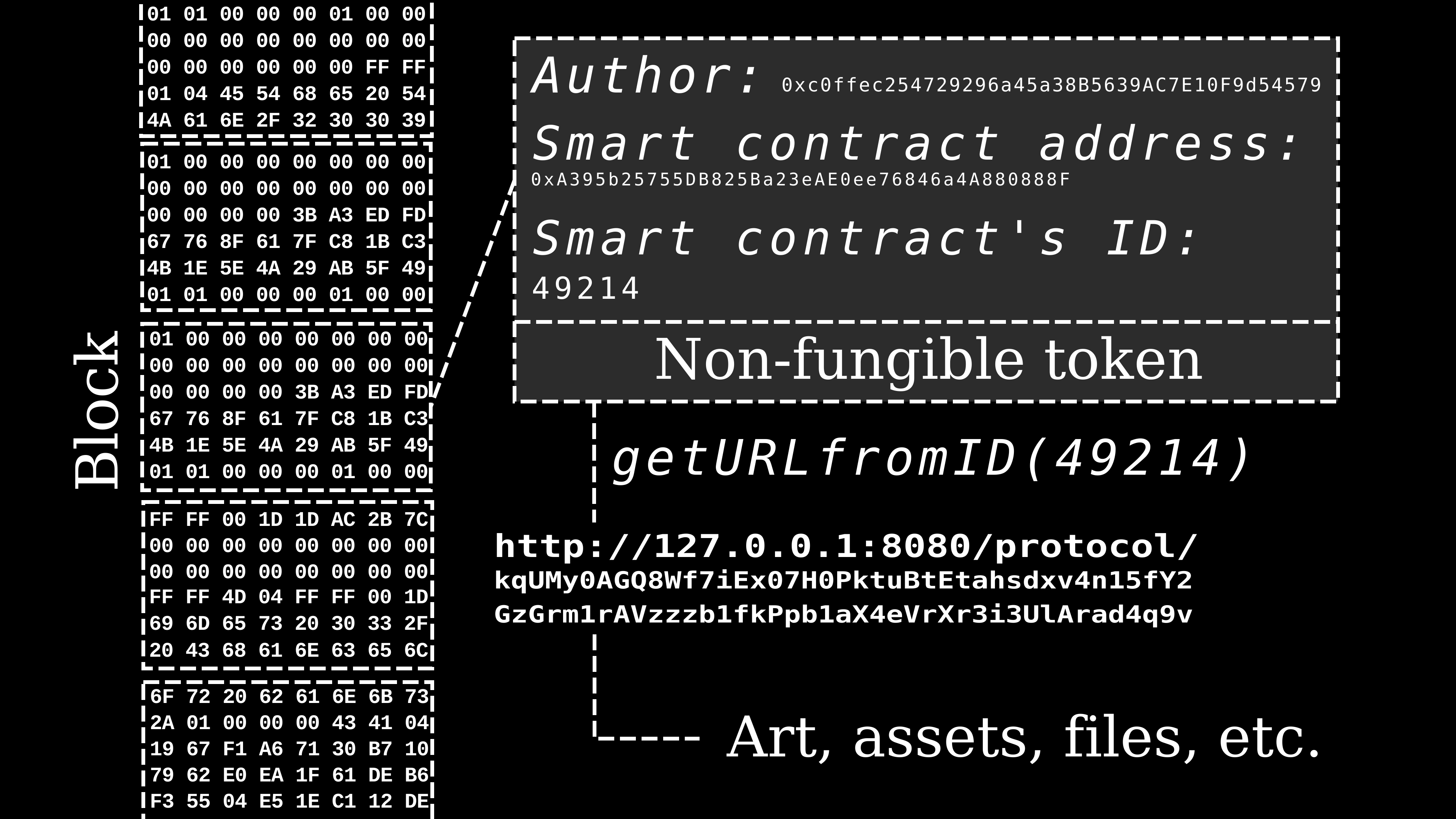
NFTs function by leveraging blockchain technology, typically Ethereum, to create unique, non-interchangeable digital tokens. Each NFT is essentially a pointer to a digital asset, such as an image, video, or audio file, stored elsewhere. The criticism here lies in the 'pointer' aspect: the NFT itself is not the artwork, but a record of ownership on a distributed ledger. This means the actual digital file can be lost, corrupted, or moved, rendering the NFT effectively valueless. Furthermore, the process of 'minting' an NFT—recording it on the blockchain—and subsequent transactions require significant computational power, especially on Proof-of-Work blockchains, leading to substantial energy consumption and carbon emissions, a point heavily scrutinized by environmental activists and tech ethicists. The immutability of the blockchain, while a feature, also means that fraudulent or undesirable content, once minted, cannot be easily removed.
📊 Key Facts & Numbers
The scale of NFT trading has been a major point of contention. The global NFT market saw a dramatic boom followed by a bust; sales volume reportedly dropped significantly. A September 2023 analysis by Chainalysis indicated that over 95% of NFT collections had zero monetary value, with daily active users on NFT marketplaces falling by over 90% from their peak. The total value locked in NFT-related decentralized finance (DeFi) protocols also saw a significant decline, underscoring the speculative nature and volatility that critics frequently highlight.
👥 Key People & Organizations
Key figures and organizations have emerged both as proponents and critics of NFTs. Vitalik Buterin, co-founder of Ethereum, has acknowledged the environmental concerns, advocating for the network's transition to Proof-of-Stake (which Ethereum completed in September 2022), significantly reducing energy consumption. On the critical side, environmental groups like Extinction Rebellion and artists have vocally protested the ecological impact. Organizations such as Chainalysis provide data-driven analyses of the market's trends and risks, often highlighting the speculative bubbles and wash trading. Tech journalists and economists, including those at The Verge and Bloomberg, have consistently reported on the market's volatility and the ethical questions surrounding NFT ownership and value.
🌍 Cultural Impact & Influence
NFTs have profoundly influenced the digital art world, creating new avenues for artists to monetize their work and connect directly with collectors, bypassing traditional galleries. However, this has also led to a surge in copyright infringement cases, where artists' work is minted as NFTs without their permission, a phenomenon widely condemned by creators' rights advocates. The speculative frenzy surrounding NFTs also influenced broader cultural perceptions of digital ownership, investment, and the value of digital assets. The association of NFTs with lavish spending and 'get rich quick' schemes, particularly during the 2021 peak, has led to a cultural backlash, with many viewing the phenomenon as a frivolous bubble detached from real-world utility or artistic merit. The cultural impact is also seen in the rise of NFT-themed communities and the integration of NFTs into gaming and virtual worlds, though these too face criticism for their speculative underpinnings.
⚡ Current State & Latest Developments
As of late 2024, the NFT market has largely stabilized after its dramatic crash, though it remains a fraction of its 2021 peak. Trading volumes have decreased significantly, and the focus has shifted from speculative art sales to more utility-driven applications. Projects exploring NFTs for ticketing, loyalty programs, and digital identity are gaining traction, attempting to move beyond the hype. However, the market is still characterized by significant volatility, and many collections continue to struggle for relevance. Regulatory scrutiny is also increasing globally, with bodies like the U.S. Securities and Exchange Commission (SEC) examining whether certain NFTs constitute unregistered securities. The ongoing debate about environmental impact, though lessened by the shift to Proof-of-Stake, still lingers for older, energy-intensive blockchains.
🤔 Controversies & Debates
The controversies surrounding NFTs are multifaceted. Environmental impact remains a significant concern, despite the shift to Proof-of-Stake for major blockchains like Ethereum, as many NFTs still reside on older, energy-intensive chains. The speculative nature of the market has led to accusations of it being a 'bubble' or even a Ponzi scheme, with prices driven by hype rather than intrinsic value. Issues of copyright infringement, where artists' work is tokenized without consent, are rampant. Furthermore, the concept of 'ownership' itself is debated: owning an NFT often means owning a token that points to a digital file, which can be lost, deleted, or hosted on a platform that ceases to exist, raising questions about the permanence and true value of the asset. Scams, rug pulls, and wash trading have also plagued the space, eroding trust and leading to significant financial losses for many investors.
🔮 Future Outlook & Predictions
The future outlook for NFTs is uncertain and heavily debated. Pessimists predict a continued decline, with most current NFT projects failing to find sustainable use cases beyond speculation. Optimists, however, foresee a future where NFTs become integrated into various digital and physical experiences, providing verifiable ownership for digital collectibles, in-game assets, event tickets, and even real-world property deeds. The success of this transition hinges on developing clearer regulatory frameworks, addressing environmental concerns more comprehensively (perhaps through carbon offsetting or more energy-efficient blockchains), and demonstrating tangible utility beyond speculative trading. The potential for NFTs to revolutionize digital rights management and creator economies remains, but significant technical, ethical, and market hurdles must be overcome for this vision to materialize. The next few years will likely see a significant consolidation, with only projects offering genuine utility surviving.
💡 Practical Applications
Despite the criticisms, NFTs have found practical applications beyond speculative art. In gaming, they are used to represent unique in-game items, characters, or virtual land that players can truly own and trade, as seen in games like Axie Infinity. Event organizers are exploring NFTs for ticketing, offering benefits like exclusive access or merchandise. Brands are exper
Key Facts
- Category
- culture
- Type
- topic