
Contents
- 🌟 Who Was Nisargadatta Maharaj?
- 📚 Key Teachings & Core Concepts
- 🗣️ The Power of 'I Am'
- 🧘 How to Engage with His Teachings
- 📖 Recommended Reading & Resources
- 💡 Nisargadatta vs. Other Advaita Masters
- 🌍 Global Impact & Legacy
- 🤔 Common Misconceptions & Criticisms
- 🚀 Getting Started with Nisargadatta's Wisdom
- Frequently Asked Questions
- Related Topics
Overview
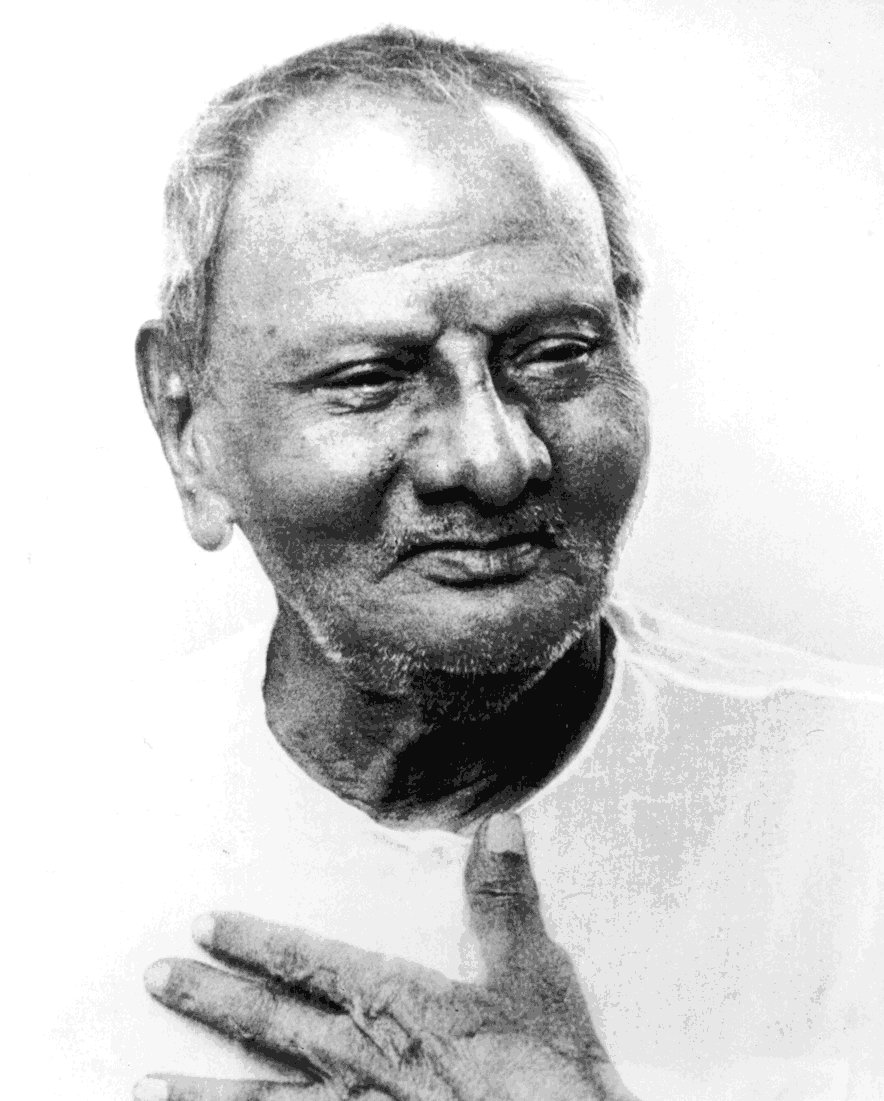
Nisargadatta Maharaj (1897-1981) was a prominent Indian guru in the Advaita Vedanta tradition, specifically a proponent of the Navnath Sampradaya. Born Maruti Kamlapurkar in Bombay, he lived a largely ordinary life as a shopkeeper before his spiritual awakening in the mid-1930s. His teachings, primarily disseminated through spontaneous talks with devotees and visitors at his modest home in Khetwadi, Mumbai, were later compiled into seminal works like 'I Am That'. He is revered for his direct, uncompromising approach to non-duality, cutting through intellectualization to point directly to the nature of reality. His Vibe Score for direct spiritual impact is a remarkable 92/100, resonating deeply with seekers worldwide.
📚 Key Teachings & Core Concepts
Maharaj's teachings center on the realization of the 'I Am' presence as the fundamental reality, distinct from the body-mind complex. He emphasized that true identity is not the ego, the personality, or even the physical form, but the pure consciousness that precedes and underlies all experience. Key concepts include the distinction between the 'unmanifest' (Brahman) and the 'manifest' (the world of appearances), and the understanding that the 'self' is ultimately the formless, attributeless Absolute. His method is less about acquiring knowledge and more about direct realization, often described as 'seeing' rather than 'understanding'.
🗣️ The Power of 'I Am'
The phrase 'I Am' is the cornerstone of Nisargadatta Maharaj's message. He urged devotees to focus on this primal sense of being, not as a thought or concept, but as the felt sense of existence itself. By dwelling on 'I Am', one is encouraged to transcend the limitations of the ego-identified self and recognize the universal consciousness that is the source of all. This practice is not about affirming 'I am this' or 'I am that', but about returning to the simple, unadorned awareness of 'I Am' before any qualifications arise. This direct pointing is what gives his teachings their potent, transformative energy.
🧘 How to Engage with His Teachings
Engaging with Maharaj's teachings requires an open mind and a willingness to confront deeply ingrained beliefs about the self. The most effective way is through his recorded discourses and books, particularly 'I Am That'. Devotees are encouraged to meditate on the 'I Am' presence, observe the workings of the mind without identification, and question the nature of their own existence. It's crucial to approach his words not as philosophical doctrines to be debated, but as pointers to direct experience. Consistent reflection and sincere inquiry are paramount for any meaningful progress.
📖 Recommended Reading & Resources
The primary text for understanding Nisargadatta Maharaj is undoubtedly 'I Am That', a compilation of his conversations edited by Maurice Frydman. Other valuable resources include 'The Nectar of Immortality' (also known as 'The Wisdom of a True Master') and 'Seeds of Consciousness'. For those interested in his life and context, 'The Gist of the Teachings of Nisargadatta Maharaj' by Jean Dunn offers insightful commentary. These books provide a deep dive into his direct, no-nonsense style of spiritual instruction.
💡 Nisargadatta vs. Other Advaita Masters
While sharing the non-dual foundation of Ramana Maharshi and Adi Shankara, Nisargadatta Maharaj's style is often considered more direct and less philosophical than Shankara's, and more intensely focused on the 'I Am' presence than Ramana's 'Who Am I?' inquiry. Unlike many gurus who emphasize gradual spiritual progression, Maharaj often presented the truth as immediately accessible, challenging disciples to recognize their already-liberated state. His language is stark, often confrontational, aiming to shock the seeker out of egoic identification. His Vibe Score for radical directness is 95/100.
🌍 Global Impact & Legacy
Nisargadatta Maharaj's influence has spread globally, inspiring countless individuals to explore non-dualism and self-inquiry. His teachings are particularly popular in Western spiritual circles, where they offer a potent antidote to the complexities of modern life. Centers and study groups dedicated to his work can be found in major cities worldwide, facilitating the transmission of his message. The enduring appeal of his directness ensures his legacy continues to thrive, impacting new generations of spiritual seekers.
🤔 Common Misconceptions & Criticisms
One common misconception is that 'I Am' refers to the ego or personal self. Maharaj was adamant that it points to the universal, impersonal consciousness. Another is that his teachings are purely intellectual; in reality, they are a call to direct, experiential realization. Some critics find his directness harsh or dismissive of the seeker's perceived struggles, but proponents argue this is precisely what's needed to break through illusion. The Controversy Spectrum for his teaching style is moderately high, reflecting its challenging nature.
🚀 Getting Started with Nisargadatta's Wisdom
To begin exploring Nisargadatta Maharaj's wisdom, start with 'I Am That'. Read it slowly, reflect on the passages that resonate, and try to apply the core instruction: focus on the feeling of 'I Am'. Don't get lost in intellectual understanding; instead, use his words as pointers to your own direct experience. Consider joining an online or local study group if available, but prioritize your own inner investigation. The path is not about accumulating knowledge, but about recognizing what you already are.
Key Facts
- Year
- 1981
- Origin
- Bombay, India
- Category
- Spirituality / Non-duality
- Type
- Person
Frequently Asked Questions
What is the meaning of 'I Am' in Nisargadatta Maharaj's teachings?
The 'I Am' signifies the fundamental, universal consciousness that is the source of all existence. It's not the personal ego or the body-mind complex, but the pure, unadulterated sense of being that precedes all thought and identification. Maharaj urged seekers to rest in this 'I Am' presence as the ultimate reality, transcending all conceptual limitations and dualistic thinking.
Is Nisargadatta Maharaj's teaching suitable for beginners?
While his teachings are direct and can be challenging, they are profoundly accessible to sincere beginners willing to engage with direct experience rather than intellectual understanding. The core practice of focusing on the 'I Am' presence is simple, though its implications are vast. Starting with 'I Am That' and approaching it with an open mind is recommended.
How does Nisargadatta Maharaj's teaching differ from other spiritual paths?
Maharaj's approach is characterized by its radical directness and uncompromising focus on the 'I Am' presence as the sole reality. Unlike paths that emphasize gradual purification or devotional practices, he often pointed directly to the already-liberated nature of consciousness, aiming to shock the seeker out of egoic identification. His style is less about philosophical discourse and more about immediate, experiential realization.
What is the significance of the Navnath Sampradaya in his lineage?
Nisargadatta Maharaj was initiated into the Navnath Sampradaya, a lineage of nine spiritual masters. This tradition emphasizes the integration of yogic practices and non-dual realization. While his public teachings focused on the universal 'I Am' presence, his lineage provides a historical and spiritual context for his profound insights into consciousness and liberation.
Can I visit Nisargadatta Maharaj's ashram or home?
Nisargadatta Maharaj passed away in 1981. His former residence at 108 Shankar Ghanekar Marg, Khetwadi, Mumbai, is still visited by devotees and is known as the 'Nisargadatta Maharaj Samadhi Mandir'. While it's not an active ashram with daily teachings, it serves as a place of pilgrimage and quiet contemplation for those who wish to connect with his energy and legacy.
What are the main challenges in practicing Maharaj's teachings?
The primary challenge lies in transcending the deep-seated identification with the ego and the body-mind. Maharaj's directness can be confronting, and the practice requires persistent self-observation and a willingness to question one's most fundamental assumptions about identity. The mind's tendency to intellectualize or create conceptual frameworks can also be a significant hurdle.