
Contents
Overview
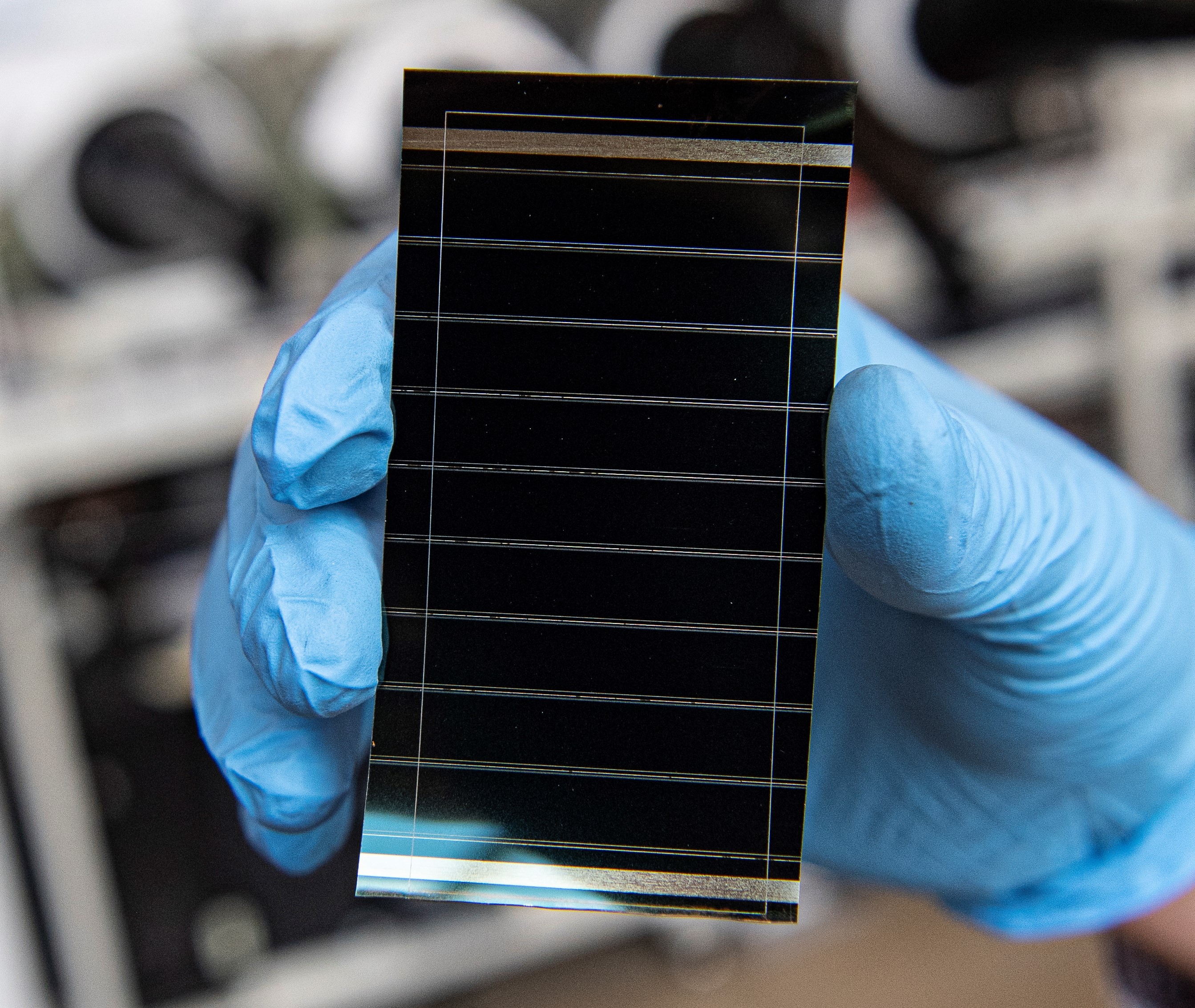
The story of perovskite solar cells is a tale of serendipity and rapid iteration. While the perovskite crystal structure itself, named after Russian mineralogist Lev Perovski, was discovered in 1837, its application in photovoltaics is a much more recent phenomenon. Early research in the late 1990s and early 2000s explored perovskite materials for light-emitting diodes and lasers. The true dawn of PSCs began around 2009 when researchers first reported using a liquid dye-sensitized solar cell architecture incorporating a methylammonium lead halide perovskite as the sensitizer. This initial 3.8% efficiency, while modest, ignited a firestorm of interest. By 2012, Michael Grätzel and Henry Snaith independently demonstrated solid-state PSCs, bypassing the instability issues of liquid electrolytes and paving the way for higher efficiencies and practical applications. This breakthrough, detailed in publications from Nature, marked a pivotal moment, shifting the field's focus from dye-sensitized to solid-state architectures.
⚙️ How It Works
At its heart, a perovskite solar cell functions by absorbing sunlight and converting it into electricity, much like its silicon counterpart. The key is the perovskite layer, typically a hybrid organic-inorganic compound with the chemical formula ABX₃, where 'A' is often a small cation like methylammonium (MA) or cesium (Cs), 'B' is a metal cation (commonly lead (Pb) or tin (Sn)), and 'X' is a halide anion (iodide (I), bromide (Br), or chloride (Cl)). When photons strike this layer, they excite electrons, creating electron-hole pairs. These charge carriers are then efficiently extracted by adjacent electron transport layers (ETLs) and hole transport layers (HTLs). For instance, titanium dioxide (TiO₂) often serves as the ETL, while Spiro-OMeTAD is a common HTL. The specific arrangement and material choices for these layers, along with the electrode materials, are critical for maximizing charge collection and minimizing recombination losses, thereby boosting the overall power conversion efficiency.
📊 Key Facts & Numbers
The numbers surrounding perovskite solar cells are nothing short of astonishing. In just over a decade, laboratory efficiencies have skyrocketed. When paired with silicon in tandem configurations, PSCs have pushed efficiencies beyond 34.85%, surpassing the theoretical limits of silicon alone. The projected manufacturing cost for PSCs is estimated to be as low as $0.10-$0.20 per watt, a significant reduction compared to silicon panels which currently hover around $0.30-$0.40 per watt. Furthermore, research indicates that PSCs can achieve high efficiencies even with active layers as thin as 300 nanometers, drastically reducing material usage. The global market for perovskite solar cells is projected to reach over $1.5 billion by 2028, demonstrating rapid commercial interest.
👥 Key People & Organizations
Several key individuals and organizations have been instrumental in the rapid development of perovskite solar cells. Michael Grätzel, a Swiss chemist at the École Polytechnique Fédérale de Lausanne (EPFL), is a foundational figure, whose work on dye-sensitized solar cells laid crucial groundwork. Henry Snaith, a professor at the University of Oxford, is widely recognized for his pioneering work on solid-state perovskite solar cells and co-founding Oxford PV, a leading company in the field. Other significant contributors include Nam-Gyu Park from the Korea Advanced Institute of Science and Technology (KAIST), whose group has made substantial contributions to stability and efficiency. Major research institutions like the Fujifilm Corporation and Solaronix are also actively developing and commercializing PSC technology, alongside numerous university labs globally.
🌍 Cultural Impact & Influence
The rapid rise of perovskite solar cells has sent ripples through the established photovoltaic industry, primarily dominated by silicon solar cells. Their potential to achieve efficiencies exceeding silicon, coupled with significantly lower manufacturing costs and flexibility, has sparked a wave of innovation and investment. This has led to a vibrant ecosystem of startups and research initiatives, creating a palpable buzz around the technology's disruptive potential. The ability to print PSCs onto flexible substrates opens up entirely new application areas, from building-integrated photovoltaics (BIPV) to portable electronics, challenging the traditional rigid panel paradigm. This technological dynamism has also spurred academic discourse and public interest, positioning PSCs as a symbol of next-generation clean energy solutions.
⚡ Current State & Latest Developments
As of 2024-2025, the perovskite solar cell landscape is characterized by intense research and development focused on commercialization. Companies like Oxford PV are actively producing tandem cells that integrate perovskites with silicon, aiming to break the 30% efficiency barrier in mass production. Efforts are also underway to develop all-perovskite tandem cells, which could offer even greater cost reductions. Significant progress is being made in addressing the stability issue, with new encapsulation techniques and material compositions extending operational lifetimes. Pilot manufacturing lines are being established globally, with China and Europe showing particular interest. The first commercial perovskite-based products, such as flexible solar chargers and BIPV modules, are beginning to emerge, signaling a transition from laboratory curiosity to market reality.
🤔 Controversies & Debates
The primary controversies surrounding perovskite solar cells revolve around their long-term stability and the toxicity of lead. While lab efficiencies are impressive, real-world operational lifetimes remain a concern, with many devices degrading significantly within thousands of hours, far short of silicon's 25-30 year lifespan. The use of lead, a known toxic heavy metal, raises environmental and health concerns, particularly regarding disposal and potential leakage. While researchers are exploring lead-free alternatives like tin-based perovskites, these often suffer from lower efficiencies and even greater instability. The debate centers on whether these stability and toxicity issues can be adequately resolved to justify widespread commercial deployment and whether the rapid efficiency gains outweigh the inherent risks compared to mature silicon technology.
🔮 Future Outlook & Predictions
The future of perovskite solar cells looks exceptionally bright, albeit with caveats. Projections suggest that by 2030, perovskite-silicon tandem cells could capture a significant share of the high-efficiency solar market, potentially reaching efficiencies of 35-40%. All-perovskite tandems are also on the horizon, promising even lower costs and greater design flexibility. Continued research into lead-free alternatives and advanced encapsulation methods is expected to mitigate toxicity and stability concerns. The integration of PSCs into flexible electronics, wearables, and even windows is likely to expand their application scope dramatically. The ultimate success will hinge on achieving cost-effective, large-scale manufacturing that meets stringent durability standards, potentially reshaping the global energy landscape.
💡 Practical Applications
Perovskite solar cells offer a diverse range of practical applications beyond traditional rooftop installations. Their flexibility and lightweight nature make them ideal for building-integrated photovoltaics (BIPV), seamlessly incorporated into facades, windows, and roofing materials. They are also being developed for portable electronics, such as charging surfaces for smartphones and laptops, and for powering Internet of Things (IoT) devices. In the automotive sector, PSCs could be integrated into vehicle roofs and bodies to supplement battery power. Furthermore, their tunable bandgap allows for use in tandem cells with silicon, boosting the efficiency of existing solar far
Key Facts
- Category
- technology
- Type
- topic