
Contents
Overview
Programmable Logic Controllers (PLCs) are ruggedized industrial computers designed for controlling manufacturing processes, assembly lines, robotic devices, or any activity that requires high reliability, ease of programming, and process fault diagnosis. Unlike general-purpose computers, PLCs are built to withstand harsh environments, including extreme temperatures, humidity, and vibration. They are the unsung heroes of modern manufacturing, enabling everything from simple on/off switching to complex, coordinated multi-axis motion control. Their programming is typically done using ladder logic, function block diagrams, or structured text, making them accessible to a range of technical skill sets. The PLC market is dominated by giants like Siemens, Rockwell Automation, and Schneider Electric, with ongoing innovation pushing towards greater connectivity, cloud integration, and AI-driven optimization.
⚙️ What Exactly is a PLC?
A PLC is the ruggedized, industrial-grade computer that forms the backbone of modern automation. Think of it as the brain of a factory floor, a water treatment plant, or even a complex amusement park ride. Unlike the PCs on your desk, PLCs are built to withstand harsh environments – extreme temperatures, vibration, electrical noise, and constant operation. They read inputs from sensors (like temperature probes or limit switches), execute a programmed logic, and then control outputs (like motors, valves, or indicator lights) to automate processes. The first PLC was developed by Modicon in 1968, revolutionizing manufacturing by replacing complex relay logic systems.
🎯 Who Needs a PLC?
If you're involved in any process that requires repetitive tasks, precise timing, or sequential operations, you likely need a PLC. This includes manufacturing engineers designing assembly lines, process control specialists managing chemical plants, building automation technicians overseeing HVAC systems, and even robotics engineers integrating automated machinery. Anyone looking to increase efficiency, improve safety, reduce human error, and enable remote monitoring and control of industrial operations will find PLCs indispensable. The ability to reprogram logic without rewiring is a key differentiator for industrial settings.
💡 Core Functionality & Components
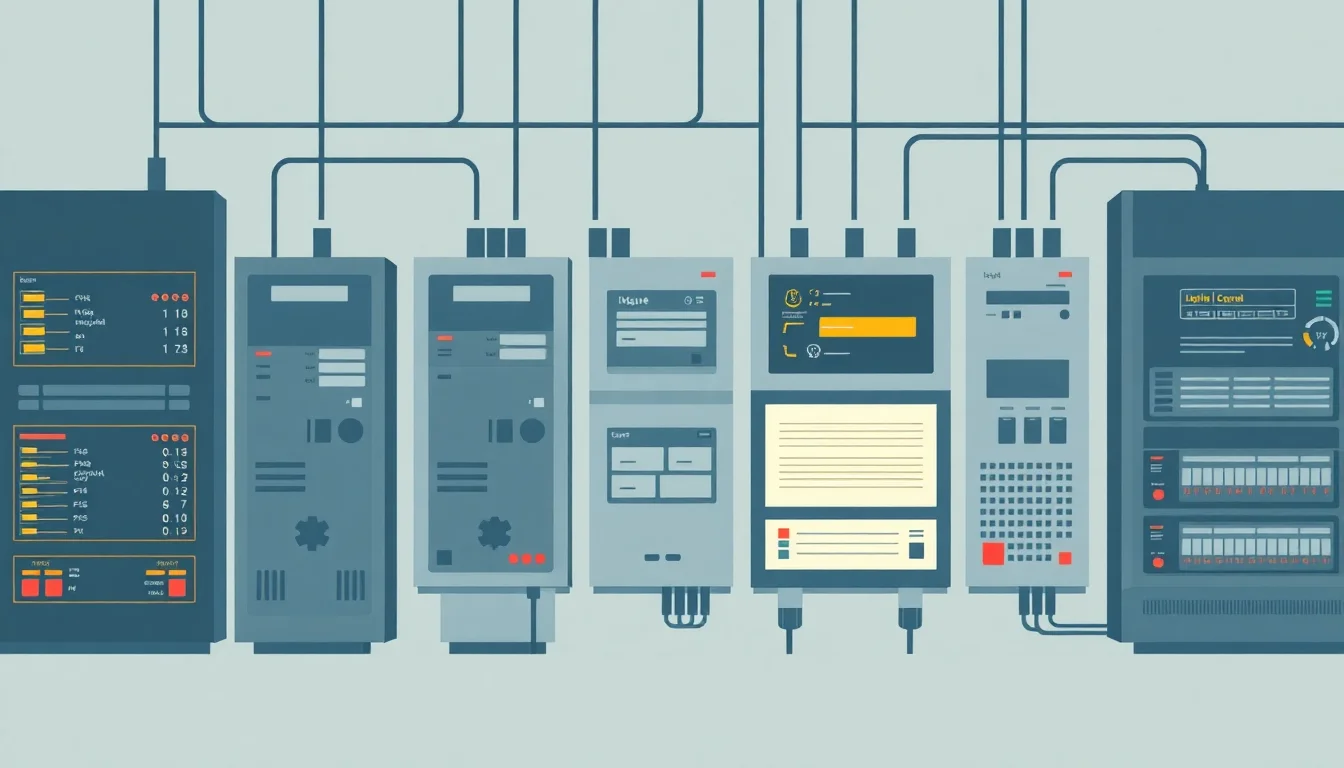
At its heart, a PLC consists of a CPU, a memory module, input modules, and output modules, all housed in a durable chassis. The CPU executes the user-written program, typically in ladder diagram, function block diagram, or structured text. Input modules interface with the physical world, converting sensor signals into digital data the CPU can understand. Output modules do the reverse, translating the CPU's decisions into electrical signals to activate actuators. HMIs are often paired with PLCs to provide operators with visual feedback and control capabilities.
🆚 PLC vs. Other Controllers
Compared to older relay-based control systems, PLCs offer vastly superior flexibility and scalability. They are also more compact and consume less power. While DCS handle larger, more complex plant-wide control, and SBCs or microcontrollers might be suitable for simpler embedded applications, PLCs strike a balance for discrete and process control. For highly critical, real-time applications, safety-rated PLCs are specifically designed to meet stringent safety integrity levels (SIL).
📈 Market Trends & Future
The PLC market is experiencing robust growth, driven by the ongoing adoption of IIoT and Industry 4.0 initiatives. We're seeing a trend towards more powerful, networked PLCs with advanced diagnostics, cybersecurity features, and cloud connectivity. The integration of AI and machine learning for predictive maintenance and process optimization is also on the horizon. Expect to see smaller, more modular PLCs for specialized applications, alongside larger systems capable of handling massive data streams. The future is undeniably connected and intelligent.
💰 Cost Considerations
The cost of a PLC can range dramatically, from a few hundred dollars for a small, basic unit suitable for simple tasks to tens of thousands for high-end, redundant systems designed for critical infrastructure. Factors influencing price include processing power, memory capacity, number and type of I/O modules, communication protocols supported (e.g., Ethernet/IP, PROFINET), environmental ratings, and vendor reputation. Software licenses for programming and configuration can also add to the overall investment. Budgeting requires a clear understanding of the application's specific requirements.
🛠️ Getting Started with PLCs
Getting started with PLCs involves defining your automation needs. What process do you want to control? What inputs are required (sensors, switches)? What outputs need to be actuated (motors, valves)? Once these are clear, select a PLC vendor and model that meets your I/O count, processing power, and communication requirements. Most major vendors like Allen-Bradley, Siemens, and Schneider Electric offer starter kits and comprehensive documentation. Learning a programming language like ladder logic is crucial for implementing your control strategy.
📚 Further Learning & Resources
To truly master PLCs, continuous learning is key. Many vendors offer official training courses, often with certification programs. Online platforms like Udemy and Coursera provide courses on PLC programming and industrial automation. Vibepedia.wiki itself offers extensive resources on related topics such as SCADA, HMIs, and various industrial communication protocols. Engaging with online forums and communities dedicated to industrial automation can also provide invaluable practical insights and troubleshooting tips.
Key Facts
- Year
- 1968
- Origin
- USA
- Category
- Industrial Automation
- Type
- Technology
Frequently Asked Questions
What is the difference between a PLC and a DCS?
A PLC is typically used for discrete control of individual machines or smaller processes, focusing on high-speed logic. A Distributed Control System (DCS) is designed for controlling large, complex continuous processes across an entire plant, offering integrated control, monitoring, and management capabilities. DCS systems are generally more expensive and complex than PLCs.
What programming languages are used for PLCs?
The most common language is ladder diagram (LD), which visually resembles electrical relay circuits. Other IEC 61131-3 standard languages include Function Block Diagram (FBD), Structured Text (ST), Instruction List (IL), and Sequential Function Chart (SFC). The choice often depends on the application and the programmer's familiarity.
Can PLCs connect to the internet?
Yes, modern PLCs can connect to networks, including the internet, via Ethernet ports and various communication protocols. This enables remote monitoring, control, data logging, and integration with IIoT platforms. However, proper cybersecurity measures are essential when connecting industrial equipment to external networks.
How do I choose the right PLC for my application?
Consider the number and type of inputs/outputs required, the complexity of the logic, processing speed needs, environmental conditions, communication protocols, and budget. Start by clearly defining the scope of your automation project and then consult vendor specifications and application notes.
What is a safety PLC?
A safety PLC is a specialized type of PLC designed to perform safety functions, such as emergency stops or guarding. They are built with redundant components and undergo rigorous testing to meet stringent safety standards (e.g., IEC 61508, ISO 13849). They are crucial for applications where human safety is paramount.
Are PLCs difficult to program?
The learning curve varies. Ladder logic can be intuitive for those with an electrical background. Other languages like Structured Text are more akin to traditional programming. Most vendors provide robust software tools and extensive documentation to aid in programming and troubleshooting.