
Contents
Overview
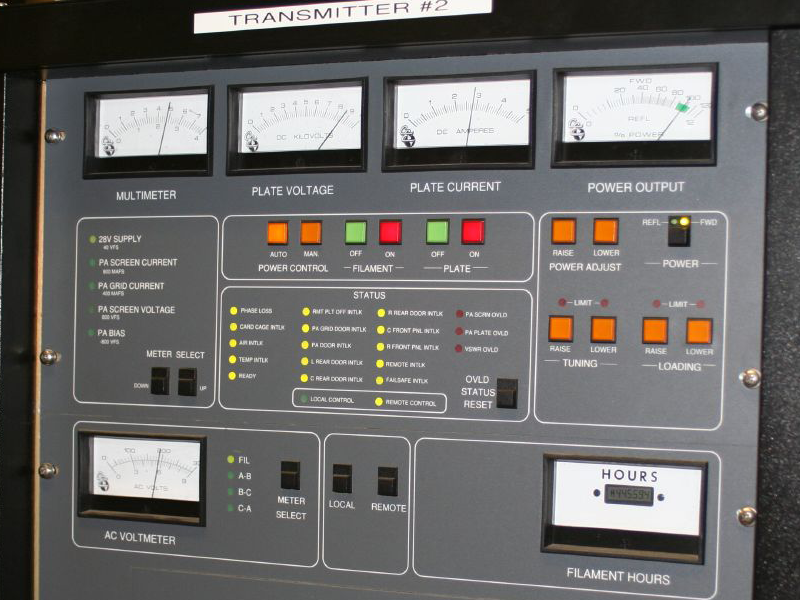
A radio transmitter is an electronic device that generates and emits radio waves, enabling wireless communication. It functions by creating a high-frequency alternating current, which is then fed to an antenna, causing it to radiate electromagnetic energy. These devices are fundamental to a vast array of technologies, from traditional AM/FM radio and television broadcasting to mobile phones, Wi-Fi networks, Bluetooth devices, and sophisticated radar systems. The development of the radio transmitter, tracing its lineage back to pioneers like Guglielmo Marconi and Nikola Tesla, revolutionized global connectivity and information dissemination, fundamentally altering human society and commerce. Its core components typically include an oscillator to generate the carrier wave, a modulator to impress information onto that wave, and an amplifier to boost the signal before transmission.
🎵 Origins & History
The genesis of the radio transmitter is a story of intense scientific rivalry and groundbreaking discovery, primarily in the late 19th and early 20th centuries. While Heinrich Hertz experimentally proved the existence of electromagnetic waves, Nikola Tesla demonstrated wireless transmission of energy and signals, even patenting a system for wireless communication. Guglielmo Marconi is widely credited with developing the first practical radio telegraph system, and the Marconi Company was established. Early transmitters relied on spark-gap oscillators and coherers, crude but effective for their time, paving the way for more sophisticated vacuum tube technologies.
⚙️ How It Works
At its heart, a radio transmitter operates by generating a radio frequency (RF) alternating current (AC) signal. This signal originates from an oscillator circuit, which produces a stable, high-frequency sine wave, known as the carrier wave. To transmit information, this carrier wave must be modified; this process is called modulation. Amplitude Modulation (AM) varies the amplitude of the carrier wave according to the information signal, while Frequency Modulation (FM) varies the carrier wave's frequency. More advanced techniques like Phase Modulation (PM) and Quadrature Amplitude Modulation (QAM) are used in digital systems. The modulated signal is then passed through an amplifier, such as a power amplifier, to increase its strength before being fed to an antenna. The antenna, a crucial component, converts this electrical energy into electromagnetic waves that propagate through space at the speed of light.
📊 Key Facts & Numbers
Broadcasting transmitters, including AM and FM, still represent a significant segment, with tens of thousands of stations operating worldwide. Mobile communication transmitters, integrated into smartphones, are ubiquitous. Wireless networking transmitters, powering Wi-Fi and Bluetooth, are found in billions of devices annually. Radar transmitters, used in aviation and maritime navigation, operate at power levels that can range from a few watts to megawatts.
👥 Key People & Organizations
Key figures in the development of radio transmitters include Heinrich Hertz, who experimentally confirmed Maxwell's theories; Nikola Tesla, whose early work on wireless transmission was foundational; and Guglielmo Marconi, the 'father of radio,' who commercialized the technology. Reginald Fessenden pioneered voice transmission via AM radio. Companies like RCA (Radio Corporation of America) and BBC (British Broadcasting Corporation) were instrumental in shaping the industry. Modern semiconductor advancements owe much to researchers at institutions like Bell Labs and companies like Intel and Qualcomm, which develop the integrated circuits powering today's compact and efficient transmitters found in devices from Apple iPhones to Samsung Galaxy phones.
🌍 Cultural Impact & Influence
The advent of the radio transmitter fundamentally reshaped global society, collapsing distances and enabling instantaneous communication. Radio broadcasting became a primary source of news, entertainment, and propaganda, influencing public opinion and cultural trends on an unprecedented scale. The ability to transmit voice and music wirelessly created new industries and art forms, from the golden age of radio dramas to the rise of pop music and rock and roll. The development of mobile radio transmitters in devices like walkie-talkies and later cell phones revolutionized personal communication and emergency services. Furthermore, radar transmitters, initially developed for military applications during World War II, became indispensable for air traffic control, weather forecasting, and maritime navigation, profoundly impacting safety and efficiency across multiple sectors.
⚡ Current State & Latest Developments
The current landscape of radio transmitters is dominated by miniaturization, increased efficiency, and the proliferation of digital technologies. 5G and future 6G mobile networks are pushing the boundaries of frequency usage and data transmission rates, requiring highly sophisticated and compact transmitters. Software-Defined Radio (SDR) technology is becoming increasingly prevalent, allowing transmitters to be reconfigured via software, offering greater flexibility and adaptability across various frequency bands and communication protocols. The Internet of Things (IoT) continues to drive demand for low-power, short-range transmitters, such as those utilizing Bluetooth Low Energy and Zigbee. Efforts are also underway to develop more energy-efficient transmitters to reduce power consumption, particularly critical for battery-powered devices and large-scale broadcast operations.
🤔 Controversies & Debates
The allocation and regulation of radio frequencies remain a persistent point of contention, managed globally by the International Telecommunication Union (ITU) and nationally by bodies like the Federal Communications Commission (FCC) in the United States. Spectrum scarcity is a constant challenge, leading to debates over how best to utilize limited available bandwidth. Concerns also arise regarding the potential health effects of radio frequency radiation, though major scientific and health organizations, including the World Health Organization (WHO), have generally concluded that current exposure levels from most devices are not harmful. The increasing use of powerful transmitters for applications like 5G has reignited these debates, with some critics calling for stricter regulations and further research, while proponents point to extensive scientific consensus on safety.
🔮 Future Outlook & Predictions
The future of radio transmitters points towards even greater integration and intelligence. Advancements in metamaterials and nanotechnology promise novel antenna designs and more efficient power amplification, potentially leading to smaller, more powerful, and more energy-efficient devices. The expansion of 6G networks will likely involve higher frequencies, such as terahertz bands, requiring entirely new transmitter architectures. Furthermore, the concept of cognitive radio, which can dynamically sense and adapt to its radio environment, will become more sophisticated, enabling more efficient spectrum sharing and reducing interference. We can also anticipate increased use of transmitters in advanced sensing applications, moving beyond communication to include highly precise environmental monitoring and medical diagnostics.
💡 Practical Applications
Radio transmitters are indispensable across a vast spectrum of practical applications. In broadcasting, they enable AM radio and FM radio stations to reach millions of listeners, and television broadcasting to deliver visual content. Mobile phones and two-way radios rely on them for voice and data communication. Wireless networking technologies like Wi-Fi and Bluetooth use transmitters to connect devices to the internet and to each other. Radar systems, employing powerful transmitters, are critical for air traffic control, maritime navigation, weather forecasting, and military surveillance. Even everyday items like garage door openers, wireless microphones, and remote controls utilize miniature radio transmitters to function. They are also essential in scientific research, medical imaging (e.g., MRI), and industrial automation systems.
Key Facts
- Category
- technology
- Type
- topic