
Contents
Overview
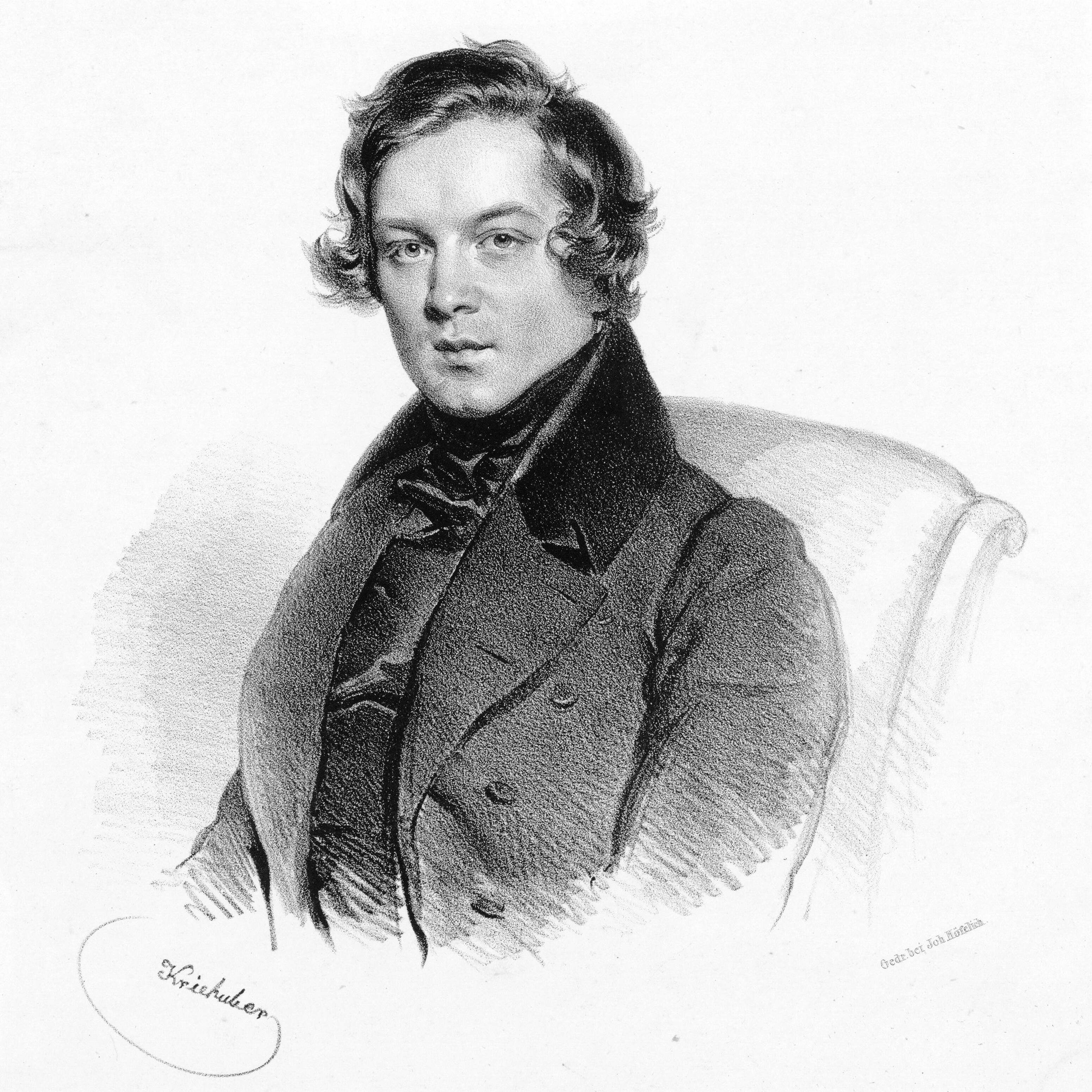
Robert Schumann (1810-1856) was a pivotal German composer, pianist, and influential music critic of the early Romantic era. Despite a promising career as a virtuoso pianist cut short by a debilitating hand injury, Schumann channeled his creative energy into composing across all major genres, leaving behind a profound body of work that epitomizes the emotional depth and literary spirit of Romanticism. His compositions, particularly for piano and voice, are celebrated for their intricate psychological portrayal, poetic titles, and innovative harmonic language. Schumann's life was marked by intense artistic passion, a deep love for his wife Clara Schumann, and a lifelong struggle with mental illness, which ultimately led to his institutionalization and premature death. His legacy endures through his deeply personal and expressive musical output, which continues to inspire musicians and captivate audiences worldwide.
🎵 Origins & History
Robert Schumann was born in Zwickau, Saxony, into a middle-class family that, surprisingly, had no prior musical lineage. His father, August Schumann, was a publisher and writer, fostering an early appreciation for literature that would deeply influence Robert's musical sensibilities. Initially drawn to law, Schumann studied at the University of Leipzig and later at Heidelberg University. However, his true passion lay in music and the burgeoning Romantic literary movement. He harbored dreams of a concert pianist career. This ambition was tragically curtailed by a debilitating hand injury, widely believed to be nerve damage possibly induced by a mechanical device he used for strengthening his fingers. This setback forced Schumann to pivot his focus entirely towards composition, a decision that would ultimately redefine the landscape of 19th-century music.
⚙️ How It Works
Schumann's compositional approach was deeply intertwined with his literary interests and his introspective nature. He often imbued his instrumental works with programmatic titles and literary allusions, drawing inspiration from authors like E.T.A. Hoffmann and Jean Paul. His piano music is characterized by its miniature, character-piece format, exploring a vast spectrum of emotions and psychological states. Schumann frequently employed musical ciphers, like the notes A-S-C-H and C-H-S (representing his birthplace and his fiancée's surname), weaving them into his compositions as hidden autobiographical threads. His harmonic language was adventurous for its time, pushing boundaries with chromaticism and unexpected modulations, while his rhythmic vitality and contrapuntal mastery added layers of complexity and intellectual rigor to his intensely personal musical narratives.
📊 Key Facts & Numbers
Schumann's opera is titled Genoveva, Op. 81. His song cycles, including Dichterliebe, Op. 48 and Frauenliebe und -leben, Op. 42, are seminal works. His mental health struggles led to periods of incapacitation.
👥 Key People & Organizations
The central figures in Robert Schumann's life were undoubtedly his wife, Clara Schumann, a celebrated concert pianist and composer in her own right, and his former teacher, Friedrich Wieck. Clara was not only his muse and lifelong supporter but also a crucial interpreter of his music, premiering many of his works. Their marriage, initially opposed by Wieck, was a profound artistic and emotional partnership. Other significant figures include composer Johannes Brahms, who became a close friend and admirer of the Schumanns, and composer Felix Mendelssohn, a contemporary whose own musical achievements in Leipzig provided a backdrop to Schumann's career. He championed emerging talents like Frédéric Chopin. As a critic for the Neue Zeitschrift für Musik, Schumann wielded considerable influence, championing progressive musical ideas and introducing the world to talents like Frédéric Chopin and Johannes Brahms through his insightful writings.
🌍 Cultural Impact & Influence
Schumann's influence on subsequent generations of composers is immense, solidifying the expressive and psychological dimensions of Romantic music. His innovative piano writing, characterized by its rich textures, harmonic complexity, and intimate character, set new standards for the instrument and inspired pianists and composers alike. The song cycles, particularly Dichterliebe, remain cornerstones of the vocal repertoire, celebrated for their profound emotional depth and masterful fusion of poetry and music. His symphonic works, though less frequently performed than those of Beethoven or Brahms, are recognized for their unique structural ingenuity and emotional intensity, paving the way for later orchestral developments.
⚡ Current State & Latest Developments
In the 21st century, Robert Schumann's music continues to be a vital part of the classical repertoire, performed and recorded globally by leading orchestras, chamber ensembles, and soloists. His works are staples in conservatories like the University of Music and Theatre Leipzig, where he briefly taught, and are studied for their compositional techniques and emotional resonance. Contemporary analyses increasingly explore the intersection of his music, his mental health, and his literary influences, with scholars at institutions like the Robert Schumann University Düsseldorf delving into his manuscripts and personal correspondence. The enduring appeal of his piano miniatures and song cycles ensures their continued presence in concert halls and educational settings, while new interpretations by artists such as András Schiff and Diana Damrau keep his music fresh for modern audiences.
🤔 Controversies & Debates
The primary controversy surrounding Schumann revolves around the nature and cause of his mental illness and its impact on his creative output. While historically attributed to syphilis or hereditary madness, modern medical perspectives suggest a complex interplay of factors, possibly including bipolar disorder, temporal lobe epilepsy, or even lead poisoning from his era's common medical practices. The extent to which his illness influenced his compositions, particularly the later, more fragmented works, remains a subject of debate among musicologists and psychiatrists. Another point of contention is the interpretation of his programmatic titles and literary allusions; some critics argue they can overshadow the purely musical appreciation, while others see them as essential to understanding his unique artistic vision. The legacy of his hand injury also sparks discussion: was it psychosomatic, a result of overwork, or a genuine physical ailment?
🔮 Future Outlook & Predictions
The future of Schumann's music lies in continued exploration of its psychological depth and its connection to Romantic literary traditions. As neuroscience advances, a more nuanced understanding of his mental health may emerge, potentially shedding new light on the creative process behind works like the Gesänge der Frühe, Op. 133. There is also potential for deeper engagement with his critical writings, which offer invaluable insights into the musical thought of his time and his championing of progressive artists. Furthermore, digital humanities initiatives are likely to unlock new avenues for studying his manuscripts and compositional evolution, perhaps revealing previously overlooked connections or influences. The enduring power of his most beloved pieces, such as the Piano Concerto in A minor, Op. 54, ensures his continued relevance in performance and education.
💡 Practical Applications
Schumann's compositions are not merely concert pieces; they serve as vital pedagogical tools and sources of inspiration across various domains. His piano works, from the accessible Album for the Young, Op. 68 to the technically demanding Piano Concerto in A minor, Op. 54, are fundamental to piano education worldwide, teaching technique, musicality, and emotional expression. His songs
Key Facts
- Category
- culture
- Type
- topic