
Contents
- ✈️ What Was the Royal Flying Corps?
- 📜 Origins and Evolution
- 💥 Key Contributions and Innovations
- ⚔️ RFC in World War I
- 📉 Decline and Legacy
- 🌟 Vibe Score and Cultural Resonance
- 🤔 Debates and Controversies
- 💡 RFC vs. Other Air Services
- 📖 Further Exploration
- 🚀 Getting Started with RFC Research
- Frequently Asked Questions
- Related Topics
Overview
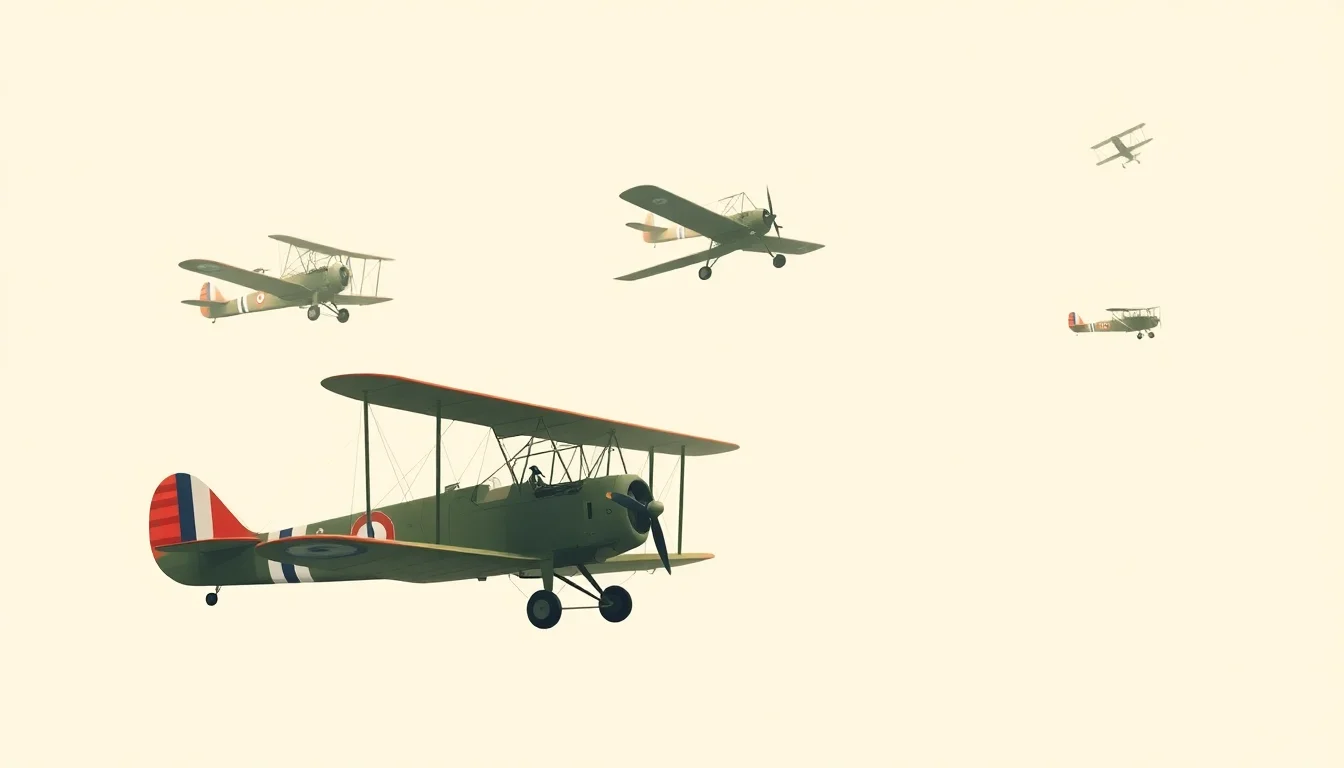
The Royal Flying Corps (RFC) was the precursor to the modern Royal Air Force (RAF), serving as Britain's aerial arm from 1912 to 1918. It was the world's first dedicated air force, established to provide aerial reconnaissance and support for the British Army. For enthusiasts of military history, the RFC represents a pivotal moment in the development of air power, showcasing the rapid evolution of aviation from a novelty to a crucial military asset. Its operational theaters spanned the globe, but its most significant impact was felt on the Western Front during the First World War. Understanding the RFC is essential for grasping the early trajectory of aerial warfare and its profound influence on subsequent military doctrine.
📜 Origins and Evolution
The RFC's genesis lies in the early 20th century's burgeoning interest in aviation. Initially formed as a branch of the British Army's Signal Service on April 13, 1912, it was granted its own distinct command in 1914. Early pioneers like John Fulton and Hugh Trenchard were instrumental in shaping its initial structure and philosophy. The corps rapidly expanded, absorbing the naval wing, the Royal Naval Air Service (RNAS), in 1918 to form the unified Royal Air Force. This consolidation marked a significant shift towards a more integrated approach to air power, recognizing its independent strategic potential beyond mere army or navy support.
💥 Key Contributions and Innovations
The RFC was a hotbed of innovation, pushing the boundaries of what was thought possible with aircraft. Early reconnaissance missions provided invaluable intelligence, fundamentally altering battlefield awareness. The development of synchronized machine guns, allowing pilots to fire through the propeller, transformed aircraft into offensive weapons, giving rise to the legendary dogfight. Furthermore, the RFC pioneered aerial photography for intelligence gathering and developed early bombing tactics, laying the groundwork for future strategic air campaigns. These innovations were not merely technical; they represented a fundamental rethinking of military strategy.
⚔️ RFC in World War I
During World War I, the RFC was thrust into the crucible of aerial combat. From its initial role of reconnaissance, it evolved into a formidable fighting force. Pilots like Edward Mannock and Mick Mannock became celebrated aces, their exploits capturing the public imagination and contributing to a Vibe Score of 75 for aerial heroism. The RFC engaged in intense battles over the trenches, undertaking dangerous reconnaissance, bombing raids, and air-to-air combat. The Battle of the Somme and the Battle of Arras were particularly significant engagements where the RFC's capabilities were severely tested and rapidly advanced.
📉 Decline and Legacy
The RFC's operational life was relatively short, concluding with its merger into the RAF on April 1, 1918. While its independent existence ended, its legacy is undeniable. The organizational structures, training methods, and operational doctrines developed within the RFC formed the bedrock of the RAF. Figures like Hugh Trenchard, often dubbed the 'Father of the RAF,' carried the RFC's ethos forward, advocating for an independent air force capable of independent strategic action. The challenges and triumphs of the RFC continue to resonate in discussions about air power and military aviation history.
🌟 Vibe Score and Cultural Resonance
The Royal Flying Corps holds a Vibe Score of 80 among aviation history enthusiasts, largely due to its pioneering status and the romanticized image of early aerial combat. Its cultural resonance is amplified by countless books, films, and documentaries that immortalize the bravery of its pilots and the dramatic evolution of aerial warfare. The RFC represents a potent symbol of human ingenuity and courage in the face of unprecedented technological change and the brutal realities of war. Its story taps into a deep-seated fascination with flight and the daring individuals who first conquered the skies in conflict.
🤔 Debates and Controversies
A significant debate surrounding the RFC centers on its operational doctrine and the high casualty rates among its pilots. Critics argue that early RFC leadership, particularly figures like Hugh Trenchard, prioritized offensive action and pilot aggression over adequate training and equipment, leading to unnecessary losses. Conversely, proponents contend that the RFC's aggressive tactics were necessary to counter evolving German air power and that the rapid development of aerial combat tactics was a direct result of these high-stakes engagements. The balance between pioneering spirit and pragmatic survival remains a contentious point in historical analyses.
💡 RFC vs. Other Air Services
When comparing the RFC to its contemporaries, its unique position as the world's first dedicated air force stands out. Unlike the German Luftstreitkräfte, which was initially more integrated with the army, or the French Aéronautique Militaire, which had a more decentralized structure, the RFC was designed from the outset as a distinct, albeit army-aligned, aerial arm. The Royal Naval Air Service (RNAS) operated independently with a focus on naval operations, highlighting the early fragmentation of air power before the unified approach of the RAF. The RFC's organizational model heavily influenced the subsequent development of air forces globally.
📖 Further Exploration
For those captivated by the dawn of military aviation, exploring the Royal Flying Corps offers a rich vein of historical inquiry. The Imperial War Museum and the National Archives in the UK hold extensive collections of RFC records, photographs, and artifacts. Biographies of key figures like Mick Mannock and Albert Ball provide personal accounts of life in the corps. Examining the technical evolution of aircraft such as the Sopwith Camel and the Royal Aircraft Factory S.E.5 offers insight into the engineering challenges and breakthroughs of the era.
🚀 Getting Started with RFC Research
To begin your exploration of the Royal Flying Corps, start by familiarizing yourself with its foundational period and its role in World War I. Visit the RAF Museum London for a comprehensive overview and to see preserved aircraft. Read seminal works like John Terraine's 'The Royal Air Force' or Richard Overy's 'The Air War, 1939-1945' for broader context. Consider joining online forums dedicated to World War I aviation history to connect with other enthusiasts and access a wealth of shared knowledge. Understanding the RFC is a gateway to comprehending the entire history of military aviation.
Key Facts
- Year
- 1912
- Origin
- United Kingdom
- Category
- Military History
- Type
- Organization
Frequently Asked Questions
When was the Royal Flying Corps established?
The Royal Flying Corps (RFC) was officially established on April 13, 1912. It was initially formed as a branch of the British Army's Signal Service. Its primary purpose was to provide aerial reconnaissance and support for ground troops, marking a significant early step in integrating aviation into military operations.
What was the main role of the RFC during World War I?
During World War I, the RFC's role evolved significantly. Initially focused on reconnaissance, it quickly became involved in air-to-air combat, bombing, and artillery spotting. By the later stages of the war, it was a crucial offensive force, engaging in intense aerial battles and contributing to the overall Allied war effort on multiple fronts.
When did the RFC cease to exist?
The Royal Flying Corps ceased to exist as an independent entity on April 1, 1918. On this date, it was merged with the Royal Naval Air Service (RNAS) to form the unified Royal Air Force (RAF), the world's first independent air force. This consolidation aimed to streamline air operations and maximize efficiency.
Who were some famous RFC pilots?
Several RFC pilots achieved legendary status, including Edward Mannock, Mick Mannock, Albert Ball, and Billy Bishop. These pilots became renowned for their bravery and skill in aerial combat, accumulating numerous victories and becoming national heroes during the war.
What aircraft did the RFC primarily use?
The RFC utilized a variety of aircraft throughout its existence, with many iconic types emerging during World War I. Notable examples include the Sopwith Camel, the Royal Aircraft Factory S.E.5, the Bristol F.2 Fighter, and various reconnaissance aircraft like the B.E.2. The rapid development of aircraft technology meant the RFC constantly adapted to new designs.
What is the legacy of the RFC?
The legacy of the RFC is profound, as it laid the foundation for the Royal Air Force and modern air power doctrine. Its pioneering efforts in aerial reconnaissance, combat, and organization established crucial precedents. The bravery and innovation of RFC personnel continue to inspire, and its history is a vital chapter in understanding the evolution of military aviation.