
Contents
Overview
Bob Dylan's 'Subterranean Homesick Blues,' released in 1965, is more than just a song; it's a watershed moment in lyrical density and cultural commentary. Its rapid-fire delivery and stream-of-consciousness imagery, drawing from Ginsberg's Beat poetry and folk traditions, set a new standard for what popular music could articulate. The song's iconic music video, featuring Dylan holding up cue cards with key phrases, became a visual shorthand for the era's burgeoning media landscape and artistic experimentation. Its influence reverberates through hip-hop's lyrical complexity, punk's raw energy, and countless artists who seek to pack more meaning into fewer words. The song remains a touchstone for understanding the evolution of lyrical artistry and its intersection with visual culture.
🎵 What is Subterranean Homesick Blues?
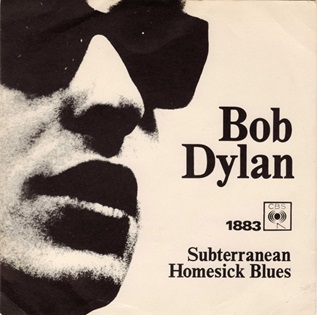
"Subterranean Homesick Blues" is not just a song; it's a seismic event in 20th-century popular music, marking Bob Dylan's definitive pivot to electric instrumentation and a radical departure in lyrical density. Released in 1965, it served as the opening track for his album Bringing It All Back Home and its accompanying single became his first Top 40 hit. This track is essential for understanding the transition from folk purism to the burgeoning rock landscape, showcasing Dylan's unparalleled ability to synthesize disparate influences into something entirely new. Its frenetic energy and stream-of-consciousness lyrics set a new benchmark for what a popular song could be.
🗓️ Origins and Recording
The genesis of "Subterranean Homesick Blues" lies in Dylan's studio sessions at Columbia Records on January 14, 1965. This was the pivotal day he embraced electric guitars, a move that alienated some folk traditionalists but ultimately propelled his sound into uncharted territory. The recording captures a raw, urgent energy, a stark contrast to his earlier acoustic work. An earlier acoustic rendition, recorded the day prior, offers a fascinating glimpse into the song's evolution, though it was the electric version that detonated on the charts and in the cultural consciousness. This session is a cornerstone of Dylan's electric period.
📈 Chart Performance and Impact
Upon its release on March 8, 1965, the "Subterranean Homesick Blues" single became a significant commercial breakthrough for Bob Dylan. It climbed to number 39 on the U.S. charts, a remarkable feat for a song so unconventional. Across the Atlantic, it fared even better, breaking into the Top 10 of the UK charts. This commercial success validated Dylan's artistic risks and demonstrated a burgeoning audience receptive to his increasingly complex and electrified sound, paving the way for future hits.
🎬 The Groundbreaking Music Video
The song's accompanying music video, filmed by Pennebaker for his documentary Dont Look Back, is as iconic as the track itself. It features Dylan holding up cue cards with key lyrics from the song, which are then shuffled and changed. This innovative visual presentation, simple yet profoundly effective, is widely considered one of the earliest and most influential music videos in history, predating the MTV era by nearly two decades. The video's stark aesthetic and conceptual brilliance amplified the song's impact.
⚡ Electric Revolution
"Subterranean Homesick Blues" stands as a landmark in the electrification of folk music. It was one of Bob Dylan's first forays into fully electric arrangements, a decision that sparked considerable debate within the folk community. This sonic shift, alongside contemporaries like The Byrds and The Beatles, signaled a broader trend towards merging folk sensibilities with rock and roll energy. The raw, amplified sound of this track directly influenced countless artists and helped define the sound of mid-1960s rock music, marking a definitive break from the past.
📜 Lyrical Innovation
Lyrically, "Subterranean Homesick Blues" is a masterclass in modernist poetry applied to popular song. Dylan unleashes a torrent of images, phrases, and cultural references, creating a dense, almost overwhelming tapestry of sound and meaning. The rapid-fire delivery and the sheer volume of words per minute were unprecedented in mainstream music. Critics and scholars continue to dissect its allusions, from news headlines to Beat poetry, highlighting its complexity and enduring relevance as a piece of lyrical art.
🏆 Critical Reception and Legacy
The critical reception of "Subterranean Homesick Blues" was initially mixed, with some purists decrying Dylan's electric turn. However, its enduring legacy is undeniable. It consistently ranks high on lists of the greatest songs of all time, celebrated for its innovation, energy, and lyrical prowess. Its influence can be traced through generations of musicians who have been inspired by its boundary-pushing spirit. The song remains a vital touchstone for understanding the evolution of popular music in the 1960s and beyond.
📚 Where to Hear It
Experiencing "Subterranean Homesick Blues" is best done through its original release on the album Bringing It All Back Home. For a comprehensive view, seek out compilations like Bob Dylan's Greatest Hits (1967), which first showcased its importance. The The Bootleg Series Volumes 1–3 1961–1991 offers the fascinating acoustic precursor. And, of course, the iconic music video is readily available online and within D. A. Pennebaker's documentary Dont Look Back, providing the full sensory immersion.
Key Facts
- Year
- 1965
- Origin
- Bob Dylan's album 'Bringing It All Back Home'
- Category
- Music History / Cultural Impact
- Type
- Song / Cultural Phenomenon
Frequently Asked Questions
When was "Subterranean Homesick Blues" released?
The single "Subterranean Homesick Blues" was released by Columbia Records on March 8, 1965, in the U.S. and April 23, 1965, in the U.K. It was also the opening track on Bob Dylan's album Bringing It All Back Home, which came out approximately two weeks after the single's U.S. release.
What made the song controversial?
The primary controversy stemmed from Bob Dylan's decision to use electric instruments, marking a significant departure from his established folk sound. This 'going electric' alienated some folk purists who felt he was abandoning the genre's roots, while others embraced the new, amplified direction.
How did the song perform commercially?
Commercially, it was a breakthrough for Dylan. It reached number 39 on the U.S. Billboard Hot 100, becoming his first Top 40 hit. In the United Kingdom, it achieved even greater success, entering the Top 10 of the UK Singles Chart.
What is the significance of the music video?
The music video for "Subterranean Homesick Blues" is considered groundbreaking for its time. It features Dylan holding cue cards with lyrics that change rapidly, a concept that heavily influenced the development of the music video as an art form and promotional tool, predating the MTV era.
What is the lyrical style of the song?
The lyrics are characterized by a dense, rapid-fire delivery of stream-of-consciousness imagery and cultural references. It's often described as a form of lyrical collage, drawing from news headlines, Beat Generation poetry, and everyday slang, creating a complex and often surreal narrative.
Where can I find an acoustic version of the song?
An acoustic version of "Subterranean Homesick Blues," recorded the day before the electric session, was released on the compilation album The Bootleg Series Volumes 1–3 1961–1991. This offers a valuable comparison to the iconic electric recording.