
Contents
Overview
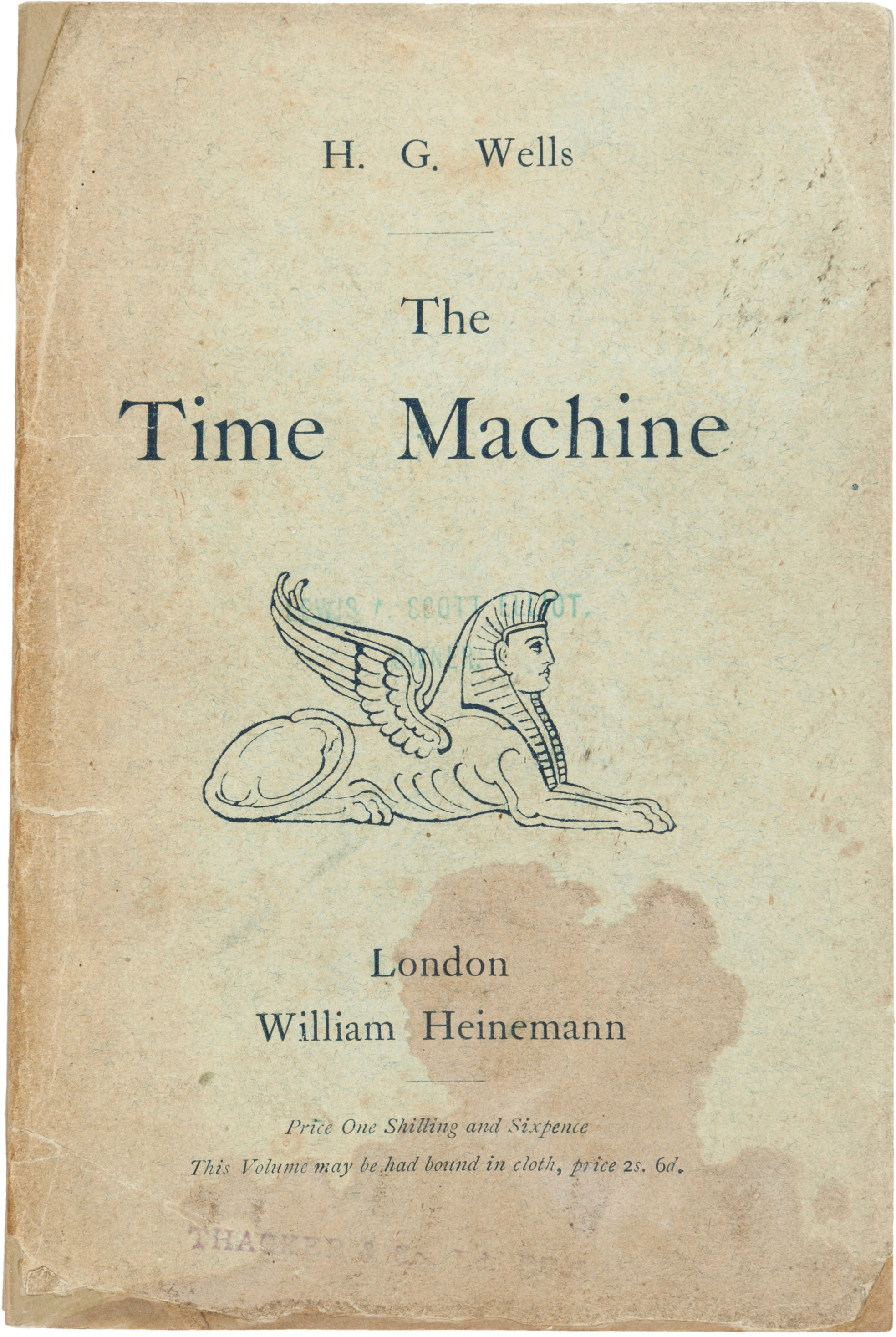
The concept of time travel has been around for centuries, with ancient myths and legends featuring characters who travel through time. However, the modern concept of time travel as we know it today was popularized by H. G. Wells's 1895 novel The Time Machine. This novel introduced the idea of a time machine, a device that could transport people through time, and has since become a staple of science fiction. Authors such as Isaac Asimov and Arthur C. Clarke have also explored the concept of time travel in their works, often using it as a tool to comment on contemporary issues and societal trends.
⚙️ Theoretical Frameworks
From a theoretical perspective, time travel is often discussed in the context of general relativity and quantum mechanics. According to Albert Einstein's theory of general relativity, time dilation occurs when an object moves at high speeds or is placed in a strong gravitational field, causing time to pass more slowly for that object relative to a stationary observer. This effect has been observed in real-world experiments, such as the Hubble Space Telescope's observations of distant galaxies. Additionally, some solutions to Einstein's equations, such as wormholes and black holes, have been proposed as potential means of achieving time travel.
🌐 Cultural Impact
Time travel has also had a significant impact on popular culture, with numerous films, television shows, and books exploring the concept. Movies such as Back to the Future and The Time Traveler's Wife have become classics of the genre, while TV shows like Doctor Who and Star Trek have used time travel as a central plot device. The concept of time travel has also been explored in music, with artists such as David Bowie and The Beatles incorporating time travel themes into their work.
🔮 Future Possibilities
As for the future of time travel, it remains to be seen whether it will become a reality. While some scientists, such as Stephen Hawking, have proposed theories that could potentially allow for time travel, others have raised concerns about the potential consequences of such technology. For example, the grandfather paradox suggests that if time travel were possible, it could create logical inconsistencies and potentially destabilize the timeline. Despite these challenges, researchers continue to explore the possibilities of time travel, with some proposing the use of quantum entanglement or exotic matter to create stable wormholes.
Key Facts
- Year
- 1895
- Origin
- Science Fiction Genre
- Category
- science
- Type
- concept
Frequently Asked Questions
Is time travel possible?
While time travel remains a topic of debate and speculation, some scientific theories, such as general relativity and quantum mechanics, suggest that it may be possible. However, the technical and logistical challenges of achieving time travel are significant, and it remains to be seen whether it will become a reality. Researchers such as Stephen Hawking and Neil deGrasse Tyson have proposed theories and ideas related to time travel, but more research is needed to fully understand the concept.
What are the different types of time travel?
There are several types of time travel that have been proposed, including forward time travel, backward time travel, and time dilation. Forward time travel involves moving into the future, while backward time travel involves moving into the past. Time dilation, on the other hand, occurs when an object moves at high speeds or is placed in a strong gravitational field, causing time to pass more slowly for that object relative to a stationary observer. Theories such as general relativity and quantum mechanics provide a framework for understanding these concepts.
What are the potential consequences of time travel?
The potential consequences of time travel are significant and far-reaching. If time travel were possible, it could create logical inconsistencies and potentially destabilize the timeline. The grandfather paradox, for example, suggests that if a person were to travel back in time and kill their own grandfather before he had children, then that person would never have been born. However, if they were never born, then who killed the grandfather? This paradox highlights the potential problems and inconsistencies that can arise when dealing with time travel. Researchers such as Kurt Gödel and Roger Penrose have explored these ideas in their work.
How has time travel been depicted in popular culture?
Time travel has been a staple of science fiction for decades, with numerous films, television shows, and books exploring the concept. Movies such as Back to the Future and The Time Traveler's Wife have become classics of the genre, while TV shows like Doctor Who and Star Trek have used time travel as a central plot device. The concept of time travel has also been explored in music, with artists such as David Bowie and The Beatles incorporating time travel themes into their work.
What are some of the most famous time travel stories?
Some of the most famous time travel stories include H. G. Wells's The Time Machine, Isaac Asimov's The End of Eternity, and Arthur C. Clarke's Childhood's End. These stories have helped to shape the public's perception of time travel and have inspired countless other works of science fiction. Authors such as Ray Bradbury and Philip K. Dick have also explored the concept of time travel in their work, often using it as a tool to comment on contemporary issues and societal trends.