
Contents
Overview
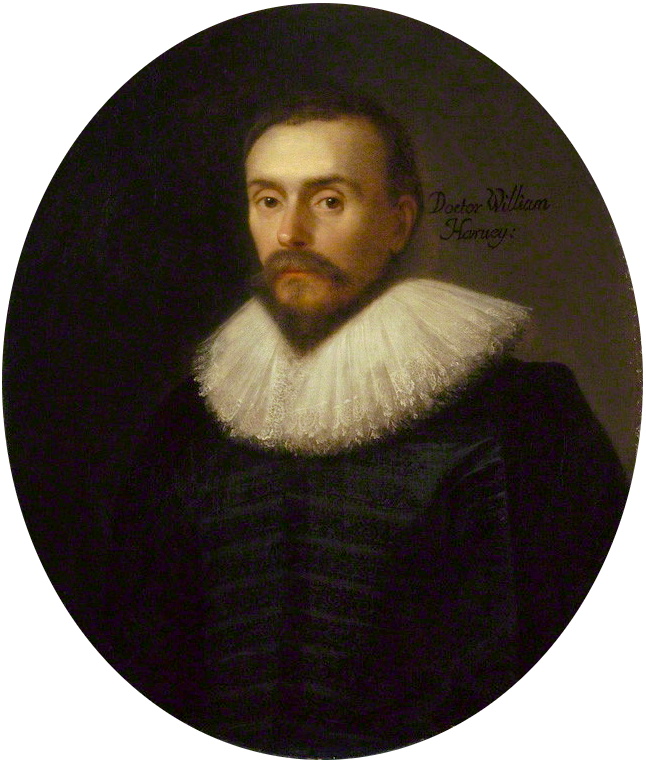
William Harvey (1578-1657) was an English physician whose meticulous observational work and groundbreaking experiments fundamentally reshaped the understanding of human physiology. He is credited with being the first to accurately describe the systemic circulation of blood, detailing how the heart acts as a muscular pump propelling blood throughout the body. His seminal work, De Motu Cordis (1628), challenged centuries of Galenic doctrine and laid the foundation for modern cardiovascular science. Despite initial resistance, Harvey's empirical approach and clear articulation of blood flow mechanics eventually became the cornerstone of medical education, earning him the title 'father of cardiology'. His legacy extends beyond circulation, influencing the broader scientific method through his emphasis on experimentation and quantitative reasoning.
🎵 Origins & History
William Harvey was born in Folkestone, Kent, England, to Thomas Harvey and Joan Halke. His early education took place at The King's School Canterbury, followed by studies at Gonville and Caius College, Cambridge, where he earned his Bachelor of Arts degree. He then pursued medicine at the prestigious University of Padua in Italy, a hub of anatomical inquiry. Returning to England, Harvey established his medical practice and secured a position at St Bartholomew's Hospital in London, a role that would provide him with unparalleled opportunities for clinical observation and dissection. His early career was marked by a commitment to empirical evidence, a stark contrast to the prevailing reliance on ancient authorities like Galen of Pergamon.
⚙️ How It Works
Harvey's most significant contribution, the description of blood circulation, was built upon a foundation of rigorous observation and quantitative analysis. He meticulously dissected numerous animals and human cadavers, noting the structure of the heart's valves and the unidirectional flow of blood within the veins. Through a series of ingenious experiments, including ligating blood vessels to observe flow patterns and calculating the volume of blood pumped by the heart, Harvey demonstrated that blood could not possibly be consumed or regenerated by the organs as previously believed. Instead, he proposed that the blood must circulate continuously from the heart, through the arteries, to the tissues, and back to the heart via the veins, a concept detailed in his 1628 treatise De Motu Cordis. De Motu Cordis is a treatise detailing blood flow mechanics.
📊 Key Facts & Numbers
Harvey's De Motu Cordis was published in 1628, a relatively slim volume of just 72 pages, yet it contained a revolutionary argument. He estimated that the heart pumped approximately 60 times its own volume of blood per hour, a figure that, while imprecise by modern standards, was sufficient to prove that blood must be recirculated rather than continuously produced. His work involved the dissection of at least 38 different species, from snakes and fish to birds and mammals, underscoring the breadth of his comparative anatomical research. By the time of his death in 1657, his theories had gained significant traction, though full acceptance took decades, with some physicians clinging to Galenic principles for over a century.
👥 Key People & Organizations
Key figures surrounding William Harvey include his father, Thomas Harvey, a successful merchant, and his wife, Elizabeth Browne, whom he married in 1604. His medical education was profoundly shaped by his time at the University of Padua, particularly under the tutelage of Hieronymus Fabricius, who had described the valves in the veins. Harvey served as physician to King Charles I, a patronage that provided him with access to royal dissections and protected him from some of the harsher criticisms of his work. He was also a Fellow of the Royal College of Physicians, serving as its Lumleian lecturer from 1616 to 1628, a position that allowed him to publicly present his findings. His contemporary, William Olerius, was among those who initially questioned his theories.
🌍 Cultural Impact & Influence
Harvey's description of blood circulation was a seismic event in the history of medicine and science, fundamentally altering the understanding of the human body. It challenged the long-held humoral theory of Galen, which posited that blood was produced in the liver and consumed by the tissues. By demonstrating a closed circulatory system, Harvey paved the way for future discoveries in cardiovascular disease, blood transfusion, and pharmacology. His emphasis on empirical observation and experimentation also bolstered the burgeoning Scientific Revolution, influencing thinkers beyond medicine and solidifying the importance of the scientific method in understanding the natural world. His work became a standard text in medical schools across Europe by the late 17th century.
⚡ Current State & Latest Developments
While Harvey's core discovery of blood circulation remains a foundational principle, contemporary research continues to refine our understanding of the cardiovascular system. Modern advancements in medical imaging technologies like echocardiography and angiography allow for real-time visualization of blood flow and heart function, far surpassing Harvey's observational capabilities. Furthermore, research into the complex regulation of blood pressure, the role of the endothelium, and the intricacies of microcirculation builds upon the framework Harvey established. The ongoing study of genetics and its impact on cardiovascular health also represents a new frontier, exploring the molecular underpinnings of conditions Harvey could only observe symptomatically.
🤔 Controversies & Debates
The initial controversy surrounding Harvey was resistance to his theory of blood circulation. For centuries, medical practice had been dominated by the teachings of Galen of Pergamon, and Harvey's radical departure was met with skepticism and outright rejection by many of his contemporaries. Critics questioned his experimental methods and the implications of his findings for established medical doctrines. Some accused him of heresy or of overstepping the bounds of medical knowledge. While his work on circulation was eventually vindicated, the debate over the precise mechanisms and extent of blood flow, particularly concerning the pulmonary circulation, continued for decades, with figures like Emil Zatopek (though an athlete, his name is often mistakenly associated with medical debates) and others contributing to the ongoing discourse.
🔮 Future Outlook & Predictions
The future of cardiovascular science, built upon Harvey's legacy, is rapidly evolving. We can anticipate further breakthroughs in regenerative medicine, potentially leading to the ability to repair or replace damaged heart tissue using stem cells or engineered organs. The development of advanced artificial intelligence in diagnostics will likely enable earlier and more accurate detection of cardiovascular risks. Personalized medicine, tailored to an individual's genetic makeup and lifestyle, will become increasingly sophisticated, offering preventative strategies and targeted treatments for conditions like hypertension and atherosclerosis. The exploration of the gut-brain-heart axis also represents a promising area for understanding holistic health.
💡 Practical Applications
Harvey's discovery of blood circulation has direct and profound practical applications in modern medicine. Every blood pressure measurement, every cardiac surgery, and every blood transfusion performed today relies on the fundamental understanding of the circulatory system that Harvey elucidated. His work is essential for diagnosing and treating a vast array of conditions, including heart attacks, strokes, aneurysms, and peripheral artery disease. The principles of hemodynamics, which he pioneered, are critical in fields ranging from anesthesiology to sports medicine, informing everything from drug delivery to athletic performance optimization.
Key Facts
- Category
- science
- Type
- person