
Contents
Overview
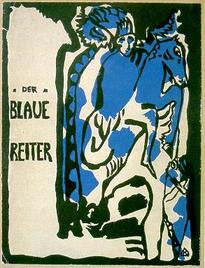
Der Blaue Reiter was formed in the early 20th century by Wassily Kandinsky and Franz Marc, two visionary artists who sought to challenge traditional art forms. Their first exhibition, held in Munich in 1911, featured works by artists such as August Macke and Heinrich Campendonk. This event marked the beginning of the Blue Rider movement, which would go on to shape the course of modern art. The group's almanac, 'Der Blaue Reiter', published in 1912, included contributions from notable artists and writers, including Arnold Schoenberg and Thomas Mann.
🖌️ Key Artists and Their Works
The artists associated with Der Blaue Reiter were pioneers of modern art, and their work had a profound impact on the development of German Expressionism. Franz Marc's vibrant, expressive paintings, such as 'The Yellow Christ', showcased the group's emphasis on bold colors and emotive brushstrokes. Meanwhile, Wassily Kandinsky's abstract compositions, like 'Composition VII', pushed the boundaries of traditional representation. Other notable artists, such as Franz von Stuck and Ernst Ludwig Kirchner, also made significant contributions to the movement. The group's loose network of relationships allowed for a diverse range of styles and influences, from Fauvism to Cubism.
🌍 Cultural Impact and Legacy
Der Blaue Reiter's cultural impact extended far beyond the art world. The group's emphasis on experimentation and innovation inspired a generation of artists, writers, and musicians. The movement's influence can be seen in the work of later artists, such as Pablo Picasso and Salvador Dali. The group's legacy can also be seen in the development of various art movements, including Abstract Expressionism and Action Painting. Despite the group's disbandment in 1914, their innovative spirit and creative vision continue to inspire artists and art lovers to this day. The Bauhaus school, founded in 1919, also drew upon the ideas and principles of Der Blaue Reiter, further solidifying the movement's lasting impact on modern art.
🔮 Disbandment and Lasting Influence
The disbandment of Der Blaue Reiter in 1914 marked the end of an era, but the movement's influence continued to be felt in the decades that followed. The group's emphasis on experimentation and innovation paved the way for a wide range of avant-garde movements, from Dadaism to Surrealism. Today, the works of Der Blaue Reiter artists can be found in museums and galleries around the world, including the Lenbachhaus in Munich and the MoMA in New York. As a testament to the movement's enduring legacy, Der Blaue Reiter remains an essential part of modern art history, continuing to inspire and influence artists, designers, and art enthusiasts alike.
Key Facts
- Year
- 1911-1914
- Origin
- Munich, Germany
- Category
- culture
- Type
- movement
Frequently Asked Questions
What was the main goal of Der Blaue Reiter?
The main goal of Der Blaue Reiter was to promote innovation and experimentation in modern art, as well as to provide a platform for artists to showcase their work. The group's founders, Wassily Kandinsky and Franz Marc, sought to challenge traditional art forms and push the boundaries of modern art. Their efforts were influenced by various art movements, including Fauvism and Cubism.
Who were some notable artists associated with Der Blaue Reiter?
Some notable artists associated with Der Blaue Reiter include Wassily Kandinsky, Franz Marc, August Macke, and Franz von Stuck. These artists, along with others, contributed to the group's exhibitions and publications, and played a significant role in shaping the movement's artistic vision. Their work was also influenced by other notable artists, such as Pablo Picasso and Salvador Dali.
What was the significance of Der Blaue Reiter's almanac?
The almanac 'Der Blaue Reiter', published in 1912, was a significant publication that showcased the group's artistic vision and theoretical ideas. It included contributions from notable artists and writers, such as Arnold Schoenberg and Thomas Mann, and featured reproductions of artworks by Der Blaue Reiter artists. The almanac was an important platform for the group to share their ideas and showcase their work, and it remains an essential part of modern art history. The almanac's influence can be seen in later art movements, such as Abstract Expressionism and Action Painting.
How did Der Blaue Reiter influence later art movements?
Der Blaue Reiter's emphasis on innovation and experimentation had a profound impact on later art movements. The group's influence can be seen in the development of various art movements, including Abstract Expressionism and Action Painting. The movement's emphasis on bold colors and emotive brushstrokes also influenced the development of Expressionism and Fauvism. Additionally, the group's experimental approach to art paved the way for a wide range of avant-garde movements, from Dadaism to Surrealism.
What is the legacy of Der Blaue Reiter today?
Today, Der Blaue Reiter is recognized as a pivotal movement in modern art history. The group's innovative spirit and creative vision continue to inspire artists and art lovers around the world. The movement's legacy can be seen in the many museums and galleries that showcase the work of Der Blaue Reiter artists, including the Lenbachhaus in Munich and the MoMA in New York. The group's influence can also be seen in the work of contemporary artists, who continue to draw upon the movement's ideas and principles. The Bauhaus school, founded in 1919, also drew upon the ideas and principles of Der Blaue Reiter, further solidifying the movement's lasting impact on modern art.