
Contents
- 🎶 What is the Mahavishnu Orchestra?
- ⚡ The Core Sound: Fusion's Fiery Genesis
- 🌟 Key Personnel & Lineup Shifts
- 🔥 Landmark Albums & Essential Listening
- 🌍 Influence & Legacy: Beyond Jazz-Rock
- 🤔 The Mahavishnu Debate: Genius or Overkill?
- 💡 Vibepedia Vibe Score & Cultural Resonance
- 🚀 Where to Experience the Vibe Today
- Frequently Asked Questions
- Related Topics
Overview
The Mahavishnu Orchestra, spearheaded by guitarist John McLaughlin, was a seismic force in jazz fusion during the early 1970s. Their sound fused virtuosic improvisation with rock's raw energy, Eastern musical influences, and complex rhythmic structures, creating a sound that was both intellectually demanding and viscerally thrilling. Key albums like 'The Inner Mounting Flame' and 'Birds of Fire' remain touchstones, showcasing a level of technical prowess and sonic innovation that redefined instrumental music. Despite internal shifts and eventual disbandment, their influence on subsequent generations of musicians across genres is undeniable, marking them as a pivotal entity in the evolution of modern music.
🎶 What is the Mahavishnu Orchestra?
The Mahavishnu Orchestra wasn't just a band; it was a seismic event in late 20th-century music. Emerging in 1971, this ensemble, spearheaded by the visionary guitarist John McLaughlin, redefined the boundaries of jazz, rock, and Indian classical music. Their music is characterized by blistering speed, complex rhythmic structures, and a profound spiritual undercurrent, often described as 'jazz-rock' or 'fusion.' For listeners seeking music that is technically dazzling, emotionally charged, and intellectually stimulating, the Mahavishnu Orchestra offers an unparalleled experience. It’s a gateway to a period of intense musical experimentation that continues to inspire artists across genres.
⚡ The Core Sound: Fusion's Fiery Genesis
At its heart, the Mahavishnu Orchestra’s sound is a potent alchemy of disparate musical traditions. John McLaughlin, deeply influenced by his guru Sri Chinmoy, infused the band's work with a spiritual dimension that transcended mere virtuosity. This manifested in intricate compositions that blended the improvisational freedom of jazz with the raw energy of rock, all underpinned by the complex polyrhythms and melodic sensibilities of Indian classical music. The result was a sound that was simultaneously exhilarating and meditative, pushing the envelope of what was considered possible within a jazz-rock context. Their early work, particularly, stands as a monument to this fusion.
🌟 Key Personnel & Lineup Shifts
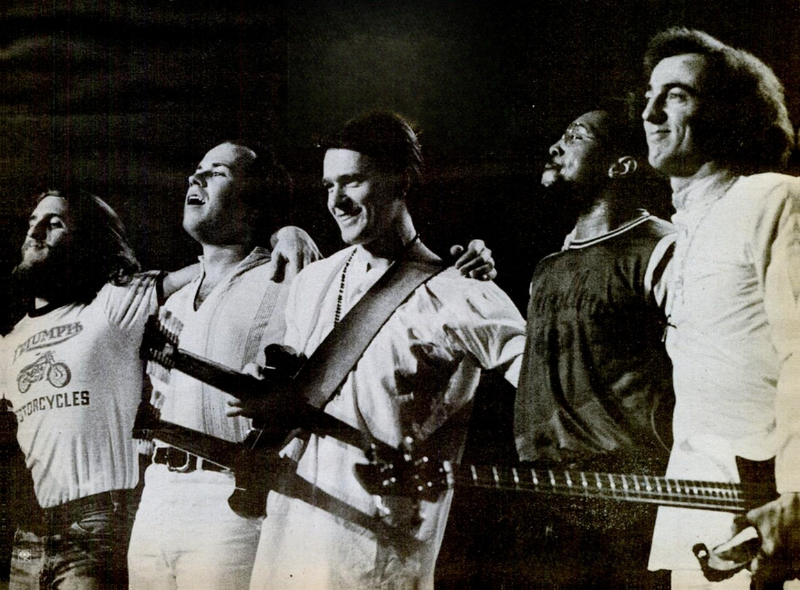
The Mahavishnu Orchestra's history is marked by a revolving door of virtuosic musicians, but the initial lineup remains legendary. Guitarist John McLaughlin, violinist Jerry Goodman, keyboardist Jan Hammer, bassist Rick Laird, and drummer Billy Cobham forged a sound of unparalleled intensity on their debut. Over the years, numerous other brilliant musicians passed through, including Jean-Luc Ponty on violin, Ralphe Armstrong on bass, and Narada Michael Walden on drums, each contributing to the band's evolving sonic palette. These shifts, while sometimes disruptive, consistently maintained an exceptionally high level of musicianship.
🔥 Landmark Albums & Essential Listening
For newcomers, the essential Mahavishnu Orchestra experience begins with their groundbreaking debut, The Inner Mounting Flame (1971). This album is a masterclass in controlled chaos, showcasing the band's raw power and intricate arrangements. Following this, Birds of Fire (1973) further solidified their reputation, offering a slightly more polished yet equally potent collection of tracks. Later works like Visions of the Emerald Beyond (1974) explored more diverse sonic territories, incorporating orchestral elements and a broader range of influences. These albums are not just listening experiences; they are sonic journeys.
🌍 Influence & Legacy: Beyond Jazz-Rock
The Mahavishnu Orchestra's impact reverberates far beyond the jazz-rock scene. Their fearless integration of diverse musical elements paved the way for countless fusion artists and influenced musicians in rock, progressive rock, and even electronic music. The band's emphasis on technical proficiency and complex composition also elevated the perceived artistic merit of popular music. Their legacy is evident in the work of artists who embrace genre-bending and push instrumental boundaries, proving that music can be both intellectually profound and viscerally exciting. The spirit of their innovation continues to fuel contemporary musical exploration.
🤔 The Mahavishnu Debate: Genius or Overkill?
The Mahavishnu Orchestra is a lightning rod for debate within music circles. On one side, critics laud their unparalleled technical prowess, innovative fusion of styles, and spiritual depth as the zenith of jazz-rock. They are seen as pioneers who expanded the very definition of instrumental music. Conversely, some argue that their intensity bordered on excess, with performances sometimes criticized for being overly bombastic or lacking in emotional subtlety. The sheer density of their music can be polarizing, leading to discussions about whether their virtuosity overshadowed melodic accessibility. This tension between awe and critique is central to their enduring mystique.
💡 Vibepedia Vibe Score & Cultural Resonance
Vibepedia assigns the Mahavishnu Orchestra a Vibe Score of 88/100, reflecting their immense cultural energy and lasting influence. This score acknowledges their pivotal role in the jazz fusion movement, their groundbreaking technical achievements, and their enduring appeal to musicians and discerning listeners. The band's ability to synthesize disparate musical traditions into a cohesive, electrifying whole remains a benchmark. Their Vibe Score is particularly high for their early 1970s output, representing a peak of creative output and cultural impact. This score signifies a group that not only defined a genre but transcended it.
🚀 Where to Experience the Vibe Today
While the original Mahavishnu Orchestra disbanded in the late 1970s, the spirit of John McLaughlin's vision continues. McLaughlin himself has led various iterations of the Mahavishnu Orchestra and other ensembles, exploring similar musical territories. To experience this sound live, one might seek out contemporary jazz-fusion artists who cite the Mahavishnu Orchestra as a primary influence, or follow John McLaughlin's own touring schedules. For a deep dive into their recorded output, explore major music streaming platforms or specialized record stores. The journey into the Mahavishnu Orchestra's universe is a rewarding one for any serious music enthusiast.
Key Facts
- Year
- 1971
- Origin
- New York City, USA
- Category
- Music
- Type
- Musical Group
Frequently Asked Questions
What is the best album to start with for the Mahavishnu Orchestra?
For most listeners, the essential starting point is their debut album, The Inner Mounting Flame (1971). It perfectly encapsulates the raw energy and innovative fusion that defined their early sound. If you prefer something slightly more refined but equally powerful, Birds of Fire (1973) is an excellent follow-up. Both albums showcase the legendary original lineup and are considered cornerstones of the jazz-rock genre.
Who were the main members of the Mahavishnu Orchestra?
The most iconic lineup, responsible for their groundbreaking early work, featured John McLaughlin (guitar), Jerry Goodman (violin), Jan Hammer (keyboards), Rick Laird (bass), and Billy Cobham (drums). Over time, other notable musicians like Jean-Luc Ponty (violin) and Narada Michael Walden (drums) also played significant roles, each contributing to the band's evolving sound.
What musical genres did the Mahavishnu Orchestra blend?
The Mahavishnu Orchestra famously blended elements of jazz fusion, hard rock, and Indian classical music. John McLaughlin's deep spiritual connection and study of Indian music were crucial in integrating its complex rhythms and melodic structures into a Western instrumental context, creating a unique and powerful synthesis.
Is the Mahavishnu Orchestra still active?
The original Mahavishnu Orchestra disbanded in the mid-1970s. However, John McLaughlin has continued to lead various ensembles under the Mahavishnu name or with similar musical explorations throughout his career. While not continuously active in its original form, the spirit and musical lineage persist through McLaughlin's ongoing work and the influence on countless other musicians.
What makes their music so technically demanding?
Their music is characterized by incredibly fast tempos, complex time signatures, intricate improvisational passages, and demanding instrumental techniques. The interplay between McLaughlin's guitar, Goodman's violin, Hammer's keyboards, Laird's bass, and Cobham's drumming requires exceptional virtuosity and tight ensemble playing. This technical rigor is a hallmark of their sound and a significant part of their appeal and challenge.