
Contents
Overview
The journey of microscopy began in the late 16th century with the invention of the first compound microscope, often attributed to Dutch spectacle makers Hans and Zacharias Janssen around 1590. This early innovation paved the way for further advancements, with figures like Robert Hooke coining the term "cell" in 1667 after observing cork under a microscope, and Anton van Leeuwenhoek later observing living cells, including bacteria, in 1675. These foundational discoveries, documented in works that would later influence fields like biology and medicine, highlighted the profound potential of magnifying the microscopic world. The development of more sophisticated instruments, building upon the principles explored by pioneers like Andreas Vesalius in anatomy, has continuously expanded our ability to visualize and understand the fundamental building blocks of life and matter.
⚙️ How It Works
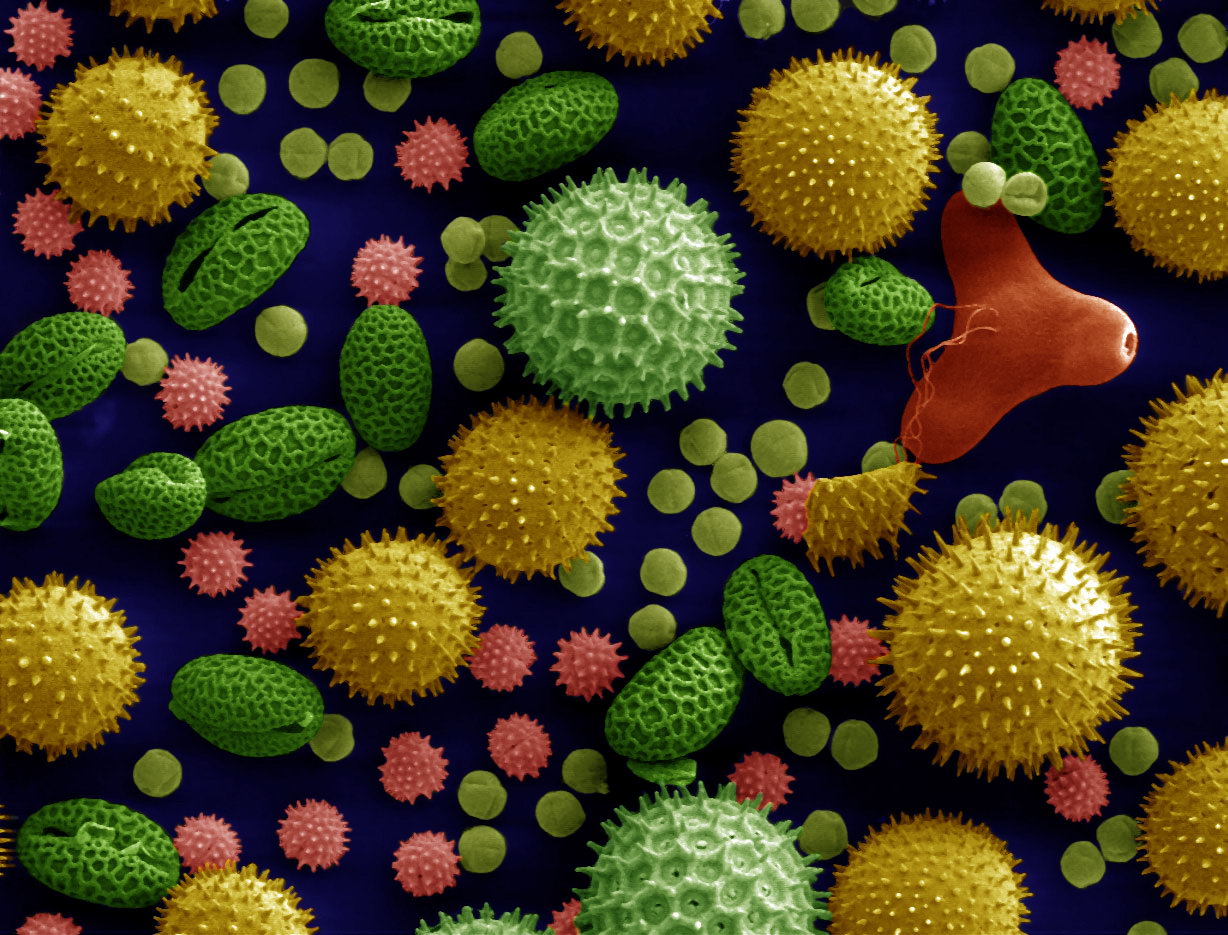
At its core, microscopy involves using specialized instruments to magnify objects beyond the resolution limit of the human eye. There are three primary branches: optical microscopy, which uses light; electron microscopy, which uses a beam of electrons; and scanning probe microscopy (SPM), which uses a physical probe to scan a surface. Optical microscopes, like those discussed on platforms such as Khan Academy, utilize lenses to bend light and create magnified images, with resolution limited by the wavelength of light. Electron microscopes, on the other hand, leverage the much shorter wavelength of electrons to achieve significantly higher resolution and magnification, enabling the visualization of structures invisible to optical methods, as detailed in resources from Thermo Fisher Scientific. SPM techniques, such as Atomic Force Microscopy (AFM), interact directly with the sample's surface, providing nanoscale topographical information, a concept explored by Bruker.
🌍 Cultural Impact
The impact of microscopy extends far beyond the laboratory, influencing our understanding of health, technology, and the natural world. From diagnosing diseases to developing new materials, microscopy has been instrumental in countless scientific breakthroughs. The ability to visualize cellular structures, as explored in educational resources like those from ZEISS Microscopy, has revolutionized fields such as medicine and biology. Furthermore, the visual output of microscopy, often shared on platforms like YouTube or Wikipedia, has captured the public imagination, fostering a broader appreciation for the intricate beauty of the microscopic realm, much like the visual impact of art movements or the detailed imagery found on Reddit.
🔮 Legacy & Future
The legacy of microscopy is one of continuous innovation, with ongoing research pushing the boundaries of resolution, speed, and analytical capability. Emerging techniques in super-resolution microscopy and advanced electron microscopy are enabling scientists to probe ever smaller scales, potentially leading to new discoveries in areas like quantum chemistry or nanotechnology. The development of user-friendly interfaces and automated systems, inspired by advancements in technologies like ChatGPT, is also making these powerful tools more accessible. As microscopy continues to evolve, its role in scientific discovery and technological advancement will undoubtedly remain central, mirroring the persistent drive for innovation seen in fields from artificial intelligence to the digital music revolution.
Key Facts
- Year
- Late 16th Century onwards
- Origin
- Netherlands
- Category
- science
- Type
- technology
Frequently Asked Questions
What is the main difference between optical and electron microscopy?
The primary difference lies in the illumination source: optical microscopy uses visible light, while electron microscopy uses a beam of electrons. This fundamental difference allows electron microscopes to achieve much higher resolution and magnification due to the shorter wavelength of electrons compared to light.
What are the three main branches of microscopy?
The three main branches are optical microscopy, electron microscopy, and scanning probe microscopy (SPM). Each utilizes different principles to image specimens at scales beyond the unaided eye.
Who are considered pioneers in the field of microscopy?
Key figures include Hans and Zacharias Janssen, credited with inventing the compound microscope; Robert Hooke, who coined the term 'cell'; and Anton van Leeuwenhoek, who was among the first to observe living microorganisms.
What are the limitations of optical microscopy?
Optical microscopy is limited by the diffraction of light, which restricts its resolution to approximately 200-350 nanometers. It also struggles with transparent or unstained specimens that lack sufficient contrast, and has a relatively shallow depth of field.
How does scanning probe microscopy (SPM) differ from other types?
SPM, unlike optical or electron microscopy, does not use light or electrons to form an image. Instead, it uses a physical probe that scans the surface of the specimen, interacting with it to generate topographical or other surface-related data, often at atomic resolution.
References
- en.wikipedia.org — /wiki/Microscopy
- microscopeworld.com — /blog/different-types-of-microscopes-explained/
- andor.oxinst.com — /learning/view/article/most-popular-microscopy-techniques
- kenhub.com — /en/library/anatomy/light-and-electron-microscopy
- clinical-sciences.ed.ac.uk — /edinburgh-imaging/for-patients-study-participants/tell-me-more-about-my-scan/wh
- msesupplies.com — /blogs/news/what-are-the-different-types-of-microscopes
- khanacademy.org — /science/biology/structure-of-a-cell/introduction-to-cells/a/microscopy
- infinitiaresearch.com — /en/news/microscopic-techniques-for-the-characterization-of-materials/